

[비즈한국] The fates of two large-scale complex cultural facilities, both expected to resolve the chronic shortage of large performance venues, have diverged. The ‘Seoul Arena’ in Dobong-gu, Seoul, led by Kakao035720, officially got its project on track with a groundbreaking ceremony held earlier this month. Conversely, the ‘K-Culture Valley’ in Goyang, Gyeonggi-do, which had been effectively delayed indefinitely, was declared completely scrapped after the Gyeonggi Provincial Government notified the developer, CJ, of the termination of their agreement. Since then, a heated battle of truth has erupted between the province and CJ over who is responsible. Why did these two projects, both suffering from repeated delays, end up with such different outcomes? And why did K-Culture Valley, which began construction three years ago, meet such a different end?
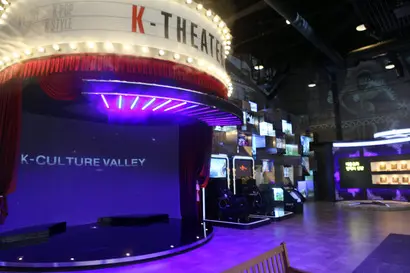
One Day Apart: Gyeonggi’s ‘Period’ on K-Culture Valley vs. Seoul Arena’s ‘Official’ Groundbreaking
A storm of backlash is brewing after the K-Culture Valley complex development project, which the Gyeonggi Provincial Government and CJ LiveCity were building together in Goyang, was effectively scuttled on the 1st by the province's notice of contract termination. As the long-cherished 1.8 trillion won project for northern Gyeonggi fell through, residents erupted in protest, joined by the Goyang city government and political circles in voicing their opposition.
On the other hand, the Seoul Arena project, touted as Seoul's first K-pop-focused complex cultural facility, has announced the resumption of its progress. On the 2nd, the day after Gyeonggi-do’s announcement, Seoul Arena held its long-delayed groundbreaking ceremony and commenced construction. This comes two years after the Seoul Metropolitan Government and Kakao signed an implementation agreement in April 2022 and established the special purpose company (SPC) ‘Seoul Arena Co., Ltd.’ to carry out the private investment project. The groundbreaking ceremony, originally scheduled for last December, had been postponed once. At the time, the Kakao board of directors approved the delay, stating, “Due to a significant increase in cost burdens, such as interest rates and construction costs, compared to what was initially anticipated at the start of the project, we will proceed after a precise re-estimation of costs and board approval to ensure responsible project execution.”
Both CJ and Kakao could not avoid the high interest rates and the explosive surge in construction and raw material costs that have emerged as the detonators at construction sites, but their results differed. CJ, burdened by the accumulation of long-term unfavorable factors, ultimately failed to resolve its conflict with the local government and had to abandon its dream of building a ‘cultural industry hub.’
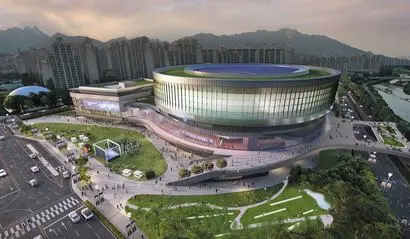
Who Will Bear the 700 Billion Won Spent? Legal Battle Expected
K-Culture Valley is a project to build a specialized K-pop performance venue with a capacity of over 40,000, along with hotels and studios, by investing 1.8 trillion won on a 326,400㎡ site in Janghang-dong, Ilsandong-gu. Since CJ LiveCity—a company established in late 2015 with capital from CJ ENM035760—was selected as the project developer, the path of K-Culture Valley has not been smooth. It took over four years just for administrative procedures related to permits and licensing, following three changes to the business plan. In the process, the project, which originally aimed for completion in 2020, was shifted to a 2021 groundbreaking and a June 2024 completion. Although it finally broke ground in October 2021, it faced repeated difficulties. Construction was halted last April after Korea Electric Power Corporation (KEPCO) notified them of a delay in power supply due to difficulties in providing high-capacity electricity, and the project was also impacted by public works to improve water quality in the Hallyucheon stream on the site.
The issue of liquidated damages resulting from the indefinite construction delays became the direct spark. The core of the project's collapse lies in the gap between the Gyeonggi Provincial Government and CJ LiveCity regarding the ‘liquidated damages,’ estimated at around 100 billion won. Liquidated damages are the compensation a private developer must pay if they fail to complete construction by the deadline.
CJ LiveCity had agreed to calculate these costs based on the number of days delayed after construction was finished. However, the final construction progress rate stalled at only 3%, and the liquidated damages grew to a level that made normal project execution impossible. Last October, when CJ LiveCity applied for project mediation to the Ministry of Land, Infrastructure and Transport’s Public-Private Joint PF Mediation Committee to extend the construction deadline, the ministry recommended at the beginning of this year that Gyeonggi-do reset the completion deadline and reduce the liquidated damages.
The gap between the two sides is also evident in their official positions. Kim Hyun-gon, Vice Governor for Economic Affairs of Gyeonggi-do, stated on the 1st, “Since signing the basic agreement in May 2016, we have cooperated to ensure the continued progress of the project, but we are terminating the agreement because the developer changed its stance by making unacceptable demands, such as for the reduction of liquidated damages, making an agreement impossible.” On the same day, CJ issued a press release stating, “Gyeonggi-do ignored the mediation recommended by the Ministry of Land, Infrastructure and Transport to both the province and our company, and only requested the imposition of liquidated damages and the resumption of arena construction,” signaling the cessation of the project.
Although the K-Culture Valley project is now in the process of termination, the conflict over ‘who is to blame’ continues. Opinions are divided between those who argue that a large-scale private project requires active administrative support and those who believe preferential treatment for specific companies should be avoided. Currently, CJ LiveCity is in internal discussions after being suddenly notified of the project’s cancellation. A CJ LiveCity official said, “As the Ministry of Land, Infrastructure and Transport’s mediation committee reviewed both sides’ positions and issued a mediation proposal, we understand that they concluded there were no grounds for the developer’s liability regarding the issues of liquidated damages or resetting the completion deadline.”
There are also predictions that this will lead to a legal dispute. Some view it as a situation where arguments over liability will persist, as the reasons for the project delay are linked to public matters such as electricity supply and water quality projects.
As public opinion boiled over the loss of expectations for direct and indirect economic effects of 33 trillion won over 10 years, including job creation, the Gyeonggi Provincial Government emphasized a plan to ‘maintain the original form.’ While the previous method involved the CJ side leasing Gyeonggi-owned land for development and operation, the new plan is to build the facility in cooperation with Gyeonggi Housing & Urban Development Corporation (GH) and then seek a private operator. Gyeonggi-do spokesperson Kang Min-seok stated, “We will push for a plan where prominent domestic and international entertainment companies like HYBE or AEG participate in the operations,” adding, “The door is also open for CJ to participate in operations.”
A CJ LiveCity official stated, “The Gyeonggi Provincial Government has not reached out for consultation, nor are there any ongoing discussions,” adding, “We will also conduct a legal review regarding the recovery of the 700 billion won already invested.”
Seo Yong-gu, a professor of business administration at Sookmyung Women’s University, said, “As the Korean culture industry grows, many local governments are pursuing projects with the private sector, but many are sluggish or become ineffective. Large-scale culture-related projects have a nature that makes them difficult to execute properly because the payback periods are long and they have strong non-commercial aspects.” He added, “There is also the implication that projects with local governments should be pursued with multiple alternatives in place.”