

[비즈한국] With the election for the new president of the Korean Pharmacists Association (KPA) about five months away, instances of suspected violations of election management regulations are already being identified. As candidates are repeatedly receiving ‘warnings’ every election cycle, critics argue that the KPA’s lack of proactive enforcement of these regulations has left candidates desensitized to such misconduct.
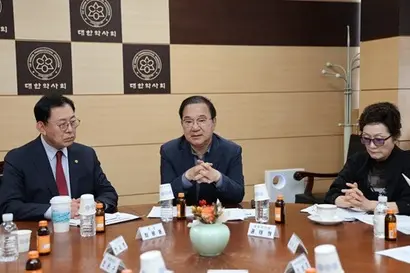
Chung-Ang University Pharmacy Alumni Association violates neutrality, convenes again to discuss candidates
According to the pharmacy community, some senior advisors of the Chung-Ang University Pharmacy Alumni Association met last month to discuss matters such as the consolidation of candidates for the KPA presidency. Candidates hailing from Chung-Ang University's pharmacy school include Gyeonggi-do Pharmacists Association President Park Young-dal and current KPA President Choi Kwang-hoon. Reportedly, the meeting featured voices advocating for the support of senior and incumbent President Choi Kwang-hoon, as well as concerns that it is inappropriate for an alumni association to intervene in such a manner before the election begins. Previously, in May, a controversy arose when the ‘Sungkyunkwan University Pharmacy Development Committee’ announced during the alumni association’s general meeting that it would recommend former Seoul Pharmacists Association President Kim Jong-hwan as a candidate.
The KPA strictly prohibits election interference by alumni associations. According to the KPA and branch president election management regulations, acts of supporting or endorsing a specific candidate by the main association, branches, sub-branches, alumni associations, academic societies, the Institute of Pharmaceutical Policy, the Korean Pharmaceutical Information Center, or other organizations designated by the election management committee are forbidden. The KPA also designates organizations bound by neutrality requirements through meetings. Chung-Ang University's pharmacy school is considered one of the largest organizations in the pharmacy community.
While individual support for candidates by alumni is not problematic, the KPA maintains that discussing which candidate to nominate at an alumni association level constitutes election interference. A KPA official explained, “For example, we want to prevent actions like ‘Let’s group these people together and coordinate candidates.’ It’s not that posting opinions on a bulletin board is wrong, but we are imposing neutrality obligations to prevent actions like ‘Our school should focus on pushing this candidate.’”
Implicitly promoting a candidate while criticizing the current leadership?
Meanwhile, another organization bound by neutrality, the Korea Institute of Pharmacist Academic Management, has been suspected of intentionally maligning one candidate to promote another via YouTube. This organization has a history of receiving warnings for violating neutrality in previous elections. The information section of the YouTube channel created by the institute states: “We aim to provide easy-to-understand information about medicine, academic insights on health functional foods and cosmetics available at pharmacies, and selection guide tips.”
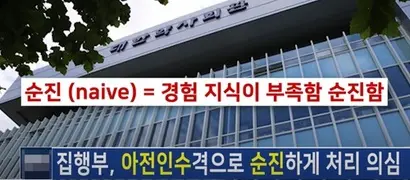
In reality, however, alongside health and medicine videos, they also cover key issues in the pharmacy community such as the Nursing Act, herbalists, and drug shortages. In videos produced in a news format, the focus is largely on criticizing the responses of relevant government ministries and the KPA itself. Six such videos have been uploaded in the past three weeks alone, and they have been criticized for being structured in a way that appears to promote a specific candidate.
Some videos include statements from the branch to which a specific candidate belongs or feature the candidate's own voice at the end. That candidate has been actively voicing opinions on various issues, such as the professional conflict with herbalists. Consequently, because the videos contain heavy criticism of the current KPA, critics point out that this amounts to an indirect attack on the other candidate, incumbent President Choi Kwang-hoon. Recently, a video consisting solely of the major initiatives and meetings conducted by that same branch was also posted.
The Central Election Management Committee stated it is monitoring the channel. A KPA official said, “That channel was also cautioned in the last election for videos that seemed to hint at or incite support for a specific candidate. They are a neutrality-bound organization, but talk has emerged within the committee recently that they seem to be strongly supporting a specific candidate. We have to base our actions on evidence, but it seems likely that measures such as a caution will be discussed.”
KPA: “Difficult to sanction without investigative powers… we will prevent repeated violations”
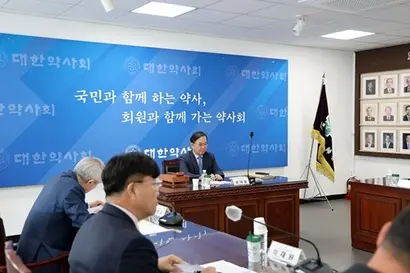
Despite the existence of election management regulations, candidates and organizations are repeatedly receiving ‘warnings’ every election. Because violations are so frequent, the word is that campaigns often prioritize the reasoning that “If the opposing camp is doing it, shouldn't we do it too?” In the 40th presidential election held in 2021, all candidates received at least one warning. Candidate Choi Kwang-hoon traveled with individuals bound by neutrality despite requests from the Central Election Management Committee and engaged in SNS campaigning, which is prohibited by regulations. Candidate Kim Dae-eup appealed for support in group chats by mentioning his candidate number and name. Both candidates were issued ‘warnings’ and fines amounting to one-third of the candidate deposit.
Organizations have also deviated from the rules. As previously mentioned, the Chung-Ang University pharmacy school was warned in the previous election for sending text messages conducting opinion polls among alumni to select a candidate. At the time, the Central Election Management Committee stated, “To prevent overheated and murky elections, we plan to send official letters to pharmacy alumni association heads and neutrality-bound organizations to ensure compliance and guide them so that acts of supporting or endorsing specific candidates do not occur.” Furthermore, Election Committee member Jeon Young-gu, despite being bound by neutrality, was confirmed to have posted messages supporting a specific candidate in a group chat composed of alumni, leading to a decision to sanction him for violating his neutrality obligations.
Some point out that candidates have become desensitized to ‘warnings,’ and because there is a lack of proper punishment, it is difficult to instill a sense of alarm. There are also voices claiming that the KPA is not acting proactively to shed the image of an ‘alumni election.’ In the last election, even though one candidate received three warnings, they were not disqualified from running. At the time, that candidate claimed, “I did not receive any notice, documents, or opportunity for explanation regarding the third warning. According to the regulations, a warning must be notified in writing to the concerned party.”
Regarding this, a KPA official stated, “It is not easy to know whether an individual or organization was involved when the KPA lacks investigative powers. Because of this, we were very cautious about disqualifying anyone just because they reached three warnings,” adding, “As we are all members of the same pharmacy community, there were instances of mutual recognition or exploitation, and we couldn’t apply the regulations strictly. Consequently, (the public) seems to judge that election order has become chaotic. This time, we will ensure that precedents of ignoring the Election Committee’s decisions are not repeated.”