

[비즈한국] As the conflict between the government and the medical community struggles to find a breakthrough, the position of the Healthcare Policy Office Chief—who oversees health and medical policy—has been replaced twice. Following former chief Im In-taek and former chief Jeon Byeong-wang, Jung Yoon-soon, former Social Welfare Policy Office Chief, was appointed as the new Healthcare Policy Office Chief effective the 27th of last month. Chief Jung has previously held key positions such as Director General of Health Insurance Policy and Social Welfare Policy Office Chief, spearheading various policies. With the medical community viewing the honorary retirement of former chief Jeon Byeong-wang critically, all eyes are on whether Chief Jung can successfully open the door to dialogue between the government and the medical sector.
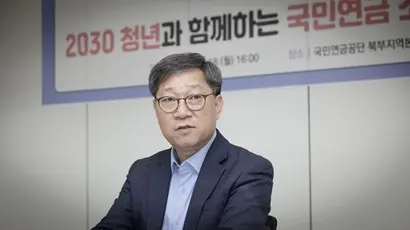
Character
Healthcare Policy Office Chief Jung Yoon-soon, born in 1969, is 56 years old. Born in Gimcheon, Gyeongsangbuk-do, and a graduate of Gimcheon High School (35th graduating class), he hails from the TK (Daegu-Gyeongbuk) region. He graduated from Korea University with a degree in International Trade (Class of '87) and entered public service by passing the 39th Public Administration Examination. He is one cohort junior to former chief Jeon Byeong-wang (38th exam). Chief Jung is known for his high standing within the Ministry of Health and Welfare, frequently cited for promotion during reshuffles, and is regarded as a quintessential bureaucrat.
Chief Jung has been garnering attention for his rapid rise under the current administration. In August 2022, while dispatched to the Korea National Institute of Health under the Korea Disease Control and Prevention Agency for an exchange program, he was unexpectedly tapped as the Director General of Health Insurance Policy—a move considered a surprise. The position of Director General of Health Insurance Policy is considered one of the "Big 4" key posts within the Ministry, alongside the Welfare Policy Officer, Pension Policy Director, and Healthcare Policy Officer. Roughly a year later, in September of last year, he was promoted to Social Welfare Policy Office Chief, a higher-ranking position than the Population Policy Office Chief initially rumored for him.
Career
Healthcare Policy Office Chief Jung Yoon-soon has served in various roles, including the Disease Policy Division and Basic Medical Security Division, before becoming Director of the Medical System Division, Director of the Medical Resources Division, International Cooperation Officer, Dispatch to the EU Embassy, Director of the Senior Policy Division, Director of the Population Policy Division, Director of the Healthcare Policy Division, Director of the Insurance Policy Division, Advanced Medical Support Officer, and Director of the Research Planning and Coordination Department at the Korea National Institute of Health. Most recently, he served as the Director General of Health Insurance Policy and Social Welfare Policy Office Chief.
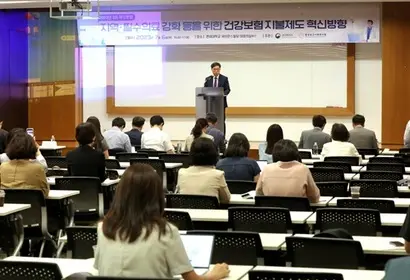
While serving as the Director of the Medical Resources Division, Chief Jung led the introduction of an integrated evaluation and accreditation system for medical institutions. He established an integrated evaluation framework that unified various disparate assessments—including emergency medical center evaluations, provincial hospital evaluations, traditional medicine institution evaluations, dental institution evaluations, and cancer screening institution evaluations—that had previously been conducted separately. This move addressed criticisms that redundant evaluations imposed significant administrative burdens on hospitals beyond their clinical duties. Furthermore, he led the process of transitioning the mandatory medical institution evaluation method into an accreditation-based system.
During his tenure as the Advanced Medical Support Officer, he promoted projects in alignment with the government's "Basic Plan for Advanced Regenerative Medicine and Advanced Bio-Pharmaceuticals (2021-2025)." This plan focuses on investing 100 billion KRW annually into R&D for the advancement of regenerative medicine and establishing a national management system for clinical research in this field. Chief Jung participated in projects such as the designation of institutions authorized to conduct advanced regenerative medical procedures.
Capability
Interest is focused on whether Chief Jung can broker an agreement this time, given that he is a figure who has experienced the government-medical conflict before. From November 2016 to February 2019, as the Director of the Healthcare Policy Division, he was a key government official involved in the negotiations that led to the joint government-medical agreement. After Choi Dae-zip took office as the President of the Korean Medical Association in 2018, discussions resumed, a consultative body was formed, and within four months, in September, a joint agreement was announced covering the phased implementation of "Moon Jae-in Care" (a policy to enhance health insurance coverage focused on essential medical care).
The joint agreement included four main items: △ The government and the medical community will fully discuss and phase in the policy to strengthen health insurance coverage centered on essential medical services with medical necessity for the public health; △ Mutual empathy regarding the current low-fee structure, and the initiation of discussions on a reasonable fee structure that allows for the provision of quality medical services based on sincerity between the government and medical community through a consultative body meeting on October 25; △ Gathering and implementing medical community feedback to strengthen primary care, such as expanding education, counseling, and in-depth consultations; and △ Joint efforts to eradicate unlicensed medical practices and foster an environment for medical self-regulation.
Critical
Chief Jung faced controversy ahead of the 2024 medical care expense contract negotiations for excluding the Federation of Korean Trade Unions (FKTU) and the Korean Confederation of Trade Unions (KCTU) from the selection process for the Fiscal Operation Committee. At the time, Jung, as Director General of Health Insurance Policy, clarified, "It was not an intentional exclusion; we judged that it was not appropriate to grant recommending rights to organizations that did not comply with related obligations, such as submitting accounting books. Even for unions under the FKTU or KCTU, we sent official requests for recommendations to those that had submitted accounting records to the Ministry of Labor." Ultimately, unions under the KCTU that failed to submit their ledgers were not included.
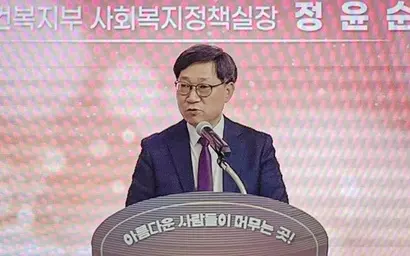
During his time as the Social Welfare Policy Office Chief, he faced criticism over the National Pension Comprehensive Operation Plan, which contained 24 scenarios. The plan lacked specific figures such as premium hike rates, and experts raised concerns about the feasibility of the proposed differential premium increases by generation. At the time, the Ministry of Health and Welfare explained, "In past reform processes, the government proposed premium rates or income replacement levels and tried to persuade the public, but success was not achieved. We thought it would be more desirable to build a plan together with the public through a process of public discourse rather than the government proposing specific figures," but this failed to silence the criticism.
Challenges
The medical community views the honorary retirement of Chief Jung's predecessor, Jeon Byeong-wang, with a cynical eye. The news of Jeon’s retirement was suddenly revealed during a hearing on the 26th of last month. When Democratic Party lawmaker Nam In-soon asked, "Is it true that you are taking honorary retirement at the end of this June? What is the reason?" former Chief Jeon replied, "Applications for honorary retirement are possible until the end of June. There is no special reason." Following this statement, criticism erupted from the medical community, with remarks such as, "Are you running away without taking responsibility after causing such a situation?", "You aren't even accepting the resignations of trainee doctors, yet you take honorary retirement yourself?", and "A ban on honorary retirement should be issued for the Ministry of Health and Welfare."
The Healthcare Policy Office Chief is a role that oversees health and medical policies, including planning, supply and demand of medical personnel, medical dispute mediation, medical institution evaluation, and traditional Korean medicine policy. Since the inauguration of the Yoon Suk-yeol administration, two changes have occurred in about two years due to major issues like the Nursing Act and the increase in medical school admissions. There was even a four-month vacancy following the suspension of former chief Im In-taek. Former Chief Jeon Byeong-wang handled more practical tasks than the Minister or Vice Minister, including briefing the Central Disaster and Safety Countermeasures Headquarters. As the medical community has kept a close eye on the statements of the leadership at the Ministry of Health and Welfare since the conflict began, Chief Jung faces the challenge of overcoming the medical community's prejudice and eliciting their active participation.
Currently, the medical community is not participating in the Presidential Special Committee on Medical Reform. The government appealed today, saying, "Please participate in the Special Committee on Medical Reform, a social consultative body, even now, and propose reasonable policies." As of the 15th, the deadline set by the government for teaching hospitals to finalize and report the number of vacant spots for trainee doctors, it was found that a minimal number of trainee doctors had expressed their intent to return. While the "Big 5" hospitals—Seoul National University, Asan Medical Center, Severance, Samsung Medical Center, and Seoul St. Mary's Hospital—sent messages asking for confirmation of resignation, the response rate itself is negligible.