

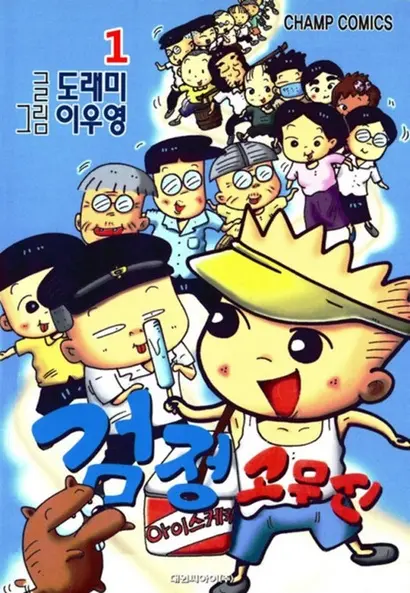
[비즈한국] Four years have passed since the news of the copyright dispute over the popular cartoon 'Rubber Shoes' (Gumjeong Gomusin) first grabbed public attention. In the summer of 2020, it was revealed that the original creators of the cartoon had been excluded from secondary derivative business ventures by their publisher. About three years later, in March of last year, the late author Lee Woo-young, who had been engaged in a legal battle with the publisher, passed away. The urgency of establishing measures to protect the rights of creators became a focal point, and the National Assembly accelerated the legislation of the 'Fair Distribution of Cultural Industries Act' (hereinafter the "Cultural Distribution Act"). Although the bill was passed by the plenary session of the relevant committee with bipartisan agreement, intended to resolve the imbalances arising behind the rapid growth of the domestic content industry, it was scrapped with the expiration of the 21st National Assembly. The relevant legislation is expected to be pushed forward once again in the 22nd National Assembly. However, addressing concerns regarding redundant regulations—a basis for pushback from companies—remains a task to be resolved. How far have the alternatives to prevent a recurrence of the 'Rubber Shoes' situation come?
National Assembly Begins Listening to Creators' Opinions
Moves to protect the rights of content creators have recently begun in the National Assembly. According to the National Assembly and the industry, the Ministry of Culture, Sports and Tourism (MCST) and the Korea Communications Commission (KCC) are currently in discussions to re-introduce the Cultural Distribution Act, which was scrapped in the previous session. The core of the bill is to prevent various unfair trade practices occurring in the cultural industry. It defines 10 types of unfair acts, including coercing the transfer of intellectual property rights and arbitrary changes to production direction or the designation and replacement of production personnel. Once the MCST drafts a new proposal, it is expected that legislation will be pushed forward in earnest following coordination with the National Assembly's Culture, Sports and Tourism Committee.
Legislative activities related to the cultural industry have already commenced. According to the National Assembly's Bill Information System, on the 25th of last month, Rep. Kim Seung-su of the People Power Party, a member of the Culture, Sports and Tourism Committee, proposed an amendment to the 'Act on the Guarantee of Artists' Status and Rights.' The crux of the amendment is to allow the Minister of Culture, Sports and Tourism to impose fines of up to 3% of sales if corrective orders for unfair practices are not fulfilled within the given period. It includes new provisions that establish grounds for effective sanctions against rights infringement and unfair practices, such as refusing, delaying, or limiting appropriate profit distribution to artists. The Cultural Distribution Act is an alternative proposal created by reflecting the bills introduced by former Democratic Party lawmaker Yoo Jung-ju (2020) and Rep. Kim (2022).
The issue of 'ignoring corrective orders' is not limited to the fields of cartoons and webtoons, but is a matter particularly closely related to the 'Rubber Shoes' case. After the 'Lee Woo-young Author Case Countermeasure Committee' was formed, centered around cartoonists' organizations, they demanded an official apology and the relinquishment of copyright shares from Jang Jin-hyuk, CEO of Hyungseul Publishing Group. The MCST, which conducted a special investigation, issued a corrective order to the company based on the 'Artists Rights Protection Act' and had the Korea Copyright Commission cancel Jang's registration as a co-copyright holder of the 'Rubber Shoes' characters.
However, the publisher missed the deadline of mid-September and has not fulfilled the corrective order to this day. According to Rep. Kim's office, the publisher has only paid the 2.5 million won fine imposed for failing to comply with the order. Rep. Kim's office stated, "Although the Cultural Distribution Act was discarded due to the expiration of the 21st National Assembly, we plan to push for it again and re-introduce it."
Even after author Lee Woo-young's death, the conflict between his bereaved family and the publisher continues. Hyungseul N has appealed against the court's judgment ordering them to pay 74 million won in damages for copyright infringement plus interest. They are continuing legal battles with the bereaved family, including Lee's young children who inherited his shares.
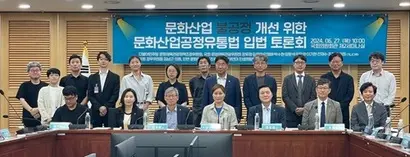
A legislative discussion on the Cultural Distribution Act was held at the National Assembly late last month. Present at the event were representatives from six cultural industry sectors, including webtoon and illustration artists and film professionals, as well as author Lee Woo-jin, a co-creator of 'Rubber Shoes' and brother of the late Lee Woo-young. The discussion pointed out the reality of the cultural industry, which lacks legal safeguards due to unclear contract terms and copyright/profit-sharing structures. Rep. Kang Yu-jung of the Democratic Party, a member of the Culture, Sports and Tourism Committee who hosted the discussion, stated, "I will supplement the amendment based on the opinions expressed today to resolve difficulties in the legislative process." As the promotion of a 'second Cultural Distribution Act' requires coordinating positions between ministries, Rep. Kang's office is currently in the stage of listening to various stakeholders.
To Clear the National Assembly Hurdle for the 'Second Cultural Distribution Act'...
The mountain that the 'second Cultural Distribution Act' must climb to pass the National Assembly hurdle is high. Since the bill conditionally passed the plenary session of the Culture, Sports and Tourism Committee at the end of March last year, it has failed to overcome backlash from related ministries and companies. Related ministries, including the Korea Communications Commission and the Ministry of Science and ICT, strongly raised issues regarding the possibility of overlapping regulations with the 'Broadcasting Act,' the 'Internet Multimedia Broadcasting Business Act,' and the 'Telecommunications Business Act.'
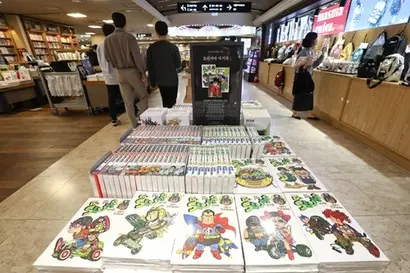
The core of the opposition's argument is that the scope of regulation is overly comprehensive. The bill's scope includes not only publishing and cartoons but also related industries such as broadcast video, music, and games. The fact that broadcast video businesses are already subject to prohibited act regulations under existing laws has become a point of contention. The argument is that if the MCST, which holds the licensing power, promotion, and budget for the cultural industry, also has the power to regulate directly, issues of neutrality or fairness could arise. A production company official said, "When setting compensation conditions, one cannot help but consider realistic aspects like popularity, and there is a great potential for it to shrink the industry. The bill overlooks some of these realities."
As the possibility of negative impacts on the industry emerged, creators' groups such as artists' associations also called for a review of the bill late last year. Consequently, suggestions are being made that the new bill needs to be structured in a way that blocks the possibility of overlapping regulations and minimizes the anxiety of the webtoon ecosystem, which consists of 'platform-production company-artist.'
However, some see the industry's concerns as excessive. A National Assembly official stated, "General unfair practices are under the jurisdiction of the Fair Trade Commission (FTC) according to the Subcontracting Act, and even if the MCST receives a report and becomes aware of them, it is a principle that the FTC takes priority action. The MCST reviews the case again in areas the FTC cannot cover. The purpose is to eliminate blind spots in special unfair cases in the cultural industry," adding, "As the cultural industry is intertwined with various platforms and broadcasts, if you exclude all businesses that overlap with existing regulations, the meaning of the bill will fade."