

[비즈한국] There is a saying, "The value of 'together'." This phrase appeared in a corporate image advertisement about ten years ago. It is a brilliant tagline, implying that the power of being together can change the world. Being together signifies empathy or communication, and with this strength, a new paradigm can be created. Art also holds value when it earns the empathy of the people. Empathy arises from the zeitgeist and a universal language of art. The 'Korea Art Support Project' also aims to present the thoughts of various people through an accessible art language. As we reach Season 10, we support artists who strive to put into practice Confucius’s idea that "good art must be easy to understand."
Painting is the oldest genre in the history of art. The earliest human expressions identified to date are paintings, as evidenced by prehistoric cave murals. Since the history of the Altamira cave paintings—known as the first paintings of humanity—dates back approximately 35,000 years, painting is indeed that old.
There was a period toward the end of the 20th century when the art world strongly debated the extinction of painting. The diversification of materials and the destruction of art genres gave rise to this discourse. In an era of excessive expression, the standing of painting was admittedly weak at the time. In particular, the development of video media provided justification for the crisis in painting.
Nevertheless, painting has endured such a long span of time and continues to firmly hold the forefront of art to this day. What is its power?
For a very long time, painting maintained the foundation of the mural. It was a method that began in caves and decorated the walls of buildings. As the narrative language used to contain stories in these spaces combined with religion, it was able to develop solidly.
It was around the Renaissance that painting became independent as the fixed plane we commonly know today. The invention of oil paint became the driving force behind the golden age of painting. The person who systematically established the oil painting technique was Jan van Eyck (1395–1441), a representative artist of Flemish naturalism. With the invention of oil paint, painting could achieve more delicate expressions and realistic effects.
The oil painting technique evolved through the Baroque and Realism periods, creating diverse expressive powers, and blossomed during the Impressionist era. Among the various oil techniques developed throughout these periods, the 'impasto technique' and 'wet-in-wet technique' maximize the strengths of the material.
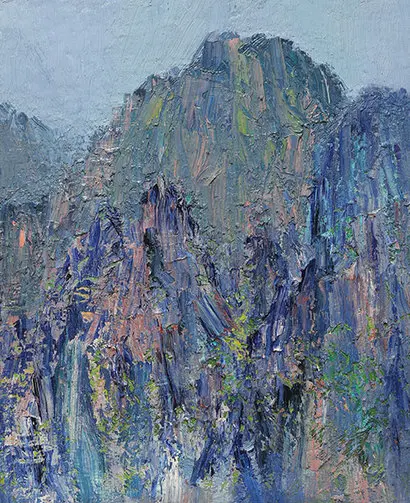
The impasto technique, which fully demonstrates the properties of oil paint, was frequently used by the Baroque master Rembrandt in his later works. It was effective in bringing out the depth of a work by applying thick layers of paint. The artist who pioneered a new world of painting with this technique was the Post-Impressionist painter Vincent van Gogh. He used this technique to create passionate and kinetic canvases. Lucian Freud, who created the greatest figurative paintings of the 20th century, is also a successful example of using the impasto technique.
The wet-in-wet technique, where paint is applied to the canvas and another color is added while the first is still wet, was used effectively by the Impressionist painter Renoir. His brilliant colors and soft textures were thanks to this technique.
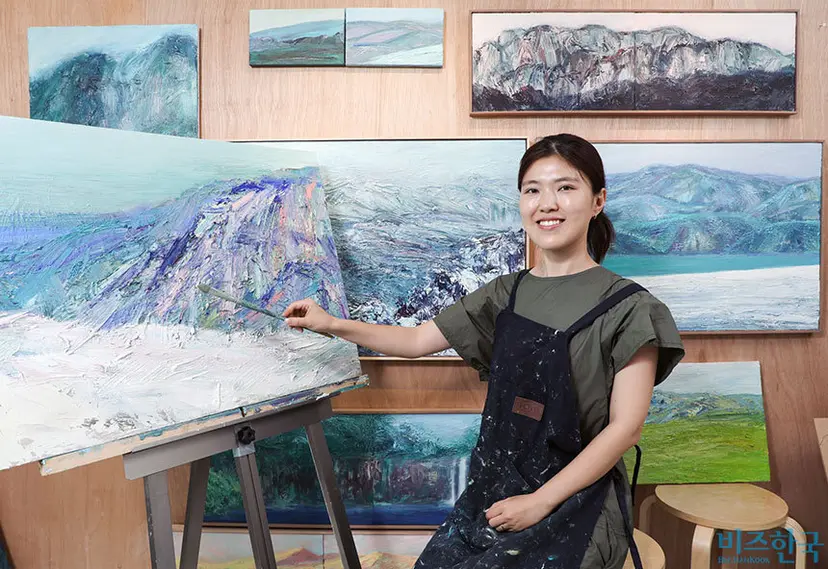
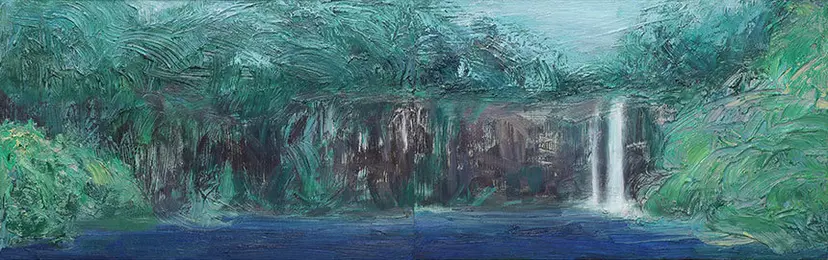
Both of these techniques remain beloved in contemporary painting. Lee Ju-hee also faithfully demonstrates the basics of oil painting through these techniques. She creates vibrant canvases using nature as a motif. She abstractly reconstructs nature gained through her travels. Through the impasto technique, she shows the rough, textured charm of brushstrokes, and through the wet-in-wet technique, she reveals profound colors that maximize the effects of spontaneity. This is why Lee Ju-hee's paintings, which exude the true "flavor" of painting, are so welcome.