

[비즈한국] Times have changed. This is the phrase that comes to mind while watching the Wavve original variety shows ‘Merry Queer’ and ‘His Man’. It was back in 2010 that a certain organization ran an advertisement in a daily newspaper stating, "My son who became gay after watching 'Life is Beautiful,' if he dies of AIDS, SBS034120 takes responsibility!" because a gay character appeared in a drama. Ten years prior, in 2000, entertainer Hong Seok-cheon had to step down from all broadcasting programs after coming out. As someone who watched that process vividly, the emergence of variety shows like ‘Merry Queer’ and ‘His Man,’ which feature ordinary people coming out to the world, is truly astounding.
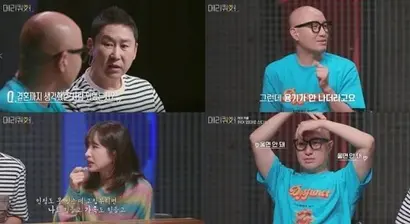
‘Merry Queer’ is dubbed "Korea's first real coming-out romance program" and showcases the dating and marriage perspectives of sexual minority couples, including gay men, lesbian women, and FTM (Female to Male) transgender-bisexual women couples. It is an observational show where broadcasters Shin Dong-yup, Hong Seok-cheon, and Hani act as MCs to look into the daily lives of three couples.
‘His Man’ is a variety show that claims to be "Korea's first dating reality show for men." It features participants living together for a set period in a lodging named ‘Namui Jip’ (Someone Else's House), and can be described as a gay version of ‘Heart Signal’. Six participants appeared in the first episode, and two more were added by the fourth episode. Both programs have adopted the familiar formats of existing variety shows. Even viewers who might have felt "pupillary tremors" early in the episodes quickly adjust to the sweet displays of affection between the same-sex couples.
While ‘Merry Queer’ and ‘His Man’ share the commonality of being variety shows featuring ordinary sexual minorities that began airing around the same time on the same OTT platform, their focus differs. ‘Merry Queer’ focuses on the ‘lives’ of the couples, such as preparing for a housewarming party or visiting parents with a partner. It attempts to show that their lives, which others call "different," actually have more "similarities" than "differences" when you get to know them. While there are certainly differences, there are just as many similarities, and the more you watch, the more it naturally shows that various forms of sexual minorities and their couples are members of our society.
In that sense, one should pay attention to a question MC Hong Seok-cheon casually threw at Hani in the first episode: "Do you have any friends who are like that (queer)?" When Hani replied, "No, actually I don't have any around me," Hong Seok-cheon’s joking retort was the highlight: "You're not very observant. There must have been some." As Hani laughs in surprise, a subtitle reading ‘belated realization’ appears on screen; for a moment, I flinched too. That's right, there could be people around me, but I just thought there weren't any!
‘Merry Queer’ is significant for its attempt to see those who exist around us but have been invisible, just as they are. Whether one likes it or not, it shows the fact that they clearly exist as members of society and desire what they rightfully deserve as members of that society. Whether it's using a swimming pool locker room, finding a wedding planner to prepare for a wedding, or filing a marriage registration, it serves as an opportunity to reflect on how things that are easy for some are obstacles for others. Matching this perspective and content, the tone of the program is somewhere between variety and documentary. Provocative editing or stir-causing tactics are hard to find.
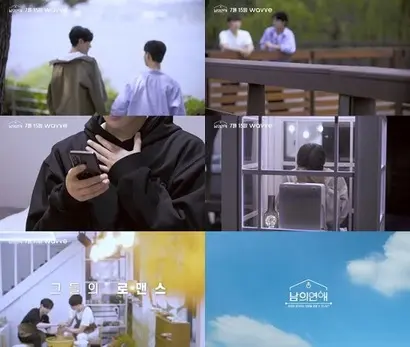
‘His Man’ can be approached more lightly (?) than ‘Merry Queer’. In the ‘Namui Jip’ filled only with male participants, they focus on finding a partner according to their feelings, just like any other heterosexual dating reality show. On the first day of moving in, they cannot reveal personal details like age or occupation, so they express interest based solely on feelings like attraction, and the men's hearts fluctuate depending on who likes whom.
Unless you are someone who is shocked by the very fact that a man is attracted to a man, you will likely find ‘His Man’ just as entertaining as any common dating reality show. Not only do the participants’ ‘heartwarming visuals’ play a part, but unlike ‘Merry Queer,’ where actual couples appear and show affection naturally, this show is filled with the scouting phase just before a spark, allowing those accustomed to heterosexual dating to watch it comfortably. It also stands out for naturally breaking the prejudice that ‘sexual minorities are sexually promiscuous.’
Since the popularity of Watcha’s original series ‘Semantic Error,’ works dealing with BL (Boys Love) content have been frequently seen on OTT platforms. BL dramas such as the youth romance period piece ‘Chunjeong Jiryeon’ (Watcha) and the cohabitation romance between a Hallyu star and a chef, ‘To My Star’ (TVING), have gained popularity, and subsequent works like ‘The New Employee,’ ‘Unintentional Love Story,’ and ‘Oh! My Assistant’ are being produced one after another.
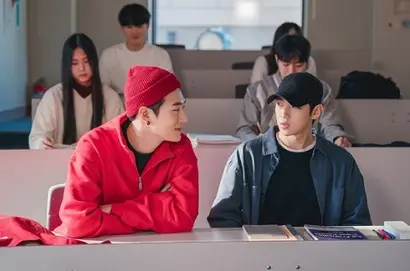
The rush to produce BL content might be proof that society is changing, but it could also be a flash in the pan limited to OTT platforms, which have somewhat higher barriers to entry. In that sense, I think the appearance of the variety shows ‘Merry Queer’ and ‘His Man,’ which feature ordinary people rather than actors in dramas or films, will play a significant role in broadening the base of public awareness regarding sexual minorities.
In the 2019 drama ‘Search: WWW,’ Bae Ta-mi (Im Soo-jung) used the word ‘lover’ (ae-in) in front of a junior colleague at her company, only to be chided for being old-fashioned, as ‘everyone uses girlfriend/boyfriend (yeo-chin/nam-chin) these days.’ Back then, Bae Ta-mi replied, "I was being considerate because I didn't know if they were gay, bi, or straight." Now that ‘Semantic Error’ is popular and programs like ‘Merry Queer’ and ‘His Man’ have emerged, perhaps terms like ‘ae-in’ or ‘yeon-in’ (partner/lover) will be used more often than ‘yeo-chin’ or ‘nam-chin’ in the future, just as Bae Ta-mi said?
Even for those who are uncomfortable with the existence of sexual minorities, I think they should keep this in mind: the world is changing every day. Even if the change isn't to your liking, you cannot turn the world back. Come to think of it, while watching the two programs, I think I was more surprised by the men’s makeup skills, where they freely used even makeup brushes, and the flamboyant tattoos they didn't bother to cover up with bandages, rather than their displays of affection. I guess I’m just a grumpy old person after all.
Who is the writer Jung Soo-jin?
I have worked across various magazines, covering and writing about movies, travel, and popular culture. I don't want to fall behind trends, but I've become an old-school person who predicts obvious clichés in the next scene while watching the latest dramas. I am currently trying to regain my sense of intuition while drifting through the vast OTT world, and my current wish is for an integrated OTT subscription plan.