

[비즈한국] The relationship between Turkey and the United States, which many thought couldn't possibly get any worse under the Trump administration, is spiraling toward its nadir with the Biden administration. Since the White House announced on April 25 that it would commemorate the Armenian Genocide that occurred 106 years ago, both the Turkish government and its people have been reacting with fierce backlash. Just two years ago, when the U.S. canceled the export of 100 F-35 fighter jets to Turkey due to its acquisition of the S-400 anti-aircraft missile system, many expected that the two countries would eventually resolve their conflict through negotiations—an expectation that has proven to be spectacularly wrong.
It is understandable, as the U.S. has treated Turkey as one of its most important allies in the Middle East, alongside Israel and Saudi Arabia. In some instances, Turkey was even treated with higher regard than Israel or Saudi Arabia. While Saudi Arabia has not yet been able to acquire the F-35A fighter jet—a weapon reserved for key U.S. allies—and Israel only signed a contract for about 24 to 40 units, Turkey was included in the development process from the beginning and successfully placed an order for 100. This was the reward for Turkey, as a NATO member, acting on behalf of the U.S. to counter the former Soviet Union and anti-American nations in the Arab world.
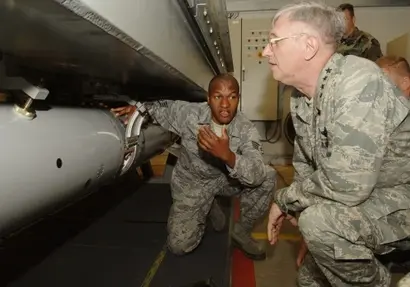
However, the purchase of 100 F-35As, which symbolized a powerful partnership, became the detonator that triggered the explosion of conflict. In August 2018, when U.S. President Trump signed the National Defense Authorization Act that prohibited F-35A exports to Turkey due to its adoption of Russia's S-400 missile system, Turkey strongly opposed it, and the relationship between the two nations has since faced an irreversible catastrophe.
Of course, there have been attempts to bridge the gap between Turkey and the U.S. For example, in February, the Turkish government signed a contract with a large U.S. law firm to lobby for the approval of F-35A sales, and the Turkish defense minister declared that the S-400 would only be used when absolutely necessary. However, the U.S. firmly rejected these proposals and openly addressed the issue of the Armenian Genocide, which touched a nerve with the Turkish public. Naturally, the U.S. refusing to negotiate and publicly wounding Turkey's pride does not mean that Turkey can strike back at the superpower that is the U.S. This is because Turkey's national strength has weakened significantly, with its economy in a deep slump even before the COVID-19 pandemic and its tourism industry suffering a devastating blow.
However, the U.S. cannot simply hammer Turkey at will either. The U.S.'s Achilles' heel is the approximately 50 B-61 tactical nuclear bombs located at the Incirlik Air Base in Turkey. Since the 1960s, the U.S. has maintained a nuclear sharing system through an organization called the Nuclear Planning Group (NPG), which stations U.S. nuclear bombs in five NATO countries, one of which is Turkey. In the event of a nuclear war, the Turkish Air Force's F-16s could be equipped with these U.S.-managed bombs to launch a nuclear strike on behalf of the U.S.
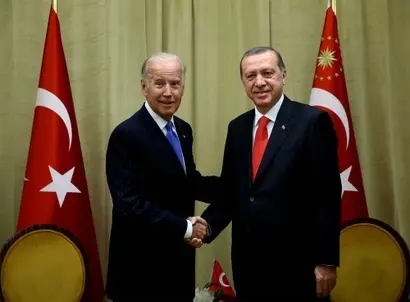
But with relations so strained, this 'nuclear sharing' system cannot function properly. Yet, simply removing the nuclear weapons would lead to inevitable backlash from the Turkish public, and leaving them as is makes the U.S. extremely uneasy. For this reason, in 2019, then-Vice President Biden and former Secretary of State Mike Pompeo led delegations to meet with Turkish President Erdogan, but without any significant results. It appears this ambiguous situation—where the U.S. can neither reconcile with Turkey nor remove the weapons—will continue for the foreseeable future.
The problem lies with South Korea, which aspires to an 'Asian version of the nuclear sharing group.' In March, the Chicago Council on Global Affairs (CCGA) published a research report suggesting that South Korea, Japan, and Australia should form an Asian nuclear sharing group similar to NATO's NPG. However, as the U.S. experiences the difficulties of the nuclear sharing situation in Turkey—unable to withdraw or maintain it properly—the possibility of the U.S. approving a new Asian nuclear sharing group has become very slim.
So, is there a way to respond to North Korea's nuclear threats other than an Asian nuclear sharing group? In the short term, we must acknowledge the limitations of not being able to use nuclear weapons and equip ourselves with more non-nuclear capabilities to counter them. If the next administration continues to invest in the powerful anti-nuclear capabilities established during the Park Geun-hye and Moon Jae-in administrations without reduction, not only will it help deter North Korea's nuclear weapons, but it will also serve as a favorable bargaining chip in the long, drawn-out negotiations for an Asian nuclear sharing agreement.
Separately, there is a need for South Korea and the U.S. to conceive creative nuclear strategies that benefit both sides. Currently, a method being discussed involves South Korean soldiers and weapons visiting the U.S.—where tactical nuclear weapons are already deployed—to practice operating them, rather than deploying U.S. tactical nukes in Korea. If South Korea's F-15K or F-35 fighter jets train to carry and use these nuclear weapons at U.S. bases, it would establish a concept where the South Korean military could use U.S. nuclear weapons in an emergency.
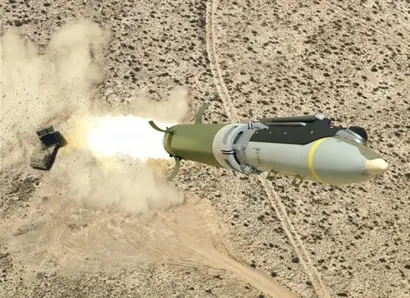
A more progressive approach would be to research whether U.S. tactical nuclear weapons, which are currently only usable by fighter jets, could be applied to other weapon systems. The B-61 tactical nuclear bomb is essentially a GPS-guided weapon, and its guidance system is very similar to the JDAM or SDB guided bombs currently operated by the South Korean military. Recently, the new GLSDB rocket system developed by Boeing can load SDB bombs directly; therefore, it is worth considering the development of ballistic missiles capable of carrying the B-61 tactical nuclear bomb just as a fighter jet would.
While sharing U.S. nuclear weapons through a sharing agreement is the most realistic path to nuclear armament that South Korea can contemplate, the issues seen in the Turkey case make the success of such an agreement highly unlikely. It is good to have high goals, but we must also realistically pursue the best possible efforts within our current capabilities and conditions.