

[비즈한국] The resumption of short selling is just one week away. Short selling is an investment strategy where one borrows shares they do not own, sells them, and then buys them back at a lower price to return them when the stock price falls, thereby profiting from the difference. Short selling, which had been banned since March 2020 due to the market crash caused by COVID-19, is set to be lifted after 14 months. Starting May 3, it will be limited to stocks included in the KOSPI 200 and KOSDAQ 150 indices. A new personal stock lending system designed to increase accessibility for retail investors will also be implemented.
Currently, there is a clash of opinions: some argue it will shock the overall market, while others dismiss such concerns as excessive. Jung Eui-jung, representative of the Korea Stock Investors Association (KSA), a group for retail investors, is a prominent figure worried about market shocks. He argues that once short selling resumes, foreign and institutional investors will flood the market with sell orders, triggering a price collapse and causing damage to retail investors. He also claims the new personal stock lending system is insufficient to protect individual investors. I met with Representative Jung at his office in Yeouido, Seoul, on the 26th.
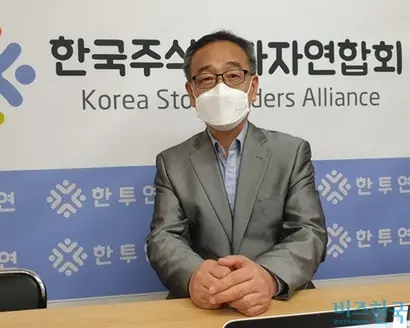
The KSA is an organization founded by Representative Jung in October 2019. Surrounded by people who had lost money in stock investments, Jung formed the group out of a desire to change a stock market where the retail investors who bear the brunt of losses are difficult to protect. What started as a small group of about 10 people in an internet cafe has now grown to approximately 45,000 members. Having established itself as a leading organization regarding short selling issues, the group held two meetings with financial authorities last year.
Ahead of the resumption of short selling, Representative Jung has been busy preparing collective actions. He revealed that a "Korean version of GameStop" is being considered. "Small and medium-sized stocks that have suffered significantly from short selling are potential targets," Jung said. American retail investors countered short sellers in GameStop via the WallStreetBets board on the community site Reddit; the KSA stated it plans to seek cooperation with WallStreetBets. KSA officials are currently in the stage of discussing counter-strategies.
While a "Korean GameStop" might not be executed if the damage from short selling is minimal, Representative Jung insists that, as it stands, the damage is inevitable. He points out that the Financial Services Commission’s new personal stock lending system, introduced to lower the threshold for retail investors, makes it difficult for them to stand against short-selling forces. For this reason, Jung suggested he plans to keep raising his voice until mechanisms are in place that can properly protect retail investors.

The new personal stock lending system starting on the 3rd increases the number of securities firms lending stocks to individuals from 6 to 17, and expands the transaction volume from 20.5 billion won to 2.4 trillion won. Personal short selling limits will also be tiered based on investment experience—30 million won, 70 million won, and so on. Additionally, it was decided that only 50% of the stock lending amount will be reflected when calculating the credit offering limit for securities firms. This is intended to prevent situations where personal short selling cannot be activated because the securities firm's credit offering limit is full.
Although the system provides more rights to retail investors, Representative Jung assessed it as only 50 out of 100 points. "It is a half-baked measure that failed to fix the 'tilted playing field' between retail investors and foreign/institutional investors," Jung said. "The mandatory repayment period for short selling is limited to 60 days for individuals, whereas it is virtually unlimited for foreigners and institutions. They claim it's due to creditworthiness, but it is heavily skewed in favor of one side. The collateral ratio is also 105% for foreigners and institutions, but 140% for individuals. It’s a structure where the total profit for foreigners and institutions is bound to grow significantly."
Jung continued, "There is inevitably a gap in capability regarding information between individuals and institutions. Even if we accept the variance in competence, we are asking for at least equal rules." He added, "They said they would computerize securities lending to prevent naked short selling, but foreigners, who account for a high proportion of short selling, have not yet been included. A real-time pre-detection system for short selling hasn't been built, and while laws were changed to allow for criminal punishment of over one year for illegal short selling, I don't think it's enough to break their resolve. I am deeply worried about resuming short selling in this situation."
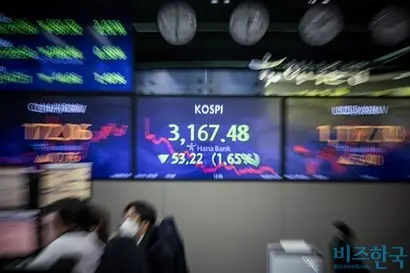
Representative Jung predicts that a "tsunami of stock price declines" is inevitable, though the exact timing is hard to predict. However, some point out that the grounds linking short selling to stock price declines are unclear, as the impact on index drops varied whenever short selling was banned or resumed in the past. Short selling was banned in Korea in 2008 and 2011, and the KOSPI 200 index rose both 3 and 6 months after it resumed in 2009 and 2011. To this, Jung replied, "The past is just the past."
Jung said, "It depends on the will of the short-selling forces. The KOSPI index could fall below the 3,000 range immediately after resumption, or it could stall for a while or rise before falling." He anticipated, "The biggest concern is that since last spring, millions of 'Donghak Ants' (retail investors) have entered the stock market, many of whom are in their 20s and 30s. If short-selling volume floods in all at once, all stocks could fall simultaneously, creating a panic market where generations with less stock experience may not be able to hold on and end up being forced out."
Representative Jung argues that discussions should also take place regarding whether short selling is even necessary for the market in the future. "Abolition would be best, but it might be realistically difficult for Korea alone to not have short selling," Jung said. "Therefore, we first suggest improving the system to be fair. However, as long as short selling exists, institutions and foreigners will inevitably be bent on driving down stock prices by any means necessary. Even without short selling, derivatives like 'leveraged inverse' funds can play the role of short selling. Didn't we see that there were no significant side effects during the period when there was no short selling?"