

[비즈한국] #1 A unit on the 4th floor of the Hyundai 4th apartment complex in Apgujeong-dong, Gangnam-gu, Seoul, with a private area of 117.9㎡ (35.66 pyeong), was sold for 4.175 billion won on the 13th. This is 145 million won higher than the previous record-high transaction price for the same size in February. "Apgujeong District 3," which includes a total of 4,065 households—including Hyundai apartments phases 1-7, 10, 13, and 14, and Daelim Villart—established a reconstruction association on the 19th.
2 A unit on the 3rd floor of the Woosung Apartment complex in Jamsil-dong, Songpa-gu, Seoul, with a private area of 82.06㎡ (24.82 pyeong), was sold for 1.5 billion won on the 16th. This is 45 million won higher than the previous record-high transaction price recorded in October 2019. The Woosung apartment complex filed for reconstruction association establishment approval with the Songpa-gu Office on the 15th.
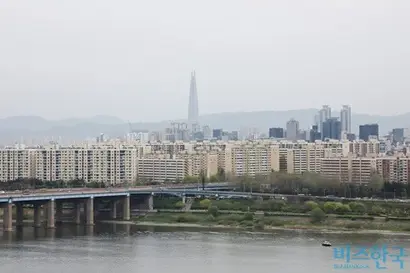
These are recent examples of record-high prices for apartments in the Gangnam area of Seoul disclosed through the Ministry of Land, Infrastructure and Transport’s actual transaction price disclosure system. Seoul apartment prices, which had slowed down following the February 4 Real Estate Measures, have been on a two-week upward trend since Seoul Mayor Oh Se-hoon took office. As abnormal signs in housing prices were detected, centered on urban renewal zones, the Seoul Metropolitan Government designated major reconstruction and redevelopment areas—including Apgujeong, Yeouido, Mok-dong, and Seongsu—as land transaction permit zones.
Seoul apartment prices have seen an increasing growth rate for two consecutive weeks. According to weekly apartment price trends released by the Korea Real Estate Board on the 22nd, the Seoul apartment purchase price index for the third week of April (as of the 19th) rose by 0.08% compared to the previous week. While the growth rate of Seoul apartment prices had subsided from 1.0% in the first week of February to 0.05% by the first week of this month due to the influence of the February 4 Real Estate Measures, it has since expanded again to 0.07% and 0.08% following Mayor Oh's inauguration.
The Korea Real Estate Board stated, "With expectations for deregulation growing, the overall growth rate in Seoul has expanded as buying interest has increased, centered on areas with development projects in Gangbuk and reconstruction complexes in the three Gangnam districts (Gangnam, Seocho, Songpa)."
Previously, Mayor Oh promoted "speedy housing supply" as his number one campaign pledge during the Seoul mayoral by-election. The plan involves supplying 285,000 new housing units in Seoul over five years. The core of this supply plan was to relax regulations on apartment floor heights and floor area ratios, and to revitalize redevelopment and reconstruction projects (Related article: [Housing Price Radar] Can Oh Se-hoon’s Real Estate Policy Tame Seoul Apartment Prices?).
After taking office, Mayor Oh's real estate policy shifted to "swift but cautious." This was his response to concerns that revitalizing redevelopment and reconstruction would stimulate housing prices. Following a real estate policy council meeting at the People Power Party headquarters on the 11th, Mayor Oh said, "Any policy is bound to have side effects and negative functions, and isn't it know-how to minimize (them)?"
Indeed, as Seoul housing prices showed abnormal signs centered on maintenance zones, the Seoul Metropolitan Government took action. The Seoul City Urban Planning Committee decided on the 21st to designate 54 redevelopment and reconstruction complexes in the Apgujeong, Yeouido, Mok-dong, and Seongsu areas as land transaction permit zones for one year, starting from the 27th. This is a preemptive measure to prevent speculation following reports of abnormal transactions, inventory depletion, and skyrocketing asking prices in some maintenance zones. Transactions for land exceeding 18㎡ in residential areas and 20㎡ in commercial areas in these zones require official permission.
At his inauguration ceremony held at the Dongdaemun Design Plaza (DDP) on the 22nd, Mayor Oh declared, "The 38th Seoul Metropolitan Government will establish a strategy to catch two rabbits at once: rapid housing supply and real estate price stabilization, even though it is difficult." He added, "We will conduct intensive investigations into abnormal transactions that disrupt the real estate market, as well as designate land transaction permit zones for major reconstruction and redevelopment complexes. We will remove the sparks of real estate price instability."
Ham Young-jin, head of Zigbang Data Lab, analyzed, "Recently, the Gangnam area showed a rise in asking prices as expectations for maintenance projects grew, centered on old complexes along the Han River or those where reconstruction safety diagnoses have begun in earnest. There is also the impact of the arrival of the seasonal peak season as the weather gets warmer. As we have experienced in the Gangnam area, land transaction permit zones can prevent short-term surges in transaction volume and prices, but they are unlikely to induce a fundamental drop in housing prices."
Meanwhile, national apartment purchase prices rose by 0.23% compared to the previous week. The growth rate of apartment prices expanded across the board, with the national average rising from 0.21% to 0.23%, the Seoul metropolitan area from 0.25% to 0.27%, and non-metropolitan regions from 0.18% to 0.20%.