

[비즈한국] The South Korean pharmaceutical industry has developed very slowly relative to the country's economic scale. While the nation achieved industrialization in a short period by concentrating state resources on specific sectors, the pharmaceutical industry requires a foundation of basic science, which takes a long time to build. However, as the world struggles with COVID-19, South Korea has shed its stigma as a "copycat drug powerhouse" and has reached a level where it competes alongside developed nations. ‘Bizhankook’ looks back at the path taken by the Korean pharmaceutical industry to forecast its potential and the direction it should take in the future.
The highest priority in the pharmaceutical industry is "new drug development." When news of a new drug breaks, stock prices fluctuate. Patients also show keen interest, hopeful that the new drug might replace existing ones. If the goal is approval by the U.S. FDA, it is considered the best-case scenario. If validated, it can generate massive profits in global markets with large populations. Perhaps for this reason, the government announced that it would invest 771.8 billion won in new drug development this year.
Starting with SK Chemicals285130, 33 Domestic New Drugs Have Been Released
When did the domestic pharmaceutical industry begin to show interest in new drugs? Domestic pharmaceutical companies, which were preoccupied with generics (copycat drugs), began to focus on R&D investments after the "product patent system" was introduced in 1987. In the past, it didn't matter if the substance was the same as long as the manufacturing method was different, but this system changed the rules so that the patent holder's approval was required. If companies didn't want to pay royalties, they had no choice but to increase R&D investment.
New drug R&D expanded further as the Leading Technology Development Project, which brings together over 150 industry-academic-research experts, and the Ministry of Health and Welfare's Health and Medical Technology Development Project were implemented in 1992 and 1998, respectively. Of course, until the mid-1990s, there was criticism that pharmaceutical companies were focusing more on energy drinks than medicine. It is reported that in 1995, the top 100 domestic pharmaceutical companies spent 166.8 billion won on R&D for new drugs, which was only 4% of their total sales.

However, new drug R&D certainly grew. According to the ‘2000 Health Industry White Paper,’ the ratio of R&D expenses to sales for pharmaceutical companies with research laboratories increased from 2.70% in 1988 and 3.86% in 1991 to 5.02% in 1996 and 5.75% in 1999. In this climate, the first domestic new drug was born. In 1999, SK Chemicals received approval from the Ministry of Food and Drug Safety for 'Sunpla Injection,' a stomach cancer treatment. The development period alone took 10 years.
Afterward, as government departments jumped into support projects for new drug development to strengthen the pharmaceutical industry, the industry's move toward new drug development gained momentum in the 2000s. The number of companies building or expanding research laboratories also increased. According to the Korea Pharmaceutical and Bio-Pharma Manufacturers Association, 79 pharmaceutical companies were operating 86 research labs in 2003.
Following the launch of Sunpla, 14 domestic new drugs were released between 2000 and 2010, starting with Daewoong Pharmaceutical's069620 'EGF Topical Solution' for diabetic foot ulcers in 2001. From 2011 to 2018, 15 new drugs emerged. By disease category, anticancer drugs were the most common with 6 types, followed by antibiotics, ulcer treatments, and arthritis treatments. During this period, excluding 2004 and 2009, 1 to 4 domestic new drugs were released every year.
No domestic new drugs were released in 2019 and 2020. This year, Yuhan Corporation's000100 lung cancer treatment 'Leclaza,' Celltrion's068270 COVID-19 treatment 'Regkirona,' and Hanmi Pharmaceutical's128940 neutropenia treatment 'Rolontis' were registered as the 31st to 33rd domestic new drugs, respectively. A pharmaceutical industry official said, "Depending on the speed of each company's new drug development, the number of domestic new drugs released in a year may vary."
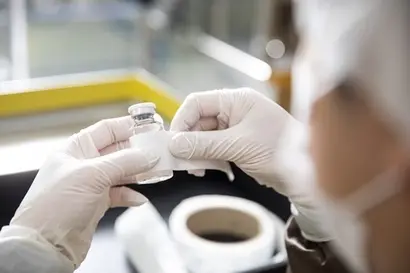
Now that R&D costs have increased, it seems that finding truly innovative domestic drugs has become harder than in the past because the industry is forced to calculate cost-efficiency. Developing something from start to finish based on unique technology requires significant time and money. However, if a company licenses existing new drug candidates from other pharmaceutical firms or makes partial improvements, they can bring drugs to market faster.
Only 2 Global New Drugs: “A Long Way to Go”
There is also self-deprecating talk in the industry surrounding domestic new drugs. First, there are not many products that have stood the test of time. Products with annual domestic sales exceeding 10 billion won are reportedly limited to Canav, Duvie, Noltec, and K-Cab. Among the 33 domestic new drugs, five have had their approvals cancelled: Dongwha Pharm's 'Milican,' CJ CheilJedang's 'Pseudovaccine,' Samsung Pharmaceutical's 'Ryavax,' and Dong-A ST's 'Sivextro' (injection and tablet).
The reasons for the cancellation of domestic new drug approvals vary. Dong-A ST voluntarily withdrew its two antibiotic drugs last year due to low drug pricing and a lack of marketability. CJ CheilJedang had its approval for a Pseudomonas aeruginosa vaccine withdrawn in 2009 after failing to complete the clinical trials promised at the time of conditional approval. In 2018, Hanmi Pharmaceutical stopped the development and sales of 'Olita' due to a lack of competitiveness, effectively leading to its cancellation.
In particular, the lack of a "global new drug" is the most painful point. Among domestic new drugs, only two have received FDA approval: 'Factive,' launched by LG Life Sciences in 2002, and the now-withdrawn Sivextro from Dong-A ST. A bio-industry official explained, "It is important to develop global new drugs in Korea. However, among the domestic new drugs released by large pharmaceutical companies, global ones are rare. It seems that entering the global market has been difficult due to factors such as a lack of independent sales capabilities or capital, and the presence of competitors already established in overseas markets."
For small and medium-sized pharmaceutical companies or venture firms, it is difficult to see new drug development through to the end. The previously mentioned bio-industry official said, "Phase 3 clinical trials alone require tens to hundreds of billions of won. It also takes a long time. This is why companies with weak capital are forced to opt for technology exports." They added, "If a company remains in the red for five consecutive years after listing, it is delisted from the KOSDAQ market. When bio-ventures with only one or two pipelines export their technology to raise capital, they lose their competitiveness altogether."
However, there is also a positive view that the number of domestic new drugs will naturally increase in the future. This is because there is a growing trend for pharmaceutical companies to spin off their new drug research and development sectors and establish R&D-focused subsidiaries.
On the other hand, there is also a negative perspective on the "Number ○○ Domestic New Drug" system. An official from the medical community stated, "In terms of ensuring patient access, the government should first check in which areas there is unmet medical need, rather than just numbering domestic new drugs. The impact of promoting new drug development on patients should be evaluated separately."