

[비즈한국] Intellectual property is a comprehensive concept that includes industrial property rights such as trademarks, patents, and designs, as well as copyrights for literary, musical, and artistic works. While its importance has grown with the rise of the Fourth Industrial Revolution, it is still strongly perceived as a specialized field. "Proving the existence" of intangible intellectual property is no small feat. This series introduces the latest trends surrounding intellectual property and offers guidance on how small and medium-sized enterprises or individuals can prepare and respond to protect their brands.
Have you heard of 'Pyo-moon', 'RtA', 'NeNemTtin', or 'IdH'? You have to look closely to see them. You have to observe them for a long time to understand their meaning. These trademarks are the same. All of the obscure terms mentioned above are either filed with the Korean Intellectual Property Office or are registered trademarks.
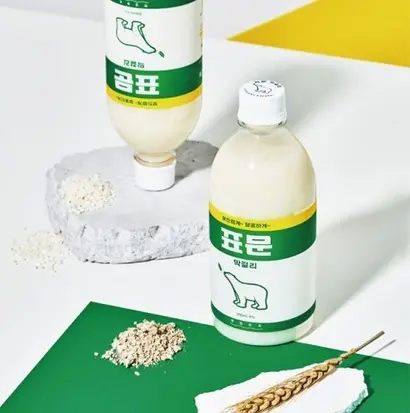
'Pyo-moon' is a trademark created by flipping the 'Gompyo' (bear mark) logo upside down. Inspired by the practice of flipping a makgeolli bottle before drinking it, this naming strategy was adopted as Gompyo Beer gained popularity, adding a twist and new fun to the brand. 'RtA' is a term registered as a trademark by Nongshim004370, based on the fact that if you look at the Korean word for "Raccoon" (Neoguri) upside down, it looks like 'RtA'. In fact, 'RtA' is used as a ramen brand name in foreign countries instead of 'Neoguri'.

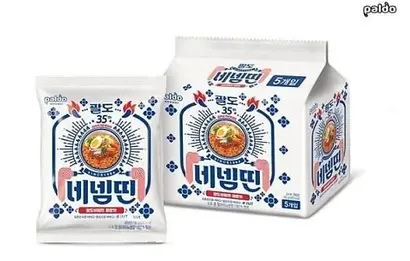
'NeNemTtin' is a new brand name for Paldo Bibim-myeon, famous for the marketing line that you mix it with your right hand and then your left. It was born when so-called 'Yaminjeongeum'—a style of internet slang where characters that look similar are substituted for others—was at its peak. Inspired by how the word for "great song" (myeong-gok) can be read as 'tting-gok' and "puppy" (meong-meong-i) as 'daeng-daeng-i', Bibim-myeon was labeled as 'NeNemTtin', and it eventually became an actual product name.
'IdH' shares a similar story. It is a brand born from the popularity of the "Gara-mandeun Bae" (Crushed Pear) hangover drink among foreigners. Recognizing that the Korean character for "pear" (Bae) is perceived by foreigners as 'IdH', Haitai registered 'IdH' as a trademark for its fruit beverage. The 'IdH' trademark is currently registered and rights are maintained in countries where the pear drink is sold, including the U.S., Australia, Mexico, and Brazil.
Beyond these, other interesting trademarks registered and in use include 'Mun-eo-ji-ji-ma' (Don't fall apart), originally a play on the word for octopus (mun-eo) now used as a brand for an octopus specialty restaurant; 'Jan-beer-s' for a pub business; 'Nail-ba-yo' for a nail salon; and 'Wine-stein' for a wine retail business.
As in the cases above, trademarks can be not only existing words but also various modifications of conventional words or newly coined terms. Furthermore, beyond text, various sounds and three-dimensional shapes can also be protected as trademarks. The purpose is to protect anything that indicates the source of a product or service and can be perceived as such by consumers, regardless of its form.
At the Korean Intellectual Property Office, various sound trademarks are registered and protected, such as Kakao's "Katok-wat-syong" (KakaoTalk has arrived), LG Electronics'066570 "Saranghaeyo LG" (I love you, LG) sound effect, SK Telecom's017670 "Tting-tting-tti-ring-tting" jingle, and Jangsoo Stone Bed's "Byeori Daseotgae" (Five stars).
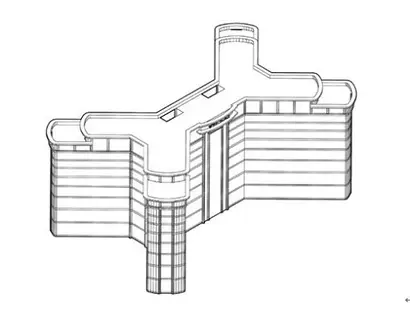
In addition, the overall image of a building's interior or exterior can be registered as a three-dimensional trademark. The drawing above shows the exterior of the WYNN PALACE, which Wynn Resort Holdings filed and registered as a 3D trademark with the Korean Intellectual Property Office.
Unlike patents or designs, trademarks do not necessarily require the development of new technology or the creation of a new design. Existing words, their variations, various sounds used and recognized as the source of a product, or the overall image of a building that distinguishes it from other services can all be registered as trademark rights if the owner chooses to use them as such.
Of course, one must be cautious when choosing a trademark, even if it is eligible for registration. This is because a registerable trademark is not necessarily a meaningful or valuable one. Countless trademarks are registered only to end up in obscurity. It is crucial to select a compelling and desirable trademark by comprehensively considering whether consumers can easily recall the source of the product, whether it will be remembered for a long time, and whether it forms a high-quality image while embodying the identity of the product or service.