

[비즈한국] Whenever I introduce myself as an astronomer, I often get asked one question: "Do you look for new stars?" When I hear this, I think to myself: "Look for new stars in this day and age? What astronomer would have nothing better to do than to conduct such pointless research?"
In fact, until the 19th century, astronomers did spend their time looking for new stars. At that time, simply discovering a new comet or asteroid to add to the roster of the solar system was a significant scientific achievement. Unfortunately, those days are long gone. With state-of-the-art automated telescopes scanning the entire sky, we have already identified nearly every star and galaxy and mapped them extensively. Most 21st-century astronomers do not obsess over the tedious task of searching for "new stars" one by one with their own eyes.
Most astronomers today believe that all the major planets and celestial bodies in our solar system have been discovered, and that anything left to find is just small, meaningless debris. But Mike Brown at Caltech is different. He believes that "hidden planets" we haven't found yet are still out there in the solar system. Even back when Pluto was still officially called the ninth and final planet of the solar system, Mike Brown suspected that tenth and eleventh planets were waiting to be discovered in the darkness beyond Pluto. Although his colleagues looked at him with pity, worrying that he was wasting his time, his lonely quest for a "new planet" continued.
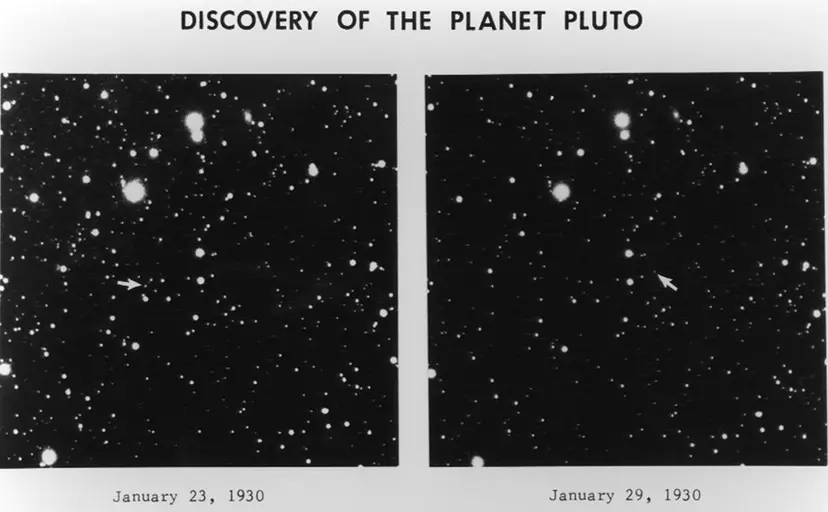
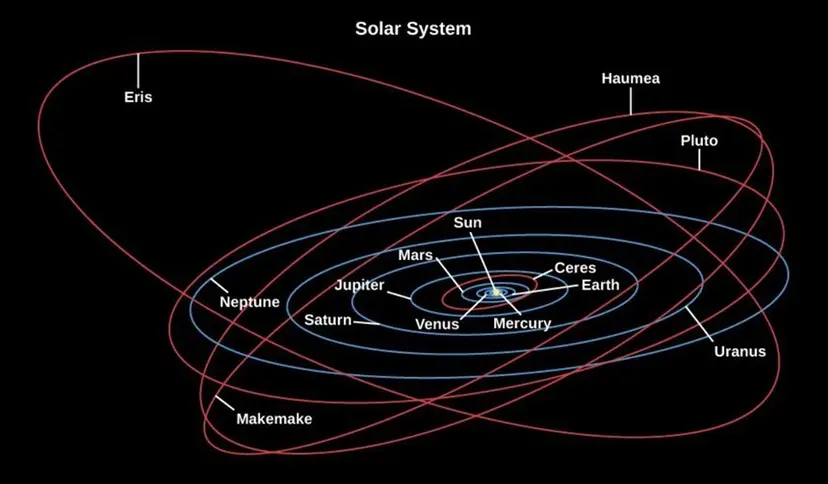
He could be called the last "planet hunter" of our time, inheriting the mantle of medieval astronomers in the 21st century. After a long period of silence, Mike Brown suddenly began pulling new celestial bodies from the edge of the solar system. Furthermore, these objects were similar in size to Pluto, which was still being called a planet at the time. Brown was proud, believing he would go down in history as the discoverer of the tenth and eleventh planets succeeding Pluto.
However, while his research was in full swing, he received shocking news. Another astronomer on the other side of the world announced the discovery of the very same object that his team had been researching in secret! What on earth could have happened?
This is the full story of the worst theft in the history of the solar system, which happened to Mike Brown, an astronomer searching for minor bodies in the outer solar system.
I thought I found it first...
On December 28, 2004, Mike Brown discovered a new icy minor planet slowly orbiting the edge of the solar system. Since it was discovered shortly after Christmas, Brown nicknamed the object "Santa." It was clearly farther away than Pluto, but Brown didn't make a fuss. He only knew that this new object "Santa" existed; he hadn't yet determined its scientific characteristics, such as whether it was actually larger than Pluto or what its properties were. He didn't know enough about the object to reveal its discovery to the world just yet.
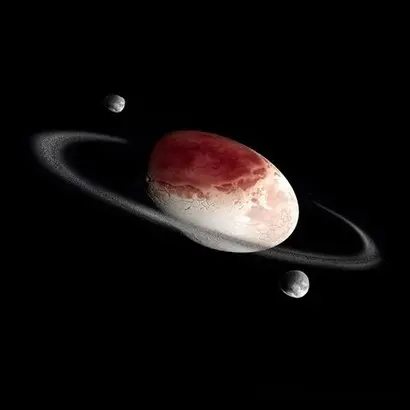
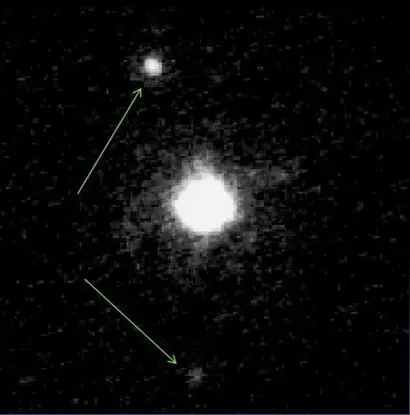
While analyzing additional observation data to determine Santa's gravity and size, Brown discovered two small moons orbiting it. These moons were fragments that had been knocked off during a collision with other minor bodies long ago but remained captured by Santa. Brown nicknamed these two small moons "Rudolph" and "Blitzen," after Santa Claus's reindeer.
The fact that there were moons orbiting Santa was a vital discovery. By observing the speed and distance of these moons, one could accurately calculate the gravity and mass of the object holding them. In other words, he could finally determine whether it was truly a planet larger than Pluto or just another trivial minor body. Unfortunately, Santa turned out to be only about one-third the size of Pluto. It wasn't a new planet larger than Pluto after all.
For about six months after his initial discovery, Brown quietly determined Santa's characteristics and worked on a paper to present his findings. Brown didn't want to just release the fragmented fact that an object named Santa existed; he wanted to calculate all scientifically significant characteristics and release it to the world as a complete, comprehensive paper.
While working on the paper, Brown received an email. It was an inquiry from a NASA research team asking when he planned to announce the discovery of an object called K40506A, and whether they could conduct follow-up observations of it. K40506A referred to "Santa." It was the serial number automatically generated by Brown's computer on the night of the discovery. The 'K' stood for Kuiper Belt, '40506' for the date the photo was taken (May 6, 2004), and 'A' meant it was the first photo taken that night. But something was strange. K40506A was a serial number used only within Brown's computer to refer to Santa. How did other scientists at NASA, not in Brown's team, know to call it K40506A? Had they secretly hacked into his computer?
Then, an even more shocking email arrived: "Someone else has announced they discovered Santa first!"
How Ortiz stole Brown’s discovery
Surprisingly, José Ortiz, an astronomer in Spain, announced that he had discovered Santa in photos taken in 2003! Ortiz was calling Santa by a different serial number, 2003EL61. What’s more, he announced that Santa was an object larger than Pluto. Brown knew all too well that this was untrue. Brown’s secret research paper, which used the movement of the two moons to determine the object's mass, contained precise results showing that Santa was much smaller than Pluto. What had happened?
For several days, journalists and colleagues asked if the 2003EL61 discovered by Ortiz’s team was the same Santa discovered by Brown. Even though he felt suspicious and discouraged, Brown told everyone who asked that although he had thought he discovered Santa over the last six months, it was technically true that Ortiz was the one who announced it.
However, he still felt a nagging suspicion. Brown googled the serial number K40506A—the one mentioned by the NASA scientists, which existed only on his computer. He found a short abstract of the paper on Santa that one of his graduate students was scheduled to present at a conference. While looking through the search results, Brown found a strange website. It was an archiving site that recorded data for every celestial body observed by a certain telescope in Chile on a specific day in May. The site was managed by an astronomer in Ohio who had built the camera equipment for that telescope. He had simply been diligently recording a log of what objects his camera was capturing every day, with no malicious intent.
Brown realized that if one changed a few numbers on that website, one could see photos of K40506A from other dates. If someone had accidentally seen the abstract of Brown’s student’s paper and become interested in K40506A, and if they had found the telescope's log website where K40506A was meticulously recorded, couldn't they have obtained photos of K40506A from other days just as Brown had? And couldn't they have compared the movements of K40506A across those dates, calculated its orbit, and realized the amazing fact that a new object existed beyond Pluto?
Later, after rumors began to spread that the discovery of Santa was suspicious, the astronomer in Ohio who managed the telescope camera sent an email to Brown. The contents were even more shocking. He apologized, saying he was sorry that his diligently kept log had unintentionally become the cause of such an unfortunate incident. He, too, had heard the rumors and began checking the website's log data. He checked the IP addresses from which the image data of K40506A had been accessed. Naturally, most of the records showed access from the IP address of Caltech’s laboratory, where Brown belonged.
But there was one strange IP address. He discovered traces of access from a location other than Brown’s lab the day after the abstract was registered for the conference, which had made the name K40506A public. It was the IP address of a university in Spain, where José Ortiz worked.
New discoveries: publish in haste vs. research properly first
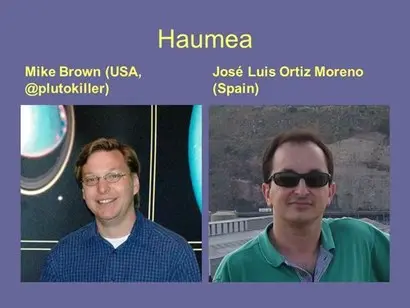
Because Ortiz never fully disclosed what happened, the complete details remain unconfirmed, but most astronomers, including Brown, believe the story unfolded roughly like this:
Brown's graduate student registered an abstract for a conference that included the serial number K40506A. Ortiz, having stumbled upon that serial number, looked for photos of K40506A in the telescope’s observation log. Seeing the movement of K40506A across several dates, he realized it was an interesting object beyond Pluto. By securing photos of K40506A taken on multiple dates, Ortiz was able to accurately determine its orbit. This would have told him where K40506A was in the sky now, as well as where it had been in the past. Ortiz then scrambled to see if there were any older photos of K40506A, and luckily, he found a photo from 2003 where another telescope had captured it. That is how Ortiz tried to claim to the world that he was the first to discover the existence of K40506A from that 2003 photo.
After the truth came to light, Ortiz started blaming Brown, turning the tables. He claimed that Brown had monopolized the research without giving other astronomers a chance to study it. He argued that Brown was the one who broke the academic tradition of sharing new discoveries immediately.
The controversy between Brown and Ortiz eventually evolved into a debate over what is the right attitude for a scientist: Is it better to rush to announce the existence of a new, scientifically interesting object so that colleagues can join the research, or is it better to properly understand its characteristics and present accurate, undistorted results? What do you think?
Discovered, but no discoverer?
In the astronomical community, there is a tradition that when a new celestial body is discovered, the discoverer is given the opportunity to name it. So, who should name K40506A? Brown, who studied it diligently without announcing it even after knowing of its existence? Or Ortiz, who found out about the hidden object and dug up older photos taken before Brown's?
If you look at the International Astronomical Union’s list of newly announced celestial bodies, you can see how K40506A ended up. The table lists the telescope that first photographed the object, the date of the first photo, the discoverer, the name of the object, and basic physical data. However, K40506A is recorded in a strange way.
The first photo of K40506A was taken by a Spanish telescope, but the name recorded is "Haumea," suggested by Brown’s team at Caltech. "Haumea" is a goddess from Hawaiian legend whose body was shattered and whose pieces became other Hawaiian gods; it is a fitting name for K40506A, given that the fragments that flew off when it shattered became its moons. However, unlike other objects, the space for the discoverer's name is left blank. In the end, the International Astronomical Union chose not to side with either Ortiz or Brown. It remains a strange object that was first discovered by a Spanish telescope, named by Caltech astronomers, but has no official discoverer.
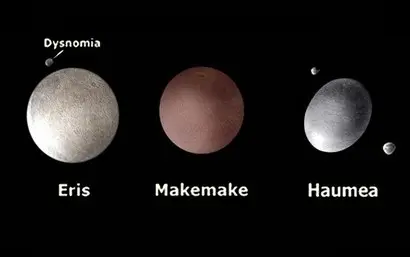
Even after this "planet theft" scandal, Brown’s hunt for new planets did not end. He eventually began discovering Kuiper Belt objects larger than Pluto, which he had so desperately sought, and in 2006, he provided the catalyst that led to Pluto losing its planetary status. Because of that, he was labeled a "Pluto killer" by the American public—a nickname he now proudly uses as his Twitter handle. Recently, Brown discovered "Farfarout," another minor body at the edge of the solar system, three times farther away than Pluto, and is slowly expanding the map of our solar system once again.


In "How I Killed Pluto," astronomer Mike Brown introduces the episodes he experienced while lonely discovering minor bodies in the solar system, the process of how he gained the infamous title of "Pluto killer," and why Pluto was inevitably stripped of its planetary status.
Perhaps he gave up the chance to go down in history as the only 21st-century astronomer to discover a new planet succeeding Pluto, and instead, the objects he discovered along with Pluto were never officially recognized as new planets...