

[비즈한국] Companies sometimes make decisions that are difficult to explain by money alone. Understanding the laws or systems hidden behind these actions provides deeper insight into the inner workings. The newly launched ‘Useful Business Law Tips’ introduces clues to help understand business trends.
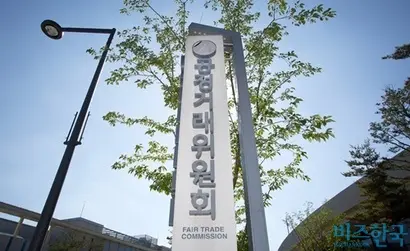
In 2017, Kim Sang-jo was appointed as the first chairperson of the Korea Fair Trade Commission (KFTC) under the Moon Jae-in administration. Perhaps due to high public expectations early in the administration, the number of complaints filed with the KFTC surged by 1.5 times after Chairman Kim took office.
However, it is impossible for the KFTC to process such a large number of cases within a short period. Perhaps for this reason, there were frequent cases where formal reports were treated as mere complaints, and the cases were closed with a single official document stating, "This is not a matter for the application of the Fair Trade Act" or "Please go to civil court."
Before long, both the reporting citizens and the accused companies became dissatisfied. From the public's perspective, there is a sense of betrayal: "They said they would wipe away the tears of the 'underdogs.' If they can't handle it, they should either change the law to say reports cannot be filed or stop advertising it."
Depending on the interpretation, the Fair Trade Act has a very broad scope of application. In the past, the KFTC actively interpreted unfair trade practices and regulated cases of abuse of dominant trading positions that also involved civil disputes. Yet, when they close a case with a single official document citing a heavy workload, it is difficult for the public to accept.
Companies are equally dissatisfied. Businesses complain, "What the claimant says is not necessarily true. Most of them are just insisting on guaranteed margins. If we were to accept every malicious complaint, normal business operations would be impossible."
These problems occurred because too many cases were concentrated at the KFTC. Therefore, to distribute this load, measures such as expanding the mediation scope of the Korea Fair Trade Mediation Agency and delegating enforcement authority to local governments began to be discussed in earnest. To ensure practical relief through the courts, private injunction systems and punitive damages systems were also introduced.
A ‘private injunction’ is a system where a victim can directly request a court to stop an infringing act (unfair trade practice) without the KFTC's intervention. Similar to applying for an injunction against publication when someone tries to publish a plagiarized work, or an injunction against performance when an affiliated celebrity tries to violate an exclusive contract, this allows a company to request that another company's abuse of power be stopped.
‘Punitive damages’ refers to a system that imposes a liability for damages greater than the actual loss incurred when an illegal act is committed due to intent or gross negligence. Punitive damages originate from Anglo-American law, with the famous U.S. case of a woman who was awarded hundreds of thousands of dollars after spilling coffee ordered at McDonald's and suffering burns. It has recently been introduced into the Fair Trade Act and others to make damages more substantial.
Although these systems were introduced with difficulty, it is hard to find cases where they have actually been applied. It is expected that there will not be many application cases in the future either. Academics oppose it on grounds such as it not fitting Korea's legal system, which is based on compensation for actual damages. Industry opposes it because it stifles corporate activity. This is because courts are passive about acknowledging damages that cannot be proven with documents.
Ultimately, the core of claiming damages lies not in invoking decorative clauses, but in familiarizing oneself with the basic legal principles and procedures of damages. Points to consider when claiming damages in a dispute under the Fair Trade Act are as follows:
Will you file a civil lawsuit separate from the KFTC report? Most KFTC cases take several years to reach a conclusion. Therefore, if you do not file a lawsuit for damages while waiting for the conclusion, the statute of limitations may expire, potentially preventing you from filing the claim at all.
For this reason, it is common to file a civil lawsuit in court separately from the KFTC report and then apply for a "designation of a later date for pleadings" (a stay of proceedings) until the KFTC reaches its conclusion. For reference, the law was recently amended so that if an application for mediation of a subcontracting dispute is filed, the statute of limitations is suspended to compensate for the expiration of the statute of limitations.

How will you specifically prove the amount of damages?
When claiming damages due to collusion, the difference between the price determined by the collusion and the hypothetical competitive price that would have been formed if there had been no collusion is calculated. At this time, the hypothetical competitive price is calculated through an appraisal.
In cases of collusion, the entity claiming damages is often the ordering party (purchasing agency) such as the government, local government, or a large corporation. Since such organizations have sufficient financial capacity to utilize court appraisals, there is no particular problem in proving the amount of damage. However, there are only complex discussions about methods of appraisal, such as statistical appraisal and cost-based appraisal.
A claim for damages due to violations of the Franchise Business Act and unfair trade practices is a claim for future operating profits (lost profits) that could have been earned if such acts had not occurred. Usually, net profit is calculated by deducting various expenses from sales for the few months immediately preceding the illegal act, and future operating profit is calculated based on this net profit.
For example, the guaranteed contract period under the Franchise Business Act is 10 years. However, due to the franchisor's abuse of power, the contract was terminated with 5 years remaining. In this case, if the average monthly net profit for the 3 months immediately before contract termination was 1 million won, the damage amount can be calculated as 60 million won by multiplying this 1 million won by the remaining 5 years (1 million won * 5 years * 12 months).
At this time, VAT/corporate tax filing records, tax invoices, and expense/expenditure ledgers become basic data. Clauses allowing the court to request the transfer of records from the KFTC and the clause allowing for the substantiation of a significant amount of damages by considering the overall intent of the pleadings are used usefully (Fair Trade Act Articles 56-2 and 57).
Sometimes, small business owners reduce their net profit on paper by paying salaries to family members in order to reduce taxes. Such expedient operations are bound to result in disadvantages when calculating damages.

What is the weight of the establishment of liability (the establishment of an illegal act) and the scope (amount of damages) in court proceedings?
If the KFTC imposes sanctions during the trial based on the premise of a legal violation, the focus of subsequent proceedings is often concentrated on the calculation of damages, i.e., money calculations. Although there are cases where companies prolong the trial by filing an administrative lawsuit arguing that the KFTC's disposition was wrong, it can look poor to deny the responsibility itself once a KFTC disposition has already been issued.
From this perspective, even if the KFTC's disposition is minor, one should be cautious about letting it slide. In the case of a warning, it brings no special disadvantages other than the accumulation of penalty points, but it is based on the premise that the underlying act is illegal. Therefore, it becomes difficult to deny the responsibility itself when a related victim claims damages.
Under the current system, it is difficult to receive sufficient damages in court. It is difficult for a small business to secure the evidence necessary to prove the amount of damage, and it is also difficult to defeat the well-equipped legal teams of large corporations. Usually, without strong endurance, one cannot withstand a lawsuit that lasts for several years.
That is why there are so many KFTC reports. It is not because Korean people have a more temperamental nature than people in other countries, nor is it because they like to whine. You can see this just by the fact that the number of KFTC reports is increasing while the number of civil main cases is decreasing.