

[비즈한국] With the amendment to the ‘Act on the Transboundary Movement of Hazardous Wastes and Their Disposal’ taking effect on the 1st, qualification requirements for waste importers and exporters have been significantly tightened. The rationale behind these stricter requirements is to preemptively prevent international environmental disputes. However, some raise concerns that these excessive restrictions could be exploited, leading to a drop in domestic waste paper prices and the creation of monopolies.
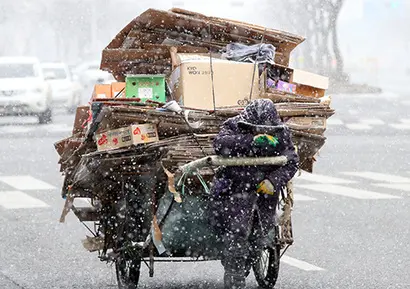
Following incidents such as the illegal export of 5,100 tons of municipal waste in 2018, the amendment to the Act on the Transboundary Movement of Hazardous Wastes and Their Disposal was implemented on the 1st to preemptively block international environmental disputes. Consequently, only waste facility operators, waste disposal/recycling businesses, and registered waste handlers are now permitted to import waste, and management has been tightened to ensure only waste handlers and commercial waste generators can export waste. Under this amendment, general trading companies and consignors are no longer able to engage in import and export activities.
In addition, the Korea Environment Corporation has been designated as the center for safe management of waste imports and exports, and plans are in place to increase container inspections before customs clearance from 1% (as of 2020) to 10% (by 2024) for waste imports and exports. Furthermore, new standards have been established requiring the purchase of a guarantee insurance policy covering six months of proper disposal or the deposit of a security bond in cases where illegal activity is confirmed.
Eom Baek-yong, chairman of the Korea Waste Paper Export and Import Association, criticized the move, stating, "This amendment is expected to make the livelihoods of elderly people who collect waste paper even more difficult. If general trading companies and consignors can no longer participate in imports and exports, the number of people available to process waste will decrease. This naturally leads to monopolies and oligopolies. Also, because exporting will become more difficult, prices will gradually decline due to a surplus of waste paper. This amendment will further squeeze the livelihoods of the elderly who collect paper, who are among the most vulnerable in our society."
He added, "The social cost of incinerating or landfilling one ton of waste already exceeds 300,000 won and is expected to continue rising. Currently, the compensation for elderly paper collectors is only 1,000 won per hour; if it drops further, they will find it impossible to maintain their livelihoods."
According to a survey conducted last year by the Seoul National University student group 'Kkeul-lim' and the waste paper (RPM) export company Balance Industry Co., Ltd., the daily compensation for six hours of labor by an elderly paper collector in 2020 was approximately 7,600 won, which is about half the level seen in 2016 (13,511 won).
Chairman Eom Baek-yong strongly criticized the amendment, saying, "There is a high possibility that all costs arising from guarantee insurance and security deposits will be passed on to the elderly paper collectors. Currently, importing countries of waste materials pay inspection fees and costs to verify legality, but South Korea is the only country that performs these inspections when exporting," he argued.