

[비즈한국] It first opened its doors in 1928 and served as a courthouse building for nearly 70 years. Given that a tribunal had been located here for some 30 years prior to that, the site has a 100-year history as a courthouse. It has now been over a decade since it welcomed visitors as an art museum following years of remodeling. In the heart of the city, the Seoul Museum of Art (SeMA) still retains the solemn atmosphere of the old courthouse.
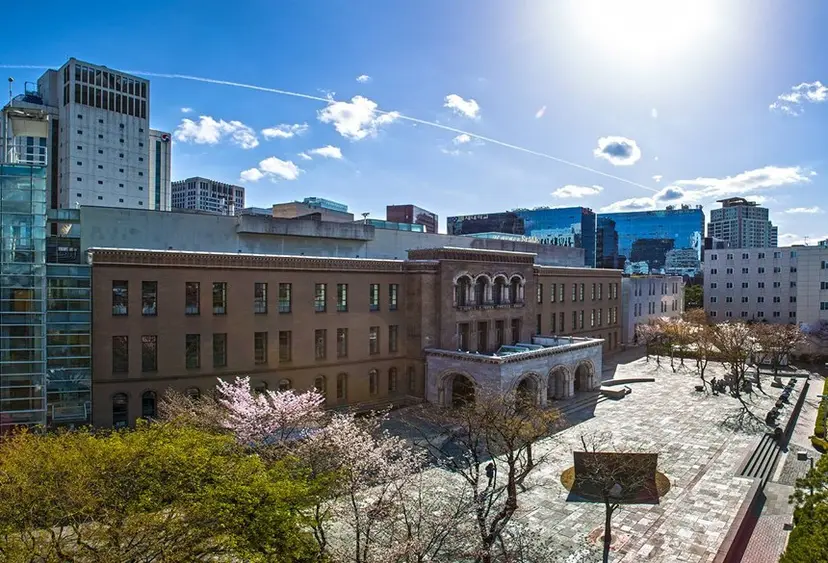
Finding Traces of a Colonial Courthouse in an Art Museum
At first glance, it didn't look ordinary. Over twenty years ago, when I worked near Seosomun in Seoul and dropped by the museum after lunch because I heard there was one just across the street, the rectangular facade finished with brown tiles and the granite arched main entrance gave off a stern atmosphere. It felt more like a city hall in a Western city than an art museum. Wait, now that I think of it, it resembles the old Seoul City Hall building, but with its rigid straight lines—save for a few arches at the main entrance and windows—it feels even more imposing. The front of the Seoul Museum of Art still preserves the solemn atmosphere of the Gyeongseong Court, which opened in 1928.
While almost everything except the front facade was rebuilt during the remodeling into an art museum, the "modern Gothic style with one basement floor and three above-ground floors" was maintained. Although it is Gothic, it adds a sense of gravity by placing semicircular arches under a flat, straight roof instead of pointed spires. The building's floor plan is shaped like the character '日', with two square courtyards centered around a central staircase and connecting passages to create a symmetrical layout. It is a structure befitting a courthouse where strict judgments are paramount. Today, the lively exhibition banners filling the outer walls feel strangely in harmony with the solemn front facade.
From Hanseong Court to Gyeongseong Court, the Supreme Court, and Finally the Municipal Art Museum
The first courthouse was established on this site in 1895. As the modern judicial system was introduced following the Gabo Reform, the Hanseong Court, Korea's first courthouse, opened here. As the name suggests, the Hanseong Court handled cases occurring in Hanseong (Seoul) and the Gyeonggi province area. Alongside it, the Pyeongriwon, equivalent to today's High Court, was also located in the same building. It handled appeals transferred from district courts, including the Hanseong Tribunal.
For the colonized Korean people, the courthouse was a gateway to the "slammer." It was a place frequently visited by young people who were well-read. Still, the modern judicial system, which determined sentences based on evidence and law rather than the Joseon-era style of "You should know your own crime!", certainly had progressive aspects. It would have been even more so had such a modern judicial system continued to develop by our own hands.
However, unfortunately, the Pyeongriwon was reorganized into the Daesimwon (Supreme Court) by the Japanese imperialists in 1907, and the Hanseong Court was renamed the Gyeongseong District Court. Then, when the Gyeongseong Court building was constructed in 1928, it housed not only the district court but also the High Court and the Appellate Court (a court situated between the district and high courts during the Japanese colonial period). After liberation, the Supreme Court of the Republic of Korea took over and used this building until it moved to Seocho-dong in 1995, after which it was transformed into the Seoul Museum of Art.
The Beginning of Lee Bul, Permanent Exhibition of Chun Kyung-ja's Representative Works
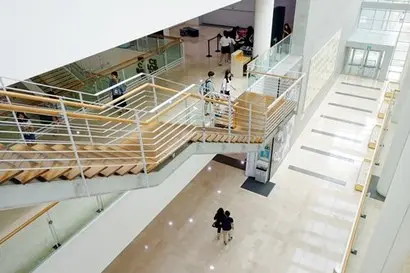
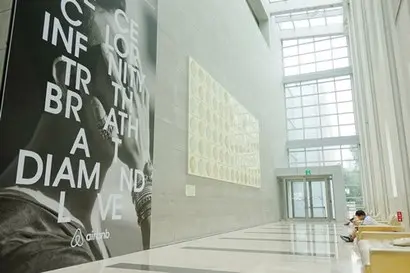
Entering the museum through the old arched gate, a completely different landscape unfolds. This is expected, as the entire building, except for the facade, was completely rebuilt for safety reasons during the remodeling into an art museum. It feels like a sort of time slip, from a colonial courthouse to a cutting-edge cultural space.
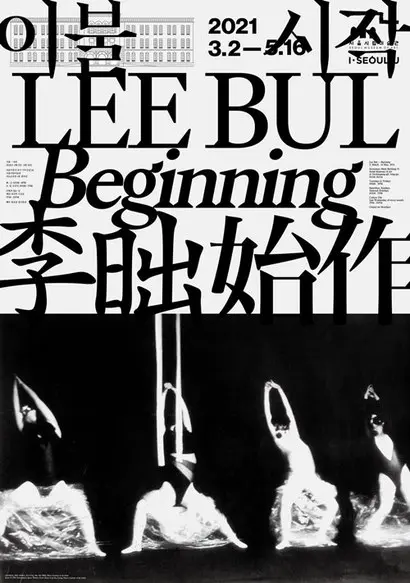
The Seoul Museum of Art focuses on invitation exhibitions by artists representing the Korean art scene as well as art education for citizens. Currently, the 'Lee Bul - Beginning' exhibition is being held, examining the works and performances from the first 10 years of Lee Bul, an artist now widely known in the global contemporary art scene. The exhibition consists of 'soft sculptures' presented by Lee to break away from traditional sculpture, as well as performance videos filmed around the world, archival photographs, and unreleased drawings.
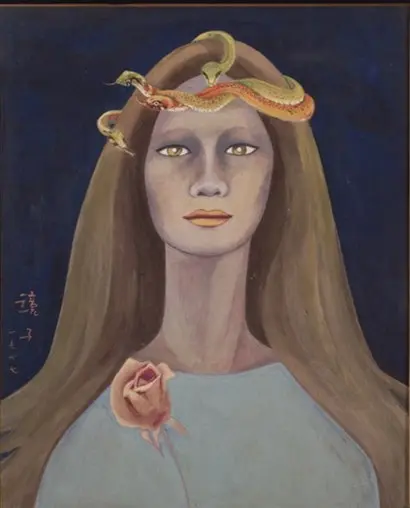
If you have shown your child the "flavor of contemporary art," it would also be a good idea to move to the permanent exhibition hall for artist Chun Kyung-ja on the 2nd floor to view more traditional paintings. Artist Chun Kyung-ja, who established a unique world of art in the Korean painting scene after liberation, donated her representative works to the Seoul Museum of Art. These pieces are on display here 365 days a year.
<Travel Memo>
Seoul Museum of Art
△ Location: 61 Deoksugung-gil, Jung-gu, Seoul
△ Inquiry: 02-2124-8800
△ Hours: 10:00~20:00, Closed Mondays (On Saturdays, Sundays, and public holidays, 10:00~19:00 from March to October; 10:00~18:00 from November to February)
The author, Koo Wan-hoe, majored in history at university and worked as a journalist for publications such as 'Woman JoongAng' and 'Friday.' As the travel publishing team leader at Random House Korea, he oversaw travel guide book series such as 'Go to the World' and 'Enjoy 100 Times.' He is currently raising two children and writes stories about history and travel that he wants to share with them.