

[비즈한국] When I first arrived in Berlin as an international student 10 years ago, the shock of realizing that "this messy neighborhood is the capital of Germany!" lasted for quite a while. Berlin's Subway Line 1, which served as the backdrop for the Korean musical "Subway Line 1," opened in 1902, and it felt like the facilities and atmosphere hadn't improved much since then. The stairwells and elevators of the subway stations were mostly filled with the familiar(?) smell of dirty public restrooms. I later realized that the source of that smell was "Gil-maek" (the act of walking around drinking beer), and I couldn't help but nod in understanding.
"Right, this is the land of beer!" Since the number of public restrooms was woefully insufficient compared to the supply of beer, it was a natural result. At the time, I was attending a school near Görlitzer Bahnhof, located roughly in the middle of Subway Line 1; whenever I got off the train, I would walk to school amidst the distinct smell of burning plants wafting from people smoking. To me, this was the smell, the image, and the atmosphere of Berlin.
It didn’t take long for me to get used to this atmosphere. A neighborhood where even a poor student didn't need to feel diminished, where everyone was poor and it was considered normal. A place where many things were a complete mess. Because of that, I could live freely without the stigma of being a "loser" even if I lived a messy life alongside everyone else. That was Berlin. It was actually strange to dress neatly or wear full makeup; it was a place where everyone lived their own lives at their own pace. For a long time, this kind of Berlin was known as the "city of poor artists."
However, as has happened in many such places, Berlin was inevitably labeled a "hip place" and experienced gentrification. While it didn't change as drastically as Hongdae or Yeonnam-dong in Seoul, change did come to Berlin. The areas where the wall that divided East and West Germany once stood had remained vacant for a long time. New buildings began to appear here first. Newly constructed apartments sprang up, primarily in areas popular with young people, and franchise cafes and shops began to open, replacing the unique, small local stores. At the same time, the city shed its "poor" image and emerged as a hub for fostering startups by highlighting the unique color Berlin possesses in the industrial sector.
Compared to cities like Munich, Stuttgart, Frankfurt, and Düsseldorf—each with its own specialized industry like automobiles, finance, or pharmaceuticals—Berlin was just a political center and a city of stories with a history of reunification. Since there was no reason for existing industries to relocate there, startups related to new industries, key sectors of the Fourth Industrial Revolution, and digitalization began to gather one by one. Low costs of living, an international atmosphere, and the full-scale support policies of the Berlin city government also played a part.
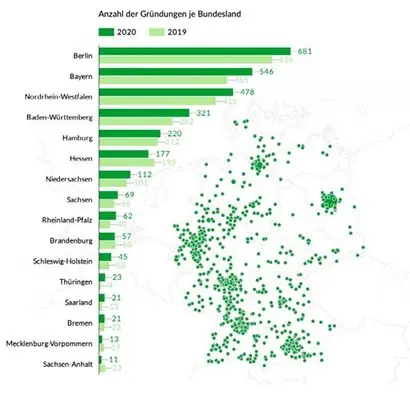
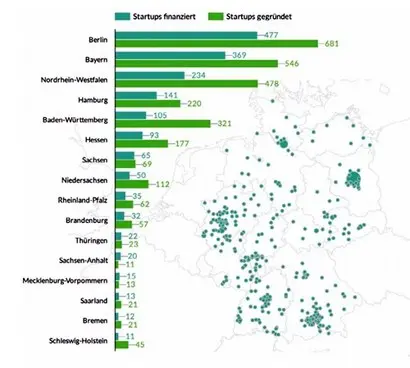
By 2020, about 681 startups had been established in Berlin (Figure 1). Berlin has become the city with the most startups in all of Germany. According to the startup research firm startupdetector, 477 out of the 681 startups in Berlin are receiving funding from the government or professional investment institutions. This abundant support has also become a reason why many startups choose to launch in Berlin (Figure 2).
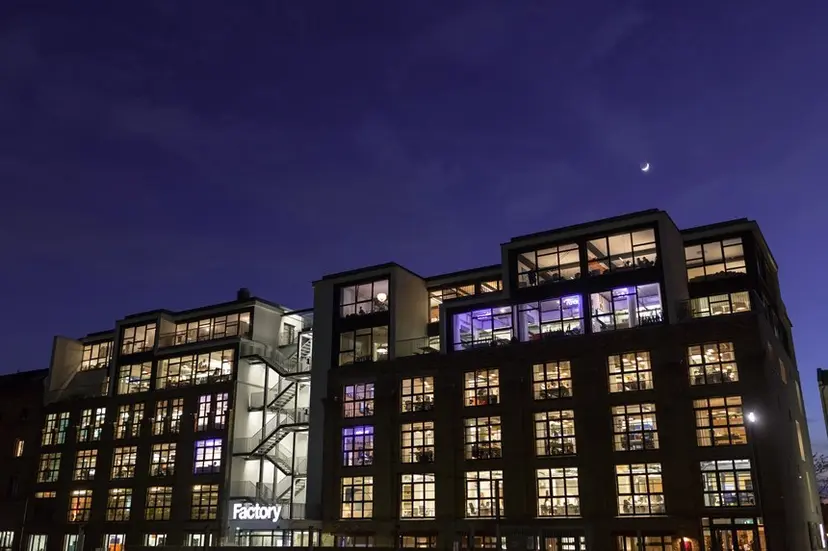
"Factory Berlin" played a vital role in making Berlin a city that serves as a nexus for art and startups. Factory Berlin is a startup accelerator and coworking space created by renovating a brewery on Bernauer Strasse, where the wall that once divided East and West Germany stood. Opening in 2014, it initially attracted global companies like Google, Twitter, and Uber, and made headlines as the innovation teams of major German corporations like Siemens, Audi, and Deutsche Bank moved their offices there. It was the birthplace of N26, Europe's largest digital bank, and served as a base for famous startups like Hello Fresh, which expanded to the U.S. with its meal kit business.
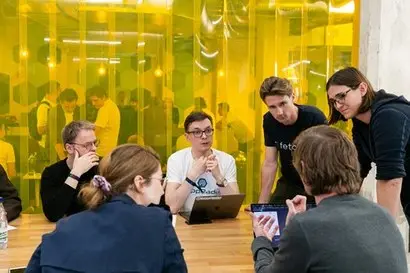
Factory Berlin took its name from "The Factory," the name artist Andy Warhol gave to his own studio. The name reveals that "artistic sensibility, creativity, and freedom" are essential components of the entrepreneurship that leads innovation. In fact, artists are also tenants here, and the organization supports them through an annual artist-in-residence program and facilitates collaborations between artists and entrepreneurs. Furthermore, it selects tenants with a balanced mix of backgrounds, ensuring a proper blend of people seeking innovation, from big corporations, SMEs, and startups to solo entrepreneurs and freelancers.
In this way, Berlin has added the image of young, innovative startups to its existing identity as a city of art, becoming an attractive destination for founders from all over the world. Furthermore, Factory Berlin has been thriving; it opened its second campus at the edge of Görlitzer Park in 2017, and plans to open its third, "Factory Hamburg," in the summer of 2021.
Berlin is a city with such high demand that it even has 10 branches of WeWork, the representative coworking office brand. However, Factory Berlin is different from WeWork. "If you are simply looking for an office to work in, you have come to the wrong place," said Nico Gramenz, CEO of Factory Berlin, highlighting a clear distinction. To move into WeWork, you only need to register and pay a monthly fee, but to get into Factory Berlin, you must submit an introduction that includes a brief business plan. They select people who contribute to the startup ecosystem and help each other grow through networking.
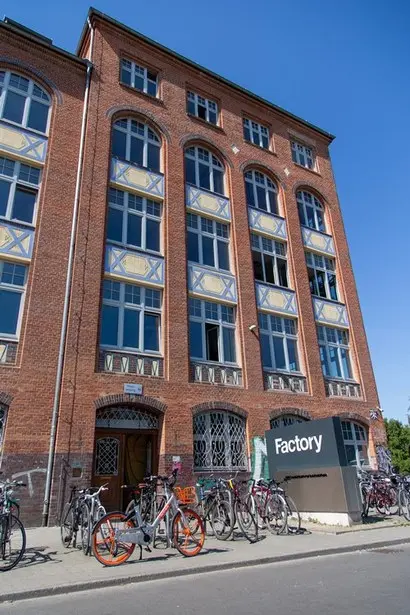
The Berlin of the 2010s, where dressing like you didn't care, wandering the streets with a beer bottle, and heading to a club was the epitome of "hip," has changed a lot. Looking at the people at the Factory, this thought becomes even stronger. It’s an atmosphere where Berliners, who start things with their own ideas—no matter how absurd—gather people, and work all night in front of their computers, are redefining the word "hip." Some Koreans who visited Factory Berlin even remarked, "Everyone looks exhausted, as if they pulled an all-nighter. It’s not as 'hip' as I thought, and it feels similar to the Gosi-chon (exam village) in Sillim-dong."
I, who had been an observer outside the Factory, also submitted a business idea about connecting Korea and Germany and moved into the Factory in early 2020. Through this series, I plan to unfold interesting stories about not only Factory Berlin but also the startup scenes in Berlin and Germany, one by one. The goal of this series is to provide "another possibility" to entrepreneurs and business people in Korea by meeting people who are deeply engaged in intense struggles rather than just "hip" trends, listening to their trials and errors, and examining the German government's support and policies.
The author, Lee Eun-seo, studied in Berlin, returned to Korea, but could not overcome her homesickness and returned to live in Berlin. She works with various startups, primarily acting as a guide for Korean companies looking to enter the German market and German companies aiming to target the Korean market.