

[비즈한국] On April 7, 2021, Oh Se-hoon, the People Power Party candidate, was elected in the Seoul mayoral by-election. Given that this election was essentially a battle of real estate pledges, the biggest concern following the election is what will happen to the Seoul real estate market.
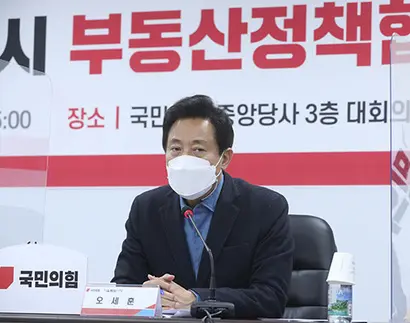
As I mentioned in my previous column, the mayor of Seoul has limited authority. Because Seoul's real estate policy is effectively subordinate to the Ministry of Land, Infrastructure and Transport, there are limits to what can be done independently without government support. Moreover, the term is very short. The local elections will be held on June 1, 2022. That is a period of one year and two months. Ultimately, he will likely be able to do nothing more than prepare for re-election in 2022.
Therefore, he will make various efforts over the next year to do his best to appease the dissatisfaction in the Seoul real estate market. Although there will be no concrete results within a year, the groundwork for future progress seems sufficient.
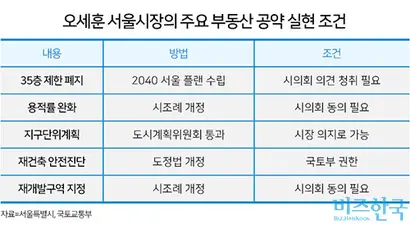
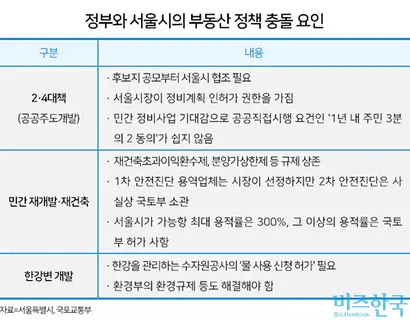
In that respect, this election is meaningful. Mayor Oh Se-hoon will pursue projects that can help him get re-elected, as he will need to appeal for a second term based on the continuity of his work.
The ruling party will also provide various policy support to win in 2022. Since one of the biggest reasons for defeat in this election was the real estate sector, it is highly likely that various policies to soothe public sentiment will emerge to regain the ground lost in real estate.
What was the biggest grievance regarding the current government's real estate measures? While there are various survey results, I believe the most objective data is the Residential Survey conducted on a large scale annually by the Ministry of Land, Infrastructure and Transport. Let’s analyze three questions from the 2020 report that allow us to infer what the public expects from the government.
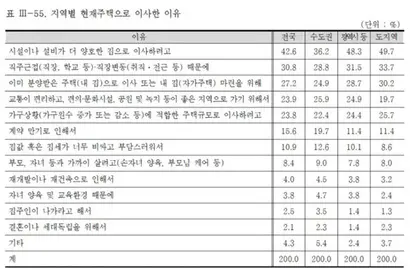
First, the reason for moving to their current home. Let’s look only at the Seoul metropolitan area, which includes the region of this election. The No. 1 reason is "to move to a house with better facilities or equipment." The No. 2 reason is "proximity to work." Combined, these two figures account for 65%. This means that 6 out of 10 people moved to their current homes because they "needed a new apartment in a location close to their workplace."
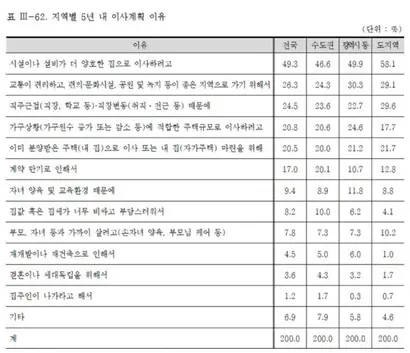
This is also reflected in future moving plans, where the intensity of desire has increased further. The combined ratio of the first and second reasons is 70.2%. More than 7 out of 10 people responded that way.
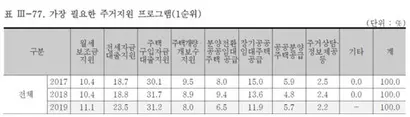
To live a residential life that reflects these expectations, the most meaningful question would be what people want from the government. The No. 1 answer is "support for housing purchase loans." The No. 2 answer is "support for jeonse (lump-sum deposit) loans." The combined ratio of the two is 54.7%. This means 5 to 6 out of 10 people hope for this.
The government must listen to these public opinions. It needs to help increase supply by even one more unit and ensure that people can move in as quickly as possible. There is a need to increase the scale of long-term, low-interest loans so that the middle class and those below can achieve their desired residential lives, not just the wealthy.
It doesn't matter if it's the ruling party or the opposition. I won't distinguish between progressives and conservatives. Anyone is fine. Let's vote for politicians who listen to these public hopes and strive to provide support. That is the only way our residential welfare will improve.
Kim Hak-ryeol, the head of the Smart Tube Real Estate Research Institute known by his pen name "Pashong," previously served as the team leader of the Real Estate Research Headquarters at Gallup Korea. He operates and hosts the Naver blog and YouTube channel, "Pashong’s World Exploration." His books include "Future Map of Korean Real Estate" (2021), "From Now On, Only Places That Can Rise Will Rise" (2020), "Korean Real Estate User Manual" (2020), "Exploration of Prime Real Estate in the Metropolitan Area" (2019), "Places That Rise Even Outside of Seoul" (2018), "There Are Still Apartments Worth Buying" (2018), "Korean Real Estate Investment" (2017), and "The Future of Seoul Real Estate" (2017).