

[비즈한국] With signs of a "fourth wave" of the pandemic emerging, discussions on the introduction of COVID-19 self-testing kits are gaining momentum. However, the government remains cautious, setting stricter qualification requirements for personal-use products in its newly announced guidelines for self-testing kits. While several diagnostic kit manufacturers have begun clinical trials in accordance with these standards, expectations are not particularly high. Above all, even if self-testing kits are authorized and products reach the market, it is expected that controversy over their implementation will persist due to the inherent limitation that achieving an accuracy rate of over 90% is difficult.
Taking a Closer Look at the 'Stricter' Self-Testing Kit Guidelines...
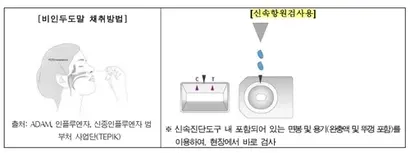
COVID-19 self-testing kits utilize the rapid antigen testing method among various COVID-19 detection techniques. A rapid antigen test is a method to identify the presence of COVID-19 viral components in samples collected from the back of the nose or saliva. Results appear in about 15 to 30 minutes. If two lines appear, it indicates a positive result for COVID-19. The principle is similar to that of a pregnancy test. This differs from the domestic standard testing method, molecular diagnosis (RT-PCR), which requires collecting samples and undergoing nucleic acid isolation and gene amplification in a laboratory. RT-PCR tests usually take more than a day.
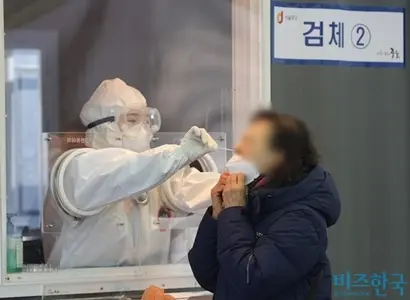
The rapid antigen testing method, newly introduced at temporary testing centers in the metropolitan area last December, has recently regained attention as the number of new daily confirmed cases has surged rapidly. This stems from arguments that the general public should be able to use antigen diagnostic kits that do not require separate equipment. In response, the government announced the "Guidelines for Approval and Review of COVID-19 In Vitro Diagnostic Medical Devices" on the 18th of last month, which reflects criteria for personal-use diagnostic reagents. On the 2nd, a meeting of quarantine authority experts was held to discuss ways to utilize self-testing kits.
According to the guidelines, to obtain approval for personal COVID-19 diagnostic kits, clinical trials must include at least one-third of asymptomatic confirmed cases who tested positive via PCR. The clinical sensitivity and specificity of personal-use antigen test products must be at least 90% and 99%, respectively. Sensitivity is the probability that a positive result is identified as positive, while specificity is the probability that a negative result is identified as negative. Accuracy is determined by combining the two. These are stricter conditions than those for professional-use antigen test kits, where the specimen is collected by an expert. For professional-use products, the government requires clinical sensitivity of 80% or higher and specificity of 95% or higher.
Products intended for self-use must also undergo a usability assessment involving 100 non-experts of various education levels, ages, and genders. The purpose is to verify whether a layperson can use the product using only training materials and whether they can accurately perform the test to derive results. Furthermore, clinical trials must be newly conducted in accordance with the revised standards. However, in cases where this is realistically difficult, previously conducted clinical trials may be accepted if valid supporting data is submitted. This is a point that hints at the government’s very cautious approach, despite considering the introduction of self-testing kits.
Diagnostic Kit Industry Starts Clinical Trials, but Why Are Expectations Low?
With the guidelines released, some diagnostic kit companies have begun preparing for clinical trials. SD Biosensor137310, which received marketing authorization from the Ministry of Food and Drug Safety for its rapid antigen kit last November and supplied it to local governments, stated that it has entered clinical trials for self-use antigen diagnostic kits. An official from Humasis205470, a company specializing in in vitro diagnostics that received domestic approval for a rapid antigen kit on the 5th, said, "We are at the stage of just starting clinical trials. We have been selling self-testing antigen diagnostic kits in the Czech Republic and Germany, so the clinical trials shouldn't be difficult."
However, the industry does not seem to have high expectations. Although the guidelines are out, there is skepticism regarding when the approval will be granted and how widely the government will allow the use of personal rapid antigen tests. Regarding demand, there is talk that it will be significantly influenced by the decisions of quarantine authorities, such as whether a prescription will be required to purchase a self-testing kit or if sales will be limited to pharmacies. In the industry, it has even been mentioned that since the opinions of experts in the quarantine authorities are still divided and there is no concrete implementation plan, it is more convenient to focus on overseas markets.
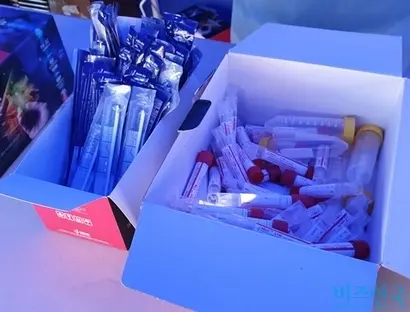
As the acceptance of industry demands to use antigen self-testing kits has been delayed, quite a few domestic companies have set out to target overseas markets early on. In March, Humasis received certification for a COVID-19 antigen diagnostic kit for self-use in the Czech Republic. As of the 25th, about 60 products have been approved in the Czech Republic, which has authorized self-screening via antigen diagnostic kits. Self-testing kits are also sold in online pharmacies and supermarkets. PCL241820 has obtained approval for the self-use of its antigen diagnostic kits in countries like Pakistan and Canada.
Accuracy Inevitably Low Due to Intrinsic Limitations of Antigen Testing
Even if the government approves the use of self-testing kits, the controversy over accuracy is likely to arise consistently. The industry argues that it is not difficult to meet the sensitivity and specificity required by the government. In fact, many companies that have released antigen diagnostic kits promote that they have confirmed over 90% sensitivity and specificity through clinical trials. However, the medical community says it is fundamentally impossible for a rapid antigen test kit to meet the 90% sensitivity and 99% specificity suggested in the guidelines.
Professor Jung Jae-hun of Gachon University College of Medicine explained, "In the case of rapid antigen tests, there is essentially no way to increase sensitivity and specificity to over 90%. However, performance can be improved by restricting use to symptomatic individuals." A specialist in laboratory medicine also noted, "Genes can be amplified because they have a replication function, but antigens and antibodies are proteins and cannot be amplified. That is why sensitivity is much lower. Because of the limitations of the method itself, 90% or higher sensitivity and specificity is theoretically impossible."
Last year, there was a controversy surrounding SD Biosensor's rapid antigen test product. The product was approved with a sensitivity of 90% and a specificity of 96%. However, when the Korean Society for Laboratory Medicine re-tested its performance, the sensitivity was 29% and the specificity was 100%. The expected sensitivity when used on new domestic patients was 41.5%. In response, SD Biosensor countered that the results were obtained through clinical trials in accordance with the Ministry of Food and Drug Safety's approval and review guidelines. The Ministry of Food and Drug Safety grants approval based on documents submitted by the company.

Meanwhile, opinions regarding self-testing kits remain divided. Some argue that allowing individuals to use products with low accuracy will lead to greater confusion in quarantine efforts, while others argue that it can help with quarantine by finding hidden sources of infection. Professor Jung Jae-hun stated, "I am reserved about whether it is necessary to introduce self-testing using rapid antigen tests, which are highly controversial, in a country where the diagnostic testing system is well-established. In the end, one would still have to get tested again via PCR." A biotech industry official said, "It is not easy for every individual to go to a temporary screening center and receive a PCR test. If it is even slightly useful, wouldn't it be better to keep the door open?"