

[비즈한국] Controversy is mounting as Citibank Korea, Shinhan Bank, and Daegu Bank, which recently announced compensation for some companies affected by KIKO, are consistently handling the process in an opaque manner.
In December 2019, the Financial Supervisory Service's (FSS) Dispute Mediation Committee decided that four banks—Shinhan Bank (15 billion KRW), Woori Bank (4.2 billion KRW), Korea Development Bank (2.8 billion KRW), Hana Bank (1.8 billion KRW), Daegu Bank (1.1 billion KRW), and Citibank Korea (600 million KRW)—should pay a total of 25.5 billion KRW in damages to four KIKO-affected companies.
When banks other than Woori Bank refused to pay, the FSS formed a "Bank Consultative Group" to proceed with mediation for 147 affected companies that had not filed lawsuits; however, the majority of the banks rejected this as well.
Then, in December of last year, Citibank stated it would provide partial compensation to some affected companies that had undergone voluntary mediation through the bank consultative group, and in February of this year, Shinhan Bank and Daegu Bank announced they would provide compensation in the same manner.
By using the term "compensation" instead of "damages," these banks made it clear that they do not admit legal liability to the affected companies. They justified the move by citing their social role as financial institutions and the difficult reality currently faced by small and medium-sized enterprises.
Since then, Citibank claimed it provided some compensation at the end of January, and Daegu Bank stated it completed its compensation at the end of February. However, the actual details of the compensation from Citibank, Shinhan Bank, and Daegu Bank remain completely unknown to the public.
A Citibank official stated, "We have compensated some affected companies. However, we cannot disclose the specific companies compensated, the criteria for compensation, or the amounts." Citibank was the first bank to introduce and sell KIKO products in Korea.
It is understood that Shinhan Bank has not yet finalized a concrete compensation plan. A Shinhan Bank official said, "We are in the stage of reviewing compensation plans."
According to the FSS's bank consultative group, the KIKO damage amount (and number of companies affected) totals 1.1451 trillion KRW, with Hana Bank at 333 billion KRW (71 companies), followed by Citibank at 253.4 billion KRW (42 companies) and Shinhan Bank at 251 billion KRW (46 companies). Daegu Bank has the lowest scale of KIKO damage at 2.3 billion KRW (2 companies).
The KIKO Victims' Committee, an association of affected companies, claimed that they have not confirmed a single case of compensation being received by their member companies from Citibank, Shinhan Bank, or Daegu Bank.
Hwang Taek, Chairman of the KIKO Victims' Committee, criticized, "Banks that should be paying damages, not just compensation, are refusing to disclose any information. If they had actually provided compensation as they claim, there would be no reason to hide it, and it is impossible that not a single case of compensation has been reported by companies belonging to our committee."
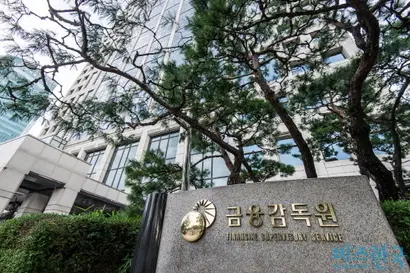
The supervisory authority, the FSS, is also unable to grasp any information regarding the compensation from these banks.
An official from the FSS's Dispute Mediation Bureau stated, "This compensation is a voluntary implementation by individual banks, not a mandatory order. As a financial authority, this is a matter where we cannot order individual banks to submit relevant information. We understand that the banks implemented partial compensation for some affected companies on the condition of non-disclosure to the public."
In response, the KIKO Victims' Committee urged, "Financial consumers cannot be protected when the financial authorities are unable to even operate the bank consultative group and cannot supervise the opaque compensation attempts by banks that reject the Dispute Mediation Committee's compensation orders. The current administration pledged to resolve the KIKO issue. Fulfill that pledge."
Meanwhile, KIKO is a derivative product designed to hedge exchange rate risks; it yields profits if the exchange rate stays within a stipulated range, but incurs losses if it falls outside that range. When export-oriented SMEs using KIKO suffered heavy losses during the 2008 financial crisis due to government currency intervention intended to artificially weaken the won, the issue of "incomplete sales" emerged, citing the banks' insufficient explanation of the product's risks.