

[비즈한국] With the rise in Seoul apartment prices slowing down in the wake of the February 4 real estate measures, attention is turning to the housing policies that new Seoul Mayor Oh Se-hoon will implement. Mayor Oh promised to revitalize reconstruction and redevelopment projects as part of his campaign for the Seoul mayoral by-election, and experts are predicting both long-term price stability from an net increase in housing and short-term price spikes driven by development expectations.
The government previously announced a real estate plan on February 4, which includes the supply of 836,000 new housing units nationwide. By 2025, it aims to supply 323,000 units in Seoul, 293,000 in Incheon and Gyeonggi, and 220,000 in the five major metropolitan cities through new urban projects (573,000 units) and the designation of new public housing sites (263,000 units). On the 24th of the same month, Gwangmyeong-Siheung (70,000 units), Busan Daejeo (18,000 units), and Gwangju Sanjeong (13,000 units) were announced as the first new public housing sites under the February 4 plan.

Seoul Apartment Price Growth Slows for Two Months, Transaction Volume Halved
In the two months since the announcement of the February 4 real estate measures, the upward trend in Seoul apartment prices has slowed. According to weekly apartment price trends released by the Korea Real Estate Board on the 8th, the Seoul apartment sales price index for the first week of April (as of the 5th) rose 0.05% compared to the previous week. The growth rate of Seoul apartment prices has shown a slowing trend, moving from 0.1% to 0.09%, 0.08%, 0.08%, 0.07%, 0.07%, 0.06%, 0.06%, 0.05%, and 0.05% since the first week of February.
Apartment sales volume has been cut in half. According to the Seoul Real Estate Information Plaza, apartment sales in Seoul in February were 3,857, a 53.5% (4,444 cases) decrease compared to the same month last year. So far, 2,470 apartment sales have been registered for March, a 44.1% (1,949 cases) decrease from March of last year. Since housing transactions must be reported within 30 days of the contract, the statistics for March transaction volume may still increase until the end of April.
The Korea Real Estate Board explained, "Due to rising market interest rates, increased tax burdens, and the crystallization of the February 4 supply measures, buying sentiment has shrunk and a wait-and-see attitude persists, maintaining the same margin of (Seoul apartment price) growth as last week."
New Seoul Mayor Oh Se-hoon to Increase Housing Supply by Revitalizing Reconstruction and Redevelopment
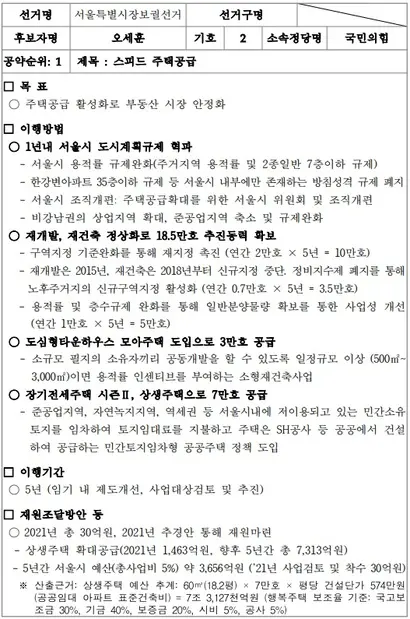
In this context, the policy moves of new Seoul Mayor Oh Se-hoon are expected to be a variable that determines future housing prices in Seoul. Mayor Oh made "Speedy Housing Supply" his primary pledge for the Seoul mayoral by-election. The plan involves pushing for the supply of 285,000 new housing units in Seoul over five years. The core of this supply plan is to ease regulations on apartment floor counts and floor area ratios, and to revitalize redevelopment and reconstruction projects.
The housing supply plans proposed by Mayor Oh include: ▲ redesignating maintenance zones by easing criteria (100,000 units), ▲ designating new maintenance zones by abolishing the "Maintenance Index System" (35,000 units), ▲ securing units for general sale by easing floor area ratio and floor count regulations (50,000 units), ▲ introducing urban townhouses through small-scale reconstruction projects (30,000 units), and ▲ introducing public housing with private land leases (70,000 units).
When announcing the pledges, Mayor Oh stated, "A stubborn attitude of sticking only to government-led supply measures will make a rapid housing supply difficult," adding, "We will use the vitality of the private market to supply housing in the form and location that citizens want."
Experts: “Expect Long-term Stability” vs. “Fear Short-term Price Spikes”
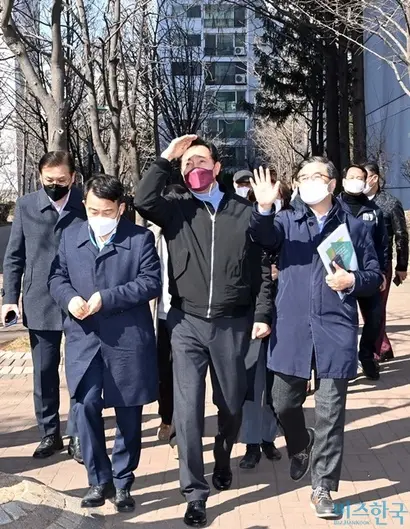
Experts have expressed both expectations and concerns regarding the pledge to revitalize maintenance projects. While an increase in housing supply (general sales) through redevelopment and reconstruction could lead to a long-term decline in housing prices, there is a risk that the designation of maintenance zones or regulatory easing could be perceived as development news, causing prices to spike before the actual supply hits the market.
Yoon Ji-hae, a senior researcher at Real Estate 114, said, "In the long run, expanding supply through redevelopment and reconstruction is necessary, but in the short term, the market may interpret regulatory easing as positive news, leading to higher prices. Analyses suggest that Seoul needs at least 50,000 units per year, and if large-scale supply exceeding that level is not achieved, price volatility may simply increase without solving the supply shortage."
Seo Jin-hyung, president of the Korea Real Estate Society (professor of business administration at Kyung-in Women's University), also noted, "It appears the Seoul Metropolitan Government will move toward reconstruction-centered housing supply. In the short term, the prices of redevelopment and reconstruction apartments benefiting from deregulation will rise, but once actual supply takes place, it should lead to price stabilization. Since there will be no immediate supply, Seoul's housing prices are likely to trend upward for the time being."
Song Ki-kyun, director of the Song Ki-kyun Economic Research Institute and representative of the Citizens' Action for Housing Price Normalization, pointed out, "Reconstruction apartment prices have been considered a leading indicator for overall apartment prices. If the city eases regulations on maintenance projects, the asset value of apartments targeted for reconstruction will rise, pushing up prices even before the actual supply occurs. It remains to be seen whether the supply effect from reconstruction will outweigh the price increases caused by those expectations. The city should increase supply by utilizing land it already owns, such as the Seoul Medical Center site, to add supply without immediately fueling housing prices."