

[비즈한국] Innisfree’s "Paper Bottle," launched last June, has recently come under fire. As it became known that Innisfree, a road-shop subsidiary of Amorepacific090430, used plastic in a product marketed as a "paper container," critics are labeling it an instance of greenwashing that deceives consumers. It is also being pointed out that the government and companies are failing to meet the heightened expectations of consumers regarding eco-friendly products.
Named ‘Paper’, but actually plastic
On the 7th, a post on the Facebook page "Living Well Without Plastic" stated, "I bought this product while looking for other items because Innisfree announced the release of a 'paper container' to minimize plastic packaging. After using it up, I cut it open for recycling and found a plastic container inside the paper-wrapped package."
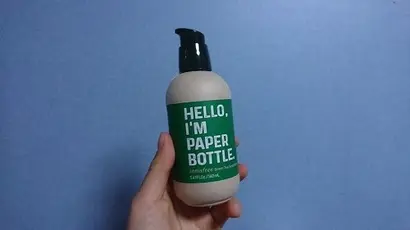
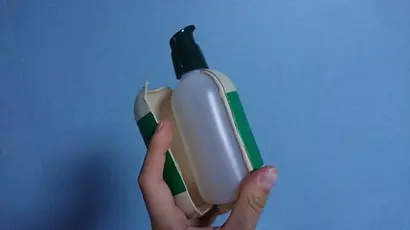
This post went viral, being shared over 120 times. The product in question is the "Green Tea Seed Serum Paper Bottle Limited Edition" released last June, and it features the text "HELLO, I’M PAPER BOTTLE" on its exterior.
Innisfree’s stance is that they "overlooked the fact that the product name could lead to the perception that the entire container was made of paper." At the time of its release, the product was sold with the explanation that "the plastic content of the container has been reduced by approximately 52%, and 10% recycled plastic was used for the cap and shoulder, contributing to the reduction of new plastic packaging. After use, the paper bottle and the lightweight plastic container can be separated for recycling."
However, social media users are still expressing fierce reactions. Comments included, "In the end, they just wrapped thick paper around plastic and called it a paper bottle," and "The wording is clearly misleading for consumers who purchased it out of concern for the environment."
Innisfree, a subsidiary of Amorepacific Group, has been beloved for its marketing strategy that highlights an "eco-friendly" image. Hong Soo-yeol, director of the Resource Circulation Society and Economy Institute, pointed out, "This appears to be a case where a company has failed to keep pace with the rising standards of consumers. If we view the container as a way to store contents, the best approach is to reuse it through refills. If that is not possible, the goal should be to minimize greenhouse gas emissions during incineration. Was it really necessary to wrap a plastic container in paper?"
Even 'eco-friendly' bio-PET is difficult to recycle
As consumer awareness of greenwashing grows, companies remain on edge. Greenwashing refers to situations where unfair profits are gained by exaggerating or falsely labeling the eco-friendly characteristics of a product.
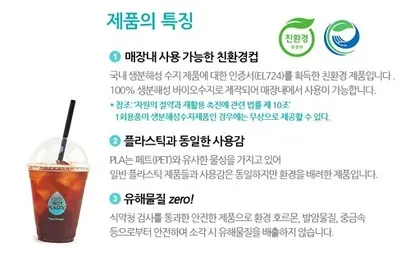
A gap is widening as the number of consumers interested in environmental issues increases, yet no clear solutions are being presented. "Bio-PET," introduced as an alternative to the plastic problem and an eco-friendly product, is also not easily recyclable. Bio-PET is plastic made from renewable raw materials such as corn or sugarcane, and it may possess the characteristics of bio-based plastics, biodegradable plastics, or both.
According to a report titled "The Misconceptions and Truths of Degradable Plastics" published by Green Korea United last December, greenwashing manifests in very diverse and broad ways, with biodegradable plastic products marketed as eco-friendly being a prime example. Even if a product is biodegradable, it may still be subject to usage restrictions, yet many companies promote biodegradable plastic products as being exempt from bans on free disposable items. The domestic guidelines for processing biodegradable plastic products are to dispose of them in standard waste bags like regular trash, and more than half of such household waste is incinerated.
Ultimately, because the conditions for biodegradation are often not met, only 18.4% of such plastics are actually recycled. Looking at the generation and treatment of household waste in 2018, out of 25,572 tons generated per day, 52.7% was incinerated and 28.9% was landfilled.
Environmental groups and citizens are paying particular attention to cosmetic containers. According to a press release by Green Korea United in February, 90% of current cosmetic containers are classified as "difficult to recycle." Cosmetic containers use a mix of various materials such as glass, plastic, ceramics, and metal depending on their ingredients and function, and the use of plastic among them is significantly high.
Experts point out that the act of using biodegradable plastics for marketing without considering disposal methods constitutes greenwashing itself. Director Hong Soo-yeol explained, "Generally, the products we consume are processed within waste management systems primarily through recycling or incineration, so whether they are biodegradable is meaningless. However, many companies market 'biodegradable plastic' as unconditionally eco-friendly without worrying about post-use processing. They need to distinguish whether the contents can be reused or not, and if not, they should replace them with products that minimize greenhouse gas emissions."