

[비즈한국] Every startup dreams of the "J-curve," representing explosive growth. However, their beginnings are always daunting, awkward, and sometimes even humble. Only startups that navigate countless trials and errors to seize opportunities are worthy of the glory of the J-curve. What kind of "ups" and "downs" occurred during this grand journey?
If you own a car, you have likely worried about periodic maintenance, thinking, "I really need to change the engine oil..." When this thought finally strikes, your regular repair shop is often too far away, and you hesitate to visit just any shop due to concerns about service quality, eventually putting it off time and again.
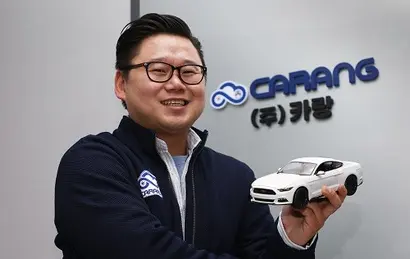
Park Jong-kwan, CEO of Carang, identified this pain point for drivers and launched an "on-site mobile vehicle maintenance service." The service targets both individuals and corporations. Last year, the company solidified its market position by merging with its competitor, "Carsuri."
START: Entrepreneurship Requires Preparation
CEO Park Jong-kwan had dreamed of being an entrepreneur since he was young. Fascinated by his uncle’s self-made success as a businessman, he wanted to change the market with his own ideas. To achieve this, he decided he needed to build expertise in a specific field. He spent seven years working as a project manager overseeing vehicle production processes at a domestic automaker.
"I was always thinking about business items. I once obtained a master technician certificate in automotive maintenance just to stimulate myself during my mundane company life. Getting this certificate was the spark that led me to take an interest in the maintenance industry. I realized that maintenance is a truly cumbersome service for drivers. I thought about how it would be to apply the on-site maintenance services already operating in the B2B market to the B2C sector."
Although Park quit his job in 2014, he didn't jump into entrepreneurship immediately. He said, "I wanted to change my identity, which was 'employee to the bone,' into that of an entrepreneur. I needed more learning. First, I joined my uncle's company for eight months to learn about business. I also worked as a mechanic at a repair shop for ten months. I even applied to the Youth Startup Academy (YSA). It was a program where the Korea SMEs and Startups Agency supported the entire startup process, from theoretical training to commercialization, to foster young entrepreneurs. I was in the 5th cohort, and it was through YSA activities that I created what is now Carang."
UP: Proper Pivoting and Investment Leading to Pre-Series A
In the early days, CEO Park operated Carang as a direct-managed business. He worked with the head of the repair shop where he had worked while preparing for the startup, refining the service planning from the very beginning. He said, "I realized that to run a maintenance business, you need a mechanic with at least 15 years of experience. One month after starting the business, I visited that shop owner and proposed the partnership. Since then, I have worked with Director Park Jun-young, who oversees site-related tasks like managing mechanics and establishing manuals. He is a key contributor to where Carang is today."
However, Park felt the limitations of an on-site maintenance service aimed at B2C. He confessed, "In B2B services, demand can be predicted monthly, but in B2C, it's impossible. Furthermore, the structure only becomes profitable if one mechanic handles six to seven cars a day, but the demand couldn't keep up. For a startup, these were significant risks."
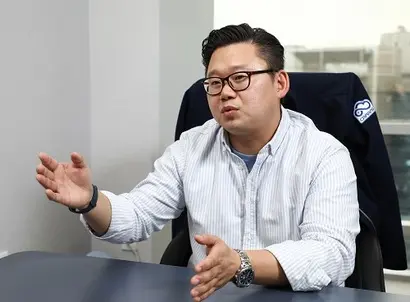
The "reality check" faced by the directly employed mechanics was another source of worry for Park. It stemmed from the increasing proportion of driving time in the mechanics' working hours. Park said, "Since they were young and promising mechanics, they had many concerns about their dreams. I had to find a way to help them level up their professional specs as well."
Eventually, Park expanded the direct service into a platform business. He judged that utilizing the mechanics' downtime would be profitable for both Carang and the mechanics. To resolve the mechanics' concerns and ensure service stability, he opened an 800-pyeong (approx. 2,645 sqm) direct-managed repair shop in Suwon, Gyeonggi-do. "After that, we received Pre-Series A investment and signed a B2B contract with a car-sharing company 'S', which served as a stepping stone to reach a certain level of revenue," he recalled.
DOWN: Living and Dying by Money – The Startup Life
CEO Park Jong-kwan faced funding issues every time Carang needed to grow. He opened up about the difficulties of attracting investment, saying, "If you can't get investment when you need to expand, you have to use your own money or take out loans. To keep pace with rapid growth, I feel like I've taken out every loan possible, from banks to the Korea Technology Finance Corporation and the Korea Credit Guarantee Fund. Even when opening the repair shop, I did it with the help of acquaintances."
Crises don't come just once. Following the Pre-Series A round, Park was preparing for a Series A round as B2B maintenance volume increased. However, he was met with the COVID-19 pandemic. The pandemic drastically dampened the investment climate, and startups even saw signed investment contracts being canceled. Carang was no exception.
Park proposed a merger to his competitor, "Carsuri." He explained the reason: "Both companies provided on-site vehicle maintenance, but Carang had strengths in B2B, while Carsuri had strengths in B2C. The merger was an opportunity to fill each other's gaps."
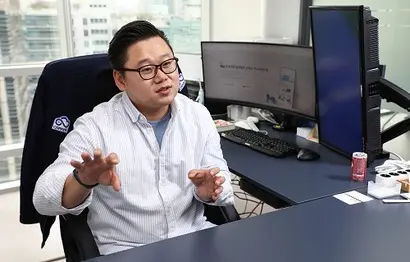
Even after the merger, securing investment was not easy due to the lingering effects of the pandemic. Park had to once again "scrape every resource together" with the help of his acquaintances. It was because he was certain that if he didn't expand the business now, he wouldn't get another chance. Carang, having overcome those difficult times, has been growing rapidly, surpassing 1 billion won in monthly revenue last December.
Stability through B2B, Growth through B2C... "I am glad to focus on the business I once dreamed of"
Carang is currently seeking financial stability through its B2B services while raising its profile in the maintenance market through B2C services. Carang is the only company that provides on-site maintenance services, specifically on-site engine oil replacement for imported cars.
"B2C was always the business model I dreamed of. But my abilities were lacking at the time. I felt that our then-competitor, Carsuri, was doing business much better than us. At the time, our B2B business was doing well. I thought if I secured stable funding, I would challenge B2C again someday. Fortunately, through the merger with Carsuri, I was able to fulfill my dream."
Carang closed its Series A round in March, raising a total of 5.5 billion won. The company intends to focus on marketing to secure B2C service demand and ensure service stability. In addition to its own services, it plans to provide on-site maintenance through partnerships with Tmap Mobility and Kakao Mobility. Carang's goal for this year is to reach 2 billion won in monthly revenue and 17 billion won in annual revenue.
"A business idea alone cannot guarantee 100% success. The power to run a business lies in entrepreneurship. When you start a business, you always face difficult situations. It's not easy to lead the business in the direction you want, either. I think the secret to long-term survival as an entrepreneur is to always contemplate what kind of impact I will make on this market in the long run. In that sense, I am still growing."