

[비즈한국] The day before yesterday (April 4th) was Easter. It is the day Jesus Christ rose from the dead three days after his passing. Due to COVID-19, there were no special events or the colorful eggs that have become symbols of Easter, but believers who gathered at churches while following quarantine protocols reflected on the meaning of Jesus' death and resurrection. Over 100 years ago, there were people on our land who also believed in resurrection. They willingly gave their lives to protect their faith. Whether you are religious or not, why not take a moment with a reverent heart to reflect on the meaning of resurrection while thinking of those who died for their beliefs?
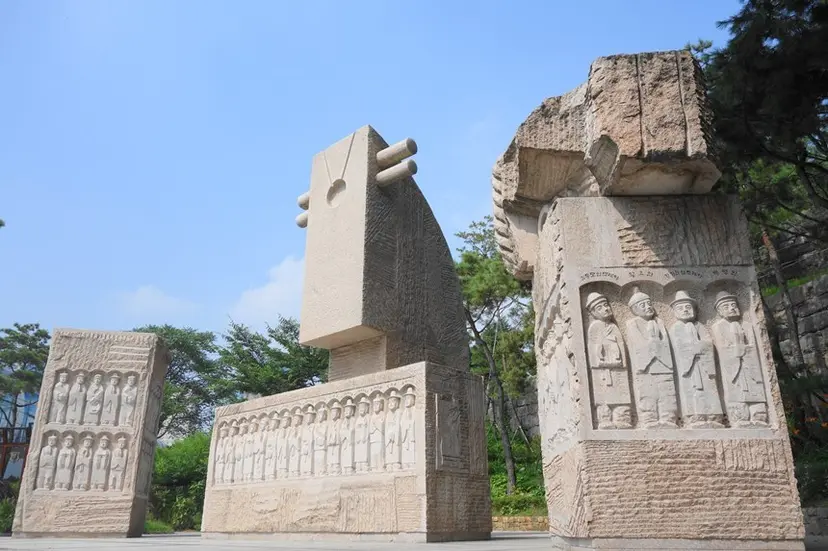
Korea's Largest Martyr Shrine: Seosomun Outside the Intersection Martyrs' Shrine
When Pope Francis visited the Seosomun Outside the Intersection Martyrs' Shrine among the martyr sites in Seoul during his visit to Korea in 2014, it was because this is the largest Catholic martyr shrine in South Korea. The intersection outside the now-vanished Seosomun Gate was the official execution site in Hanyang during the Joseon Dynasty.
In Joseon, criminals involved in various treason cases, crimes, and political coups were executed here. Death row inmates were largely divided into those guilty of treason and those who committed general crimes; while the execution site for treason was not fixed, most other death row inmates were executed at the 'intersection outside Seosomun Gate.' This followed the teaching in the 'Classic of Rites' (Liji), one of the five Confucian classics, that 'the execution ground must be to the right of the Sajik altar.' When viewed from Gyeongbokgung Palace, this location is precisely to the right of the Sajik altar (present-day Sajik Park).
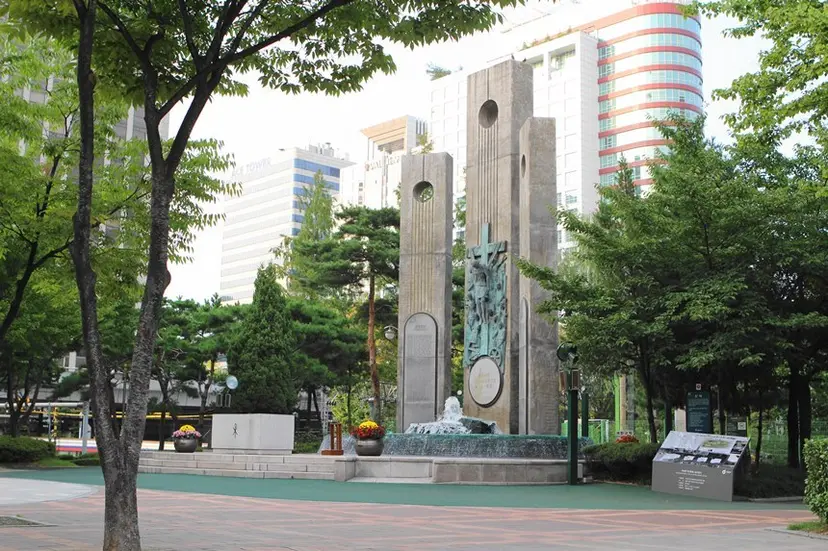
After the persecution of Catholicism began in Joseon, the execution site outside Seosomun Gate became the most important site for martyrdom. Most martyrs were arrested on charges of believing in Western Learning (Seohak), taken to the police bureau (Podocheong) for initial interrogation or punishment, and then transferred to the Ministry of Justice (Hyeongjo) or the State Tribunal (Uigeumbu) for sentencing. They were then held in the prison under the Ministry of Justice before being dragged out by officials to the execution site.
Martyrdom began with the Shinyu Persecution in 1801, during which 20 people lost their lives, including Jeong Yak-jong (the third older brother of Dasan Jeong Yak-yong), Yi Seung-hun, Choe Chang-hyeon, and Kang Wan-suk. It is known that nearly 100 Catholic believers were executed following the Gihae Persecution in 1839 and the Byeongin Persecution in 1866. The intersection outside Seosomun Gate later became a neighborhood park, and a monument honoring the martyrs was erected within it. With the opening of the Seosomun Shrine History Museum in 2019, the park was also refurbished as the Seosomun Historical Park.
Where Father Kim Dae-geon Was Martyred: Saenamteo Martyrs' Shrine
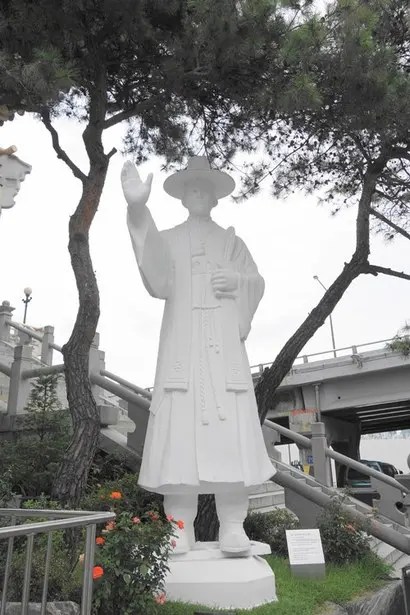
The Saenamteo Martyrs' Shrine along the Han River is famous as the place where Father Kim Dae-geon, the first Korean priest, was martyred. The name 'Saenamteo' comes from the fact that it was a shallow sandy hill near the Nodeul ferry crossing on the northern Han River, filled with silver grass and trees. Since the early Joseon Dynasty, this place was used as a military training ground and an execution site for major criminals.
While the execution site outside Seosomun Gate mainly claimed laypeople during the persecutions of the late Joseon period, this site was where clergy and high-ranking believers were executed. During the Shinyu Persecution, the Chinese priest Father Zhou Wen-mo became the first martyr of Saenamteo, and during the Gihae Persecution, Bishop Imbert, the second vicar apostolic of Korea, Father Maubant, and Father Chastan were martyred. During the Byeongo Persecution, Father Kim Dae-geon was executed, and during the Byeongin Persecution, nine French priests were executed, which served as a cause for the French campaign against Korea (Byeonginyangyo).
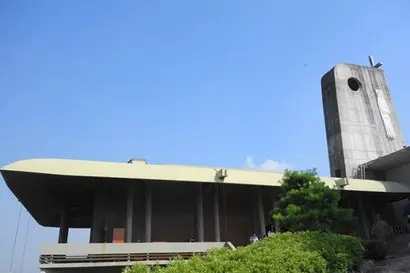
Currently, the Saenamteo Memorial Church stands at the Saenamteo Martyrs' Shrine. Completed in 1987, the church has a unique shape featuring a three-story pagoda on top of a traditional tiled hip-and-gable roof. In the Saenamteo Memorial Hall inside the church, one can see copperplate engravings of the 14 martyrs who died here, a relic room housing their remains, dioramas recreating the torture and execution scenes faced by Catholics during the persecution, and the torture instruments used at the time. A walking path following the Stations of the Cross that Jesus walked is laid out around the church.
The Mountain Where Martyrs Were Beheaded: Jeoldusan Martyrs' Shrine
The Jeoldusan Martyrs' Shrine in Yanghwajin along the Han River literally means 'Mountain where heads were cut.' Jeoldusan was not called by this name from the beginning. In the early Joseon period, it was called 'Gaeuldu,' which appears to be a change from the Korean word 'deulmeori' (entrance). It was also called 'Jamdubong' because its protruding shape resembled a silkworm. It is said that local residents began calling it Jeoldusan (Head-Severing Mountain) because countless Catholic believers had their heads severed here during the Byeongin Persecution. When the Korean Martyrs' Memorial Association purchased the land in this area, the name Jeoldusan began to be used officially.
The change of the execution site for Catholics from outside Seosomun or Saenamteo to Jeoldusan occurred because the French fleet, which triggered the Byeonginyangyo, had sailed up to Yanghwajin. The rulers of Joseon at the time, including Heungseon Daewongun, believed that Catholics were helping the French invasion. In fact, some Joseon people who had fled to China to escape persecution were hired as guides for the French fleet. Therefore, by executing Catholic believers in Yanghwajin, where the French fleet was anchored, they intended to hold them strictly accountable and set an example for others.
A total of about 170 Catholic believers were martyred here. At the Jeoldusan Shrine, which is now designated as a National Historic Site, the Jeoldusan Pilgrimage Church and the Martyrs' Memorial Hall were built in 1966 to commemorate the 100th anniversary of the Byeongin Persecution. Inside the Martyrs' Memorial Hall is the Museum of Korean Catholic Martyrs.
<Travel Memo>
Seosomun Outside the Intersection Martyrs' Shrine
△Location: 5, Chilpae-ro, Jung-gu, Seoul
△Inquiries: 02-392-5018
△Opening Hours: 24 hours, closed on Lunar New Year and Chuseok (Seosomun Shrine History Museum hours are 09:30~17:30, closed on Mondays)
Saenamteo Martyrs' Shrine
△Location: 80-8, Ichon-ro, Yongsan-gu, Seoul
△Inquiries: 02-716-1791
△Opening Hours: 24 hours, open all year round (The Saenamteo Memorial Church can be viewed for about 30 minutes starting 1 hour before Mass)
Jeoldusan Martyrs' Shrine
△Location: 6, Tojeong-ro, Mapo-gu, Seoul
△Inquiries: 02-3142-4434
△Opening Hours: 24 hours, open all year round (Museum of Korean Catholic Martyrs hours are 09:30~17:00, closed on Mondays)
The author, Koo Wan-hoe, majored in history at university and worked as a reporter for publications such as 'Woman JoongAng' and 'Friday.' As the travel publishing team leader at Random House Korea, he oversaw travel guidebook series such as 'Going to the World' and 'Enjoy 100 Times.' He is currently raising two children and writing stories about history and travel that he wants to share with them.