

[비즈한국] The prosecution has fallen into a dilemma regarding the illegal propofol use allegations involving Samsung Electronics Vice Chairman Lee Jae-yong005930. The Supreme Prosecutors’ Office’s Investigative Review Committee (IRC) concluded that the investigation should be stopped, but the vote did not yield a clear consensus for dropping the charges. With 8 members voting to halt the investigation and 6 to continue, the margin was narrow, and the vote on whether to indict resulted in a tie.
Although the charge—illegal administration of propofol (violation of the Narcotics Control Act)—is relatively minor, the symbolic status of Vice Chairman Lee has left the investigation team deeply troubled over whether to continue the probe and pursue an indictment. The fact that the case has become a matter of public debate following the IRC meeting is particularly burdensome for the prosecution. Civic groups are pushing for an indictment, arguing that "privileged chaebol elites must not be given preferential treatment," while the business community is raising voices against what they call "excessive corporate punishment," advocating for non-indictment.
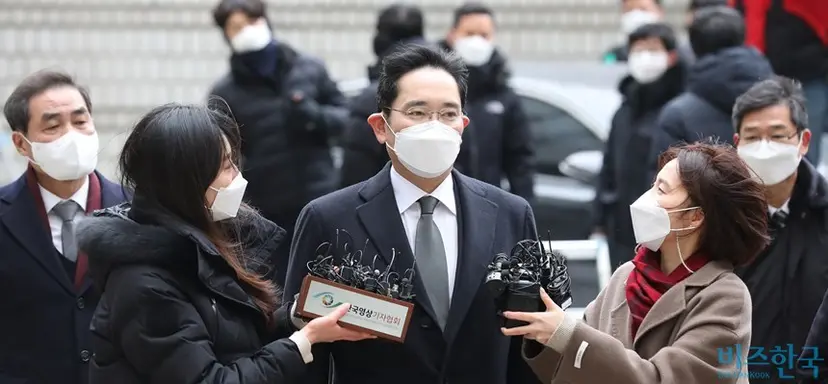
IRC Recommends ‘Halting’ Investigation, but Indictment Vote Remains Tied
Vice Chairman Lee is accused of habitually using propofol at a plastic surgery clinic in Gangnam, Seoul, since 2017. Lee’s side, which has maintained that the administration was not illegal, requested the convening of the Investigative Review Committee early this year, citing that "the investigation has made no progress for over a year." The request was granted, and the committee was convened.
The IRC, which met on the 26th, sided with Vice Chairman Lee after four hours of reviewing case materials and voting. After hearing arguments from both the investigation team and Lee’s side, the majority of the committee voted that the investigation should be discontinued.
Out of the 14 committee members present, 6 voted to continue the investigation while 8 voted to stop it. However, the vote regarding whether to indict resulted in a tie, with 7 members voting to "indict" and 7 voting "not to indict." The IRC forwarded these results to the investigation team as is.
Prosecution Deepens Concerns Over Non-Binding, Ambiguous Voting
However, this inconclusive majority vote appears to be creating a headache for the prosecution. IRC results are advisory in nature, meaning the investigation team is not obligated to follow them. Last year, the Seoul Central District Prosecutors’ Office ignored an IRC recommendation for non-indictment regarding the suspected unfair merger of subsidiaries during Lee’s succession process and indicted him without detention.
This case, however, is slightly different. The charges against Lee are relatively minor—it is a case of alleged propofol use by a chaebol leader, not a major economic crime. Furthermore, the tie in the indictment vote has shifted the spotlight back onto the "prosecution’s judgment." Cases like propofol use require absolute reliance on testimonial evidence, but both Vice Chairman Lee and the clinic director are united in their claims that "there was no illegality."
Nevertheless, the investigation team emphasized the "necessity of further investigation" during the IRC session. The team reportedly highlighted that "Vice Chairman Lee used excessive amounts of propofol, and the plastic surgery clinic director has already been convicted in the first trial." They had intended to gather more evidence and summon Vice Chairman Lee for questioning as a suspect in the near future.
External Voices Emerging Over the IRC
As the prosecution’s dilemma deepens, the Citizens’ Coalition for Economic Justice (CCEJ) immediately criticized the IRC’s results. In a statement on the 29th, the CCEJ emphasized, "The principle that any political or economic power must be investigated and tried fairly according to strict judicial procedures must not be broken. The prosecution must take a firm stance against the operation and outcomes of an Investigative Review Committee that serves the interests of the privileged."
Vice Chairman Lee’s side responded by stating that they "respect the decision that rejected both the continuation of the investigation and the indictment," while the business community has voiced complaints, calling it an "unobjective decision based on anti-corporate sentiment to ignore the IRC’s ruling and continue investigating Vice Chairman Lee." Out of 11 IRC meetings held before this one, the prosecution accepted the committee's decision in 9 cases and rejected only 2. One of those two was the previous investigation into the merger of subsidiaries; if the prosecution continues this investigation, it would mean 2 out of 3 rejections involve cases targeting Vice Chairman Lee.
The investigation team issued only a formal statement, saying, "We plan to review our final disposition by synthesizing the results of the investigation so far and the opinions of the IRC." However, prosecution officials explain that because the case—which was "under the surface"—has now become public after the IRC, the team is burdened by the fact that any decision they make will inevitably draw criticism.
A lawyer and former high-ranking prosecutor observed, "If they don't indict, they will be criticized for 'going easy on a chaebol,' and if they do indict and the result is an acquittal, they will be criticized for 'excessive investigation' by ignoring the IRC's recommendation. The IRC has landed the team in an ambiguous position where they cannot speed up the investigation nor decide to drop the case immediately, so they need to buy time. They will likely wait for more than a fortnight for the criticism to subside before deciding the direction of the investigation."