

[비즈한국] Domestic first-generation bio-venture company Helixmith084990 is continuing its turbulent journey. On the 31st, former President Kim Shin-young, who was scheduled to be appointed as CEO at the regular general shareholders' meeting, suddenly resigned, and the conflict with minority shareholders is deepening. The Emergency Committee for Minority Shareholders (Emergency Committee) is collecting proxy votes for shareholders to replace the management, and in response, Helixmith has issued a warning, stating that it is considering criminal charges. The company also continues to clash with the committee by issuing rebuttals to their various allegations one by one through IR letters.
Why is this first-generation domestic bio-venture at odds with its shareholders?
Helixmith is a Seoul National University campus venture company that has been led by CEO Kim Sun-young since 1996. Becoming the first domestic company to undergo a special technology-based listing in 2005, Helixmith rose to become the second-largest company by market capitalization on the KOSDAQ market in 2019, driven by expectations for a new pain-relieving gene therapy drug. However, in September of that same year, it failed to prove the efficacy of its first indication, the diabetic neuropathy treatment "Engensis (VM202)," in the U.S. Phase 3-1 clinical trial. The stock price, which was 318,000 won in March 2019, has steadily declined, closing at 25,800 won on the 31st. Its market cap has dropped to 70th place (884.1 billion won).
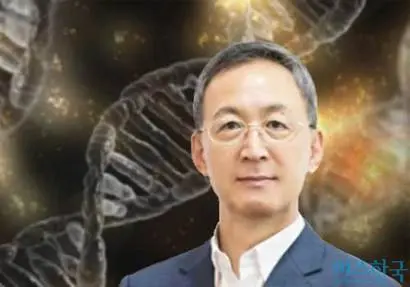
The conflict with minority shareholders spread rapidly. Shareholders were particularly incensed when Helixmith announced a large-scale rights offering of 286.1 billion won in September 2020, even as the stock price was plummeting due to the bad news from clinical trials. In August 2019, during a 146.9 billion won rights offering, CEO Kim had stated, "There will be no additional rights offerings for the next two years," but he reversed his position when the company faced the risk of being designated as an administrative issue. Controversy further intensified when CEO Kim Sun-young, the largest shareholder, announced that he would not participate in the rights offering.
During the preparation for the rights offering, it was revealed late that Helixmith had invested heavily in high-risk assets. Following a demand from the Financial Supervisory Service to amend its securities registration statement, Helixmith disclosed last October that it had invested 264.3 billion won in 68 high-risk assets, including Pop-funding-related private equity funds and DLS, over the past five years since 2016. At the time, Helixmith explained that this was inevitable because selling, general, and administrative expenses and research and development spending were higher than revenue, but it is known that it failed to recover the principal in most of these products.
Nevertheless, as minority shareholders actively participated in the rights offering, Helixmith secured about 160 billion won, avoiding the crisis of becoming an administrative issue. However, conflict with shareholders persists as new allegations arise. First, it was pointed out that since the owner family, including CEO Kim Sun-young, holds high stakes in the two subsidiaries, "Neuromyon" and "Cartexell," which were established last year by splitting off the Adeno-associated virus (AAV) and proprietary chimeric antigen receptor T-cell (CAR-T) pipelines, it would be difficult to attract external investment.
Helixmith's stake in Neuromyon and Cartexell is 58.08% and 48.13%, respectively. The second-largest shareholder of Neuromyon is CEO Kim Sun-young with 19.18%, and the third-largest is Kim Hong-geun, the CEO's eldest son, with 7.83%. In Cartexell, it is known that CEO Kim, CEO Yoo Seung-shin, and Kim Hong-geun are the 2nd to 4th largest shareholders. In particular, in the case of Neuromyon, Helixmith's stake fell from the initial 80% to 58.08% as a 35 billion won capital increase took place last October. Some shareholders argue that it should be made a 100% subsidiary of Helixmith. Shareholders have said, "It is incomprehensible why they invested in Neuromyon and Cartexell while not participating in the rights offering."
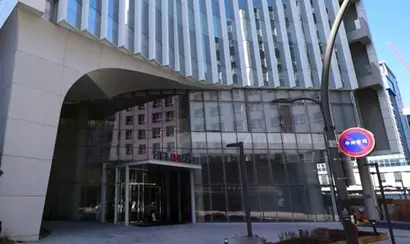
In response, Helixmith stated in an IR letter on the 30th: "Neuromyon will undergo liquidation procedures this coming April and the projects will be carried out as internal Helixmith projects. We judged that because research schedules were delayed beyond the plan, attracting large-scale investment at this stage would result in lower Helixmith stakes, which would be disadvantageous. In the case of Cartexell, the equity participation of Kim Sun-young, Yoo Seung-shin, and Kim Hong-geun was for attracting external investment and responsible management. If shareholders do not want the participation of executives, they can dispose of all their shares." However, the company firmly stated, "If we give up on the subsidiary push, we would have to use internal company funds or halt the projects, which would lead to the abandonment of the candidates."
Allegations have also been raised that a large portion of the funds raised through the rights offering is being funneled into these subsidiaries. According to the securities registration statement disclosed by Helixmith last October, it was written that 16.2 billion won would be spent on "open innovation, and equipment and facility investments related to CAR-T and AAV." 30 billion won is allocated for Engensis, and about 75.6 billion won for facility funds and other operating funds. Helixmith explained: "According to the initial business plan, Neuromyon and Cartexell were expected to require 35 billion won and 32 billion won respectively by 2023, and all of this was planned to be funded by external investment."
Furthermore, the Emergency Committee claimed that the corporate card usage limit was essentially unlimited. Helixmith countered: "The claim that the corporate card limit is unlimited is false. The total amount used by all employees during 2020 was approximately 512 million won. Most was used for welfare, supplies, transportation, insurance, and payment commissions." However, the criticism remains that the expenditure scale is excessive, as the amount spent on these items last year was about four times that of 2019.
Staking their life on Engensis clinical trials, but…
Moreover, the company is in an uproar after former President Kim Shin-young, who was scheduled to be appointed as the next CEO at the general shareholders' meeting on the 31st, suddenly resigned. Former President Kim, whose reason for resignation is known to be a difference in opinion with the current management, shared the company's problems on a shareholder forum and emphasized that "innovation" is necessary.
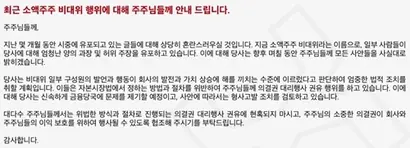
The ongoing conflict with shareholders is also a burden for Helixmith. The Emergency Committee is pushing to convene an extraordinary general shareholders' meeting with the goal of dismissing all current management and recruiting professional managers. Helixmith stated: "We plan to take stern legal action regarding the remarks and actions of some members of the Emergency Committee. We also plan to raise issues with financial authorities regarding the solicitation of proxies." At the same time, CEO Kim Sun-young is known to have promised to strengthen communication at the regular general shareholders' meeting.
Helixmith has expressed its position that it will overcome the current crisis through the "success of Engensis clinical trials." At the shareholders' meeting on the 31st, CEO Kim Sun-young pledged that if the Engensis clinical trials do not succeed by October 31, 2022, and the Helixmith stock price does not exceed 100,000 won per share, he will sell all of his company shares. Helixmith is currently conducting Phase 3-2 and 3-3 trials after failing to demonstrate statistical significance in the Phase 3-1 clinical trial for Engensis in September 2019.
However, there are skeptical voices in the industry. An industry official pointed out: "Developing a new drug is not the end. Even if it is a superior medicine, it is not easy. It is important to determine whether the drug can be placed in the insurance market and how to target the local market. That is why many bio-ventures, lacking the ability to push through to the end, choose to license out their technology. I wonder if they are in an irreversible situation by focusing only on immediate profits through investment. If that is not the case, they should announce a concrete commercialization strategy beyond just saying they will focus on clinical trials, claiming it is an 'effective drug'."