

[비즈한국] Sometimes I find myself thinking about stars from the past. I have random thoughts like, "How is that entertainer who once dominated the era living now?" or "What does that sports hero who set legendary records think when watching their successors?" Recently, the name Kim Kyung-wook crossed my mind.
This is because I saw the news that the niece of Kim Kyung-wook, the 'Perfect Gold' archer who hit the tiny camera in the dead center of the target twice at the 1996 Atlanta Olympics, won the Hyundai Motor Company005380 Chung Mong-koo Cup Korean Archery Tournament. As I muttered her name, thinking of 'Taereung National Training Center' was a natural progression. The 8-episode drama 'Taereung National Training Center,' which aired on the now-defunct 'MBC Best Theater,' was a unique series that explored the dreams and love of athletes in less popular sports like archery, judo, swimming, and gymnastics.
Although most athletes have now relocated to the Jincheon National Training Center in Jincheon-gun, North Chungcheong Province, Taereung National Training Center was long renowned as the only national comprehensive sports training facility in South Korea. Think of the stellar sports stars who passed through Taereung, like Sim Kwon-ho, Kim Yuna, or the aforementioned Kim Kyung-wook. Imagine the shining medals they won and the honor and praise they received. At the same time, Taereung is also a cruel space where countless athletes other than Sim Kwon-ho or Kim Yuna sweat and bleed, yet achieve nothing.
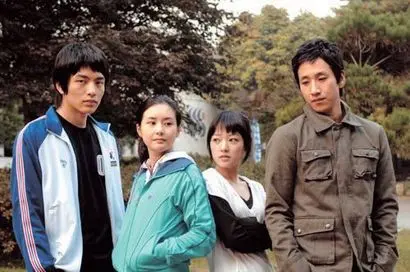
The drama ‘Taereung National Training Center’ sheds light on the youth in that trembling and cruel space where joys and sorrows are mixed at every moment. There are four young people: Bang Soo-ah (Choi Jung-yoon) of archery, who thought she was a genius but realized at some point she wasn't; Hong Min-ki (Lee Min-ki) of judo, who was a perennial second-stringer due to terrible bad luck but is now beginning to show his true worth; Lee Dong-kyung (Lee Sun-kyun) of swimming, who was the first Korean male swimmer to reach an Olympic final but whose records are gradually dropping; and Jung Ma-ru (Song Ha-yoon, then known as Kim Byul) of gymnastics, who is naturally talented but struggles with interpersonal relationships.
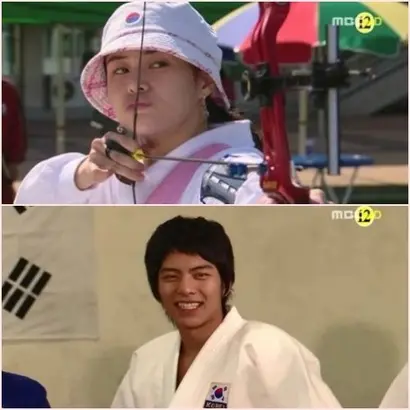
Min-ki, who could never perform at his best during tryouts due to terrible conditioning, happens to find Olympic double-gold medalist Soo-ah's medal at the track and keeps it, wanting to use it as a symbol of good luck. Though they become entangled through the medal, the moment Min-ki becomes the national representative he so desired, Soo-ah is eliminated from the tryouts. When one of the selected athletes gets into a car accident, Soo-ah returns to the training center, but she cannot escape the slump she has fallen into.
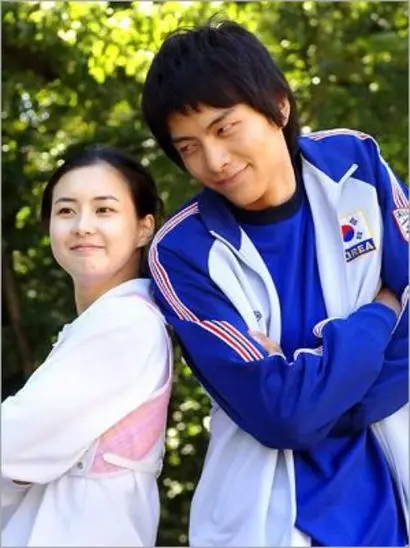
The opposing situations faced by Soo-ah and Min-ki reveal a facet of sports that is a microcosm of life. Soo-ah, who had been number one since she was young and even won two gold medals, is frustrated by the emergence of a junior referred to as the new "God of Archery." On the other hand, someone like Min-ki, who was a perennial second-stringer and self-deprecatingly called himself an "untouchable" within Taereung where status is divided by medals, can suddenly emerge and go on a 17-game winning streak. Because of the nature of "filial" sports that sweep up medals every Olympic season (even if it's just fleeting interest at that time), stars rise and fall, making it impossible to lose the tense atmosphere. Just as in reality, Rio Olympic double-gold medalist Jang Hye-jin was eliminated from the Tokyo Olympic national team trials.
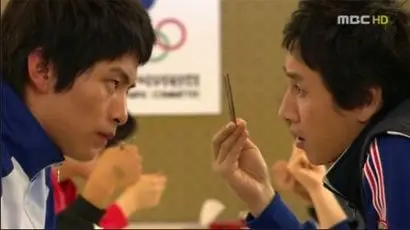
The situation of Dong-kyung, Soo-ah's long-time lover and the record-setter who reached the Olympic final for Korean men's swimming, is not easy either. His age, jokingly referred to as "sixty" in the swimming world, his ever-dropping records, and the limitations of an unpopular sport with no guaranteed future all pressure him. Standing at the opposite end of the spectrum from Dong-kyung, like Soo-ah and Min-ki, is Ma-ru. Ma-ru is a pioneer(?) who shows potential for medals with innate genius in the unpopular sport of gymnastics, but unlike Dong-kyung, she is a bright 17-year-old high school student.
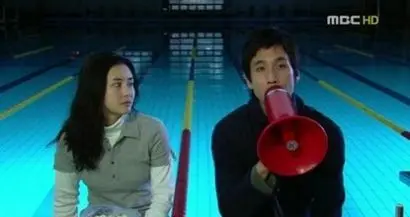
Although they are all striving toward the single goal of the Olympics, these youths are only in their 20s or early 30s, leaving them infinitely anxious and impatient. While Dong-kyung, who is older, tries to act like a mature adult, he is also inwardly anxious seeing his situation and Min-ki, who is aggressively pursuing his lover, Soo-ah. Ma-ru, who likes Min-ki endlessly but is on pins and needles due to the limitation of being a minor and Min-ki's feelings for Soo-ah, and Soo-ah and Min-ki, who are starting to feel attracted to each other but wonder, "Is this really love, and can I keep going forward?" are equally young.

But that is precisely why they hold infinite possibilities. Given the nature of sports where physical ability is paramount, Dong-kyung, who is relatively old, decides to retire, but at barely thirty, as he told Min-ki, it is a time when he could "not fear the sky, act without thinking, and endure even if he gets criticized." Just as the stable, long-time couple Soo-ah and Dong-kyung break up and the seemingly reckless Min-ki ends up with Soo-ah, there is no predetermined path for their fresh, young futures. Even Ma-ru, who breaks up with the gymnastics she poured 12 years into due to an injury, won't have her life end just like that.

A good drama is halfway to success just by having attractive characters, and in ‘Taereung National Training Center,’ all four characters are charming, lovely, and poignant. I remember it was hard to decide who was more attractive among the tightly-wound Soo-ah; her long-time lover Dong-kyung, who tries to hide his anxiety and show adult composure; the vivacious Min-ki, who leaps with life like a live fish; and Ma-ru, who imprinted on Min-ki intensely like a newly hatched duckling. Even 14 years later, thinking that they might be living hard lives somewhere makes me smile. Even Ma-ru would only be in her early 30s now.
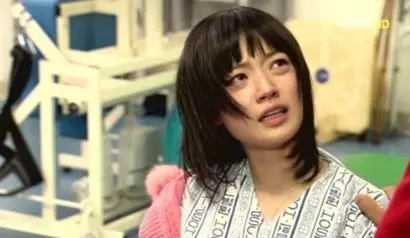
After watching ‘Taereung National Training Center’ again, I briefly think about the countless athletes who will be sweating in preparation for the Tokyo Olympics, and how we will look at them. I recall the shallow empathy we had, bathing in cheap patriotism only during major international events like the Olympics to cheer for athletes winning medals. After all, we cheered for Kim Yuna's success but did not pay attention to the long hours of patience and the poor general conditions she had to endure to reach the top.
As Min-ki said, "Is there an audience? Does anyone even recognize us? We struggle on a measly salary," and we don't acknowledge the tears of many athletes who eventually leave the sports world. Even so, despite the indifference of many people like me, I offer a small cheer to the countless youths in the training center who silently walk their own paths.
Who is the author, Jung Soo-jin?
Because of a love for movies and travel, she worked at 'Movie Week,' 'KTX Magazine,' etc., but the unchanging object of her affection was dramas. Her hobby is reading character introductions on drama websites, and she has spent 12 years in a "deadline life" ruined by getting hooked on old dramas whenever a deadline approached. Recently, she has been lurking here and there on YouTube like an adventurer exploring a new continent.