

[비즈한국] Although I am already aging, I have no desire to age mentally, so I always keep my feelers out for the latest trends (ironic, coming from someone who writes columns about old dramas). However, when it comes to picking out snacks or ice cream, I still prefer the old ones over the "new arrivals." If a snack gains a brief moment of fame like the "Honey Butter Chip," I might buy it out of curiosity, but the ones I consistently reach for are snacks like "Saeukkang" (Shrimp Crackers) or "Jagalchi." The reason I am suddenly singing praises for old snacks is because of the 1999 drama "Guk-hee."
It’s only natural to think of "Guk-hee Peanut Sand" while watching reruns of "Guk-hee" on cable TV. It was a snack already being sold by Crown Confectionery264900, but after it became an official sponsor of the drama and gained popularity, they attached the name "Guk-hee" to it. Though simple in form—savory peanut cream between two round biscuits—what appeared in the drama as "Donggeurami" (Circle) remains a steady seller even nearly 20 years later. And the drama "Guk-hee" itself is a work that people my age still vividly remember. Sigh, kids these days probably don't even know why a peanut sandwich cookie is named "Guk-hee."
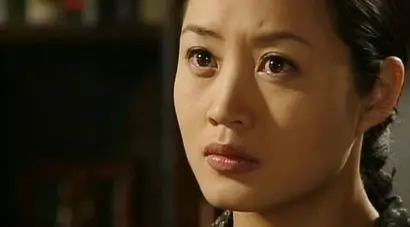
The storyline of "Guk-hee" is simple. Guk-hee’s father, Min Young-jae (Jung Dong-hwan), leaves her newborn daughter Guk-hee (Kim Hye-soo; child actor Park Ji-mi) with his friend Song Joo-tae (Park Young-gyu), entrusting him with his entire fortune before leaving to join the independence movement. Doesn't this setup already reek of tragedy? An orphaned child and a large sum of money. Guk-hee grows up getting kicked around and mistreated by Joo-tae’s wife (Kim Young-ja) and daughter Shin-young (Jung Sun-kyung; child actor Kim Cho-yeon), but she grows up to be sharp and gutsy.
Just before liberation, Young-jae returns, but fearing the loss of the property, Song Joo-tae orchestrates his friend’s assassination, and Guk-hee loses her father. Afterward, Guk-hee learns baking skills and entrepreneurship under Jang Tae-hwa (Jeon Moo-song) of "Taehwadang," eventually overcoming the hurdles set by Joo-tae’s Punggang Confectionery to become a great entrepreneur, while Joo-tae ultimately pays the price for his misdeeds. Woven into this is the love for Guk-hee from Choi Min-kwon (Son Chang-min), an economic secretary at the Gyeongmudae who fought for independence with her father, and Kim Sang-hoon (Jung Woong-in), a loan shark who grew up in the same neighborhood as Guk-hee, as well as Guk-hee’s friend Shin-young’s love for Min-kwon.
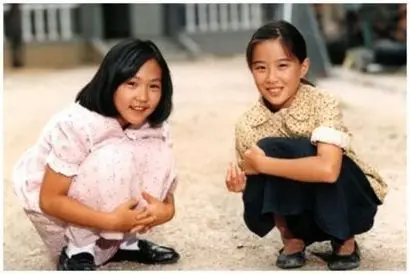
With her natural intelligence, quick wit, and nimble movements, Guk-hee showed signs from childhood that she was a "child who would achieve whatever she set her mind to." She grows further by meeting Jang Tae-hwa, the owner of Taehwadang, and learning high-level entrepreneurial ethics, such as the right mindset toward food and principles of proper management. The principles and beliefs she learns from Jang Tae-hwa are simple when you get down to it: Don't mess with the food people eat, make it honestly, and put your heart into everything, whether it's the food or the customers. However, once money and greed get involved, keeping to that simplicity is incredibly difficult.
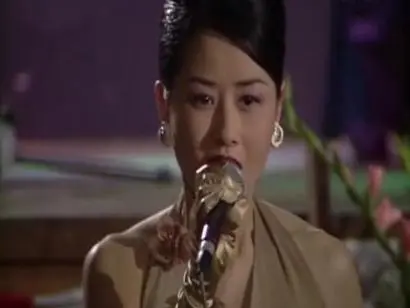
Look at President Song Joo-tae of Punggang Confectionery, who opposes Guk-hee. When he ran a noodle factory, he used lye as bleach; he quickly snatched up the patent for bread technology using edible glycerin that Guk-hee developed; and he not only undercut wholesalers with low-margin, high-volume pricing but even threw in gold rings to make people turn away from Guk-hee's "Donggeurami."
He even fabricated a story that maggots were found in "Donggeurami" to try to drive her out of the market entirely. Bribing those in power and tax evasion using double ledgers were mere trifles to him. It seems that unscrupulous businesspeople act in the same way, like conjoined twins, whether in the late 1950s, the drama's setting, or now in 2019. And because there are so few upright entrepreneurs like Guk-hee then or now, perhaps we just want to see such honest management in dramas at least.
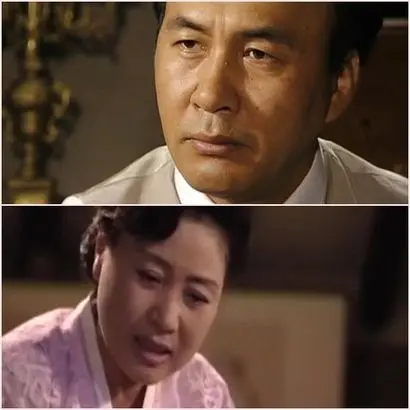
"Guk-hee," which featured a battle between good and evil that, while predictable, guaranteed a certain level of catharsis, and captured the growth story of a female entrepreneur who rises from the ruins of the late 1950s through constant effort and ideas, became so popular that it recorded a peak viewership rating of 53.1%. In the South Korea of 1999, which was reeling from the aftermath of the IMF financial crisis, success stories like "Guk-hee" were enough to touch people's hearts.
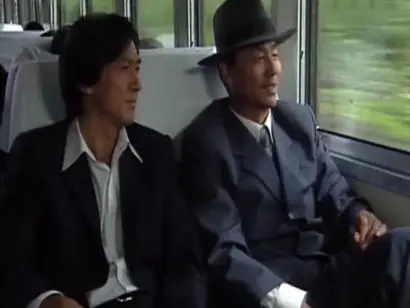
Added to this was the compelling script by writer Jung Sung-hee, who is particularly talented in period dramas, and the solid acting of the performers. In particular, one cannot praise the child actors enough. Park Ji-mi, who played young Guk-hee (who later played the child version of Kim Tae-hee in "Stairway to Heaven," now active under the name Park Ga-ryung), I recall enjoying popularity on par with adult actors for her bold and energetic performance that didn't go overboard.
And Park Young-gyu, who showed off a pathetic and petty performance in "Soonpoong Clinic" by yelling "Father-in-law, why are you doing this?", was also excellent as the villainous Song Joo-tae who never knew how to repent. As for the lead, Kim Hye-soo, it goes without saying.
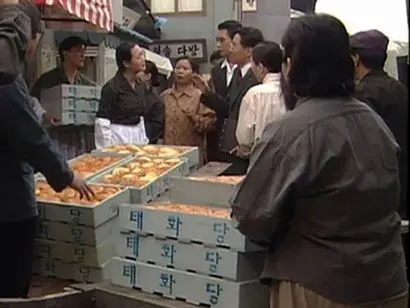
Because it focused on the growth of a female entrepreneur, the love line was drawn somewhat weakly, but that seemed to help the drama's success even more. Even when Guk-hee faced difficulties, she never easily asked for help from those around her, and Choi Min-kwon, whom she eventually ends up with, might be by her side when she's in trouble, but he never offers an easy hand. Watching it again now, I find myself more drawn to the cold-hearted loan shark Kim Sang-hoon, who helps Guk-hee from behind in every way possible, than to the always-righteous Choi Min-kwon. But because Guk-hee was someone who wanted to succeed solely through her own efforts, she probably couldn't end up with Sang-hoon.
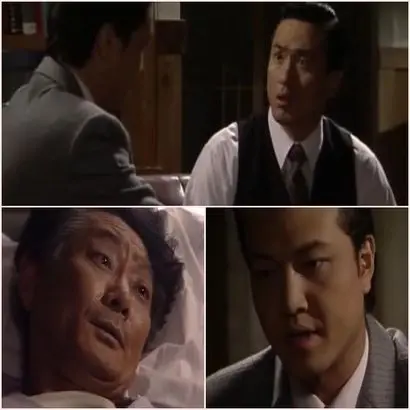
Anyway, watching "Guk-hee" makes me slowly start craving "Guk-hee Peanut Sand." Looking into it, besides "Guk-hee Peanut Sand," there is a sister product called "Guk-hee Choco Sand," which was the choco sandwich made by Punggang Confectionery in the drama, and recently, a green tea cream sandwich called "Guk-hee's younger sibling Sook-hee Sand" has been released, mainly in convenience stores. Still, when it comes to snacks, the old ones are best.
Who is the writer Jung Soo-jin?
Loving movies and travel, she passed through "Movie Week" and "KTX Magazine," but her unchanging object of affection has always been dramas. Reading character introductions on drama websites is her hobby, and she spent 12 years living a life of "ruined deadlines" because she would get hooked on old dramas whenever a deadline approached. Recently, she is roaming around YouTube like an adventurer exploring a new continent.