

[비즈한국] According to the 2024 National Health and Nutrition Examination Survey, one in ten Koreans over the age of 65 suffers from sarcopenia. This condition involves a decline in muscle mass, strength, and function as one ages. Sarcopenia increases the risk of falls, fractures, and the development of chronic diseases. Therefore, strength training is emphasized for those in their 50s and beyond, typically focusing on slow-twitch fibers that contract slowly and sustain effort over long periods.
However, Dr. Hong Jeong-gi, an authority in sports medicine, emphasizes that as we age, we should focus more on fast-twitch muscles than slow-twitch muscles. Fast-twitch muscles are those that contract rapidly to produce sudden, powerful force. While slow-twitch muscles are beneficial for long-lasting movements like walking or maintaining posture, fast-twitch muscles are used for sudden movements, such as sprinting or lifting heavy objects instantaneously.
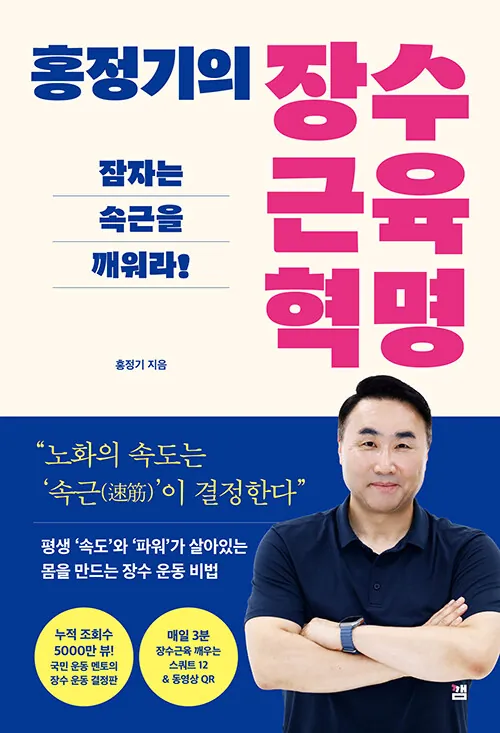
Written by Hong Jeong-gi, Ggaem
In his new book, ‘Hong Jeong-gi’s Longevity Muscle Revolution,’ Dr. Hong Jeong-gi explains why it is necessary to train fast-twitch muscles and provides specific training methods.
Why should we train fast-twitch muscles? Because as we age, they weaken first and at a faster rate. The author explains that while fast-twitch muscles decrease by approximately 50% between the ages of 30 and 80, the loss of speed, power, and reactive ability can occur even if one’s outward muscle mass appears similar. Maintaining fast-twitch muscle function is essential for responding quickly to unexpected situations and leading an active life. This is why the author refers to fast-twitch muscles as "longevity muscles."
The training method for fast-twitch muscles is different. The key is to stimulate the muscles in a way that is short, fast, and intense. The author has devised 12 postures tailored for fast-twitch muscle training by modifying the speed, direction, and intensity of the widely known squat. Using these, he provides a specific 4-step daily, 3-minute exercise routine to build longevity muscles.
Is it safe for seniors to exercise this way? Research introduced in the book shows that people over 90 years old increased their strength by 174% after eight weeks of resistance training. This demonstrates that muscles continue to respond to exercise stimuli even at an advanced age. One should not avoid necessary physical stimuli simply due to age. In fact, Julia Hawkins, an American woman who began sprint running after turning 100, completed a 100-meter dash in under 40 seconds at age 105.
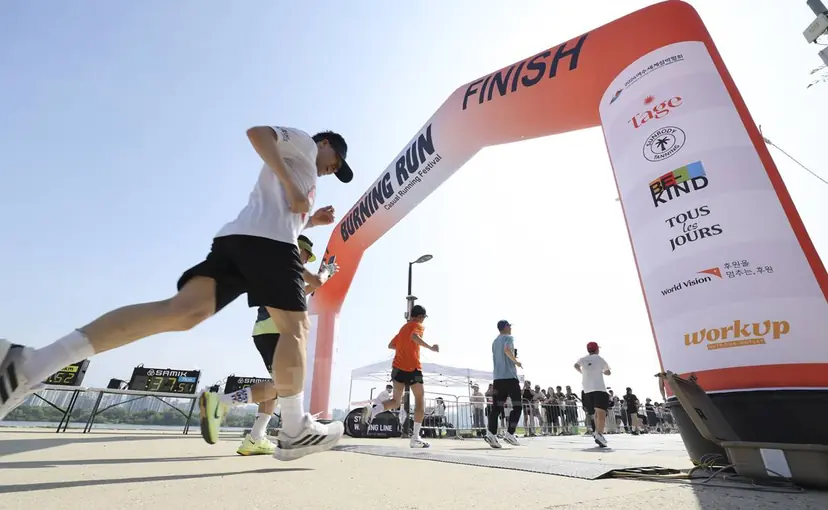
The author, Dr. Hong Jeong-gi, is an expert in sports medicine and a doctor of exercise science who has helped with the rehabilitation and conditioning of top-tier athletes such as Kim Min-jae, Ki Sung-yueng, and Yun Sung-bin. A former youth national weightlifter, he became a rehabilitation trainer after suffering recurring injuries. He has experienced everything from clinical and academic research to field work, including serving as a strength coach for the Kia Enterprise and Ulsan Mobis professional basketball teams, working on everything from elite athlete performance enhancement to pain management for the general public.
Currently serving as the Dean of the Graduate School of Sports Medicine at Cha University and President of the Korean Society of Athletic Training, he shares exercise science in an accessible way through his books, YouTube channel, broadcasts, and lectures. ‘Hong Jeong-gi’s Longevity Muscle Revolution’ includes QR codes for videos featuring the author himself demonstrating the exercises. Anyone can easily train their fast-twitch muscles by following along with the videos.