

[비즈한국] Attorney A, a former deputy chief prosecutor, has been busier than ever recently due to the criminal cases he is handling. This is because prosecutors are increasingly requesting additional statements or evidence to wrap up their cases. As he has to visit prosecutors' offices in person to convey his clients' positions, his trips on the KTX to regional prosecutors' offices have also increased. "Prosecutors are accelerating their efforts to reach decisions—either dropping charges or indicting—on cases they have been holding for anywhere from four to five months to over one or two years," Attorney A hinted. "In particular, for cases that were ambiguous, there has been a surge in lawyers approaching the prosecution to secure non-indictment decisions."
The Criminal Proceeds Recovery Department of the Seoul Central District Prosecutors' Office (Chief Prosecutor So Jeong-soo) launched a compulsory investigation into allegations of violation of the Act on Regulation and Punishment of Criminal Proceeds Concealment and tax evasion by the family of former President Roh Tae-woo. On the 21st of last month, they raided the Yeonhui-dong residence in Seodaemun-gu, Seoul, where the former president's wife, Kim Ok-sook, resides. The East Asia Cultural Foundation and the Roh Tae-woo Center, where his son, Roh Jae-heon (Ambassador to China), serves as board chairman, as well as the residence of a former secretary suspected of providing borrowed-name accounts, were also included in the search and seizure warrants.
This comes one year and ten months after the 5·18 Memorial Foundation filed a criminal complaint. The legal community believes that the investigation will not be concluded before the Prosecution Service is dissolved and the Prosecution Agency (Public Prosecution Service) is launched on October 2. However, some assess that the initiation of a search and seizure just 50 days before the dissolution of the prosecution was intended to ensure that the "start" of the compulsory investigation is marked by the prosecution.
Deciding Between Non-Indictment or Indictment
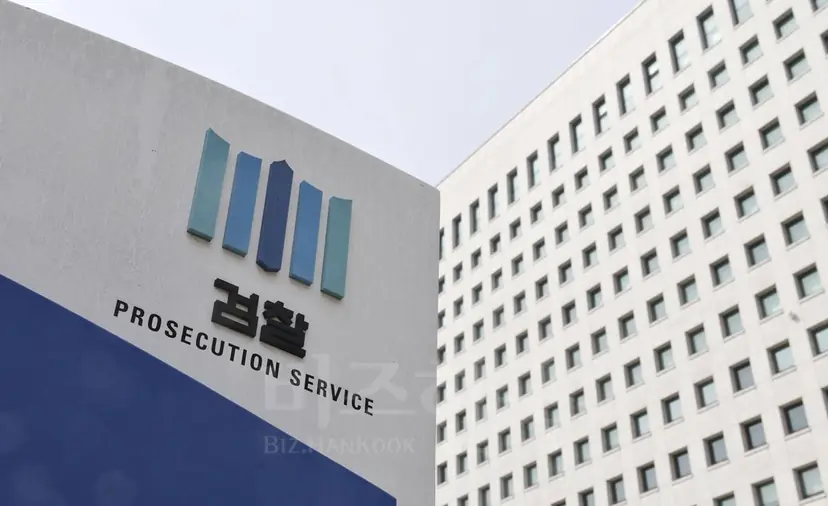
With less than a month left until the prosecutors' office shutters and a new criminal justice system that fully separates investigation and indictment is launched, frontline prosecutors' offices are busy "wrapping up cases." The goal is to dispose of as many cases as possible—including long-term cold cases that have been under supplementary investigation for a long time—based on currently available records, and to transfer unfinished cases to the police or the Serious Crimes Investigation Agency (SCIA).
The Supreme Prosecutors' Office issued guidelines to this effect to frontline offices on the 3rd. Cases currently under investigation are to be classified by type, and those that can be handled must be closed promptly. While unavoidable cases can continue to be investigated for up to 90 days after the launch of the Prosecution Agency on the 2nd of next month according to the revised Criminal Procedure Act, the rest must be transferred to the police or the SCIA, which is why they are rushing to "finish up cases."
The Supreme Prosecutors' Office has instructed that in the case of long-term cold cases, if supplementary investigation within the deadline is difficult, a decision on whether to indict or not should be made based on the evidence relations in the current records. They determined that demands for supplementary investigation from the SCIA should be avoided as much as possible. If unavoidable, approval from the Chief Prosecutor must be obtained.
The explanation is that the prosecution is mechanically choosing between "clearance sales" (dropping charges) and indictments for sensitive political and corporate cases that they have held for anywhere from four to five months to two to three years, as if stamping a seal. A prosecution official explained, "If we leave these as cold cases and transfer them to the SCIA or police, the prosecution's decision-making process or flaws might be exposed. The leadership's judgment is that we must process as many cases as possible to minimize such controversy."
Law Firms Scramble to Secure 'Non-Indictment'
It is a natural consequence that prosecutors are seeking out lawyers. They are asking lawyers for suspects or victims to "submit any additional opinions or evidence as quickly as possible, as we will be closing the case soon." Conversely, lawyers are visiting the prosecution more actively than ever to request "non-indictment."
The representative of a small law firm, a former chief prosecutor, hinted, "As the prosecution is pouring out case dispositions, large law firms are using their former prosecutors to exert tremendous influence on the prosecution to handle cases in their clients' favor. I've had meetings with prosecutors twice a day this month alone. Since there is no system yet for how to request reinvestigation once things are split between the SCIA and the Prosecution Agency, law firms view this as a 'once-in-a-lifetime opportunity to prevent a reversal' if they get a non-indictment now, making the 'persuasion war' incredibly intense."
Suddenly Launching Mega-Scale Planned Investigations, Why?
However, the prosecution's moves do not stop at simply "clearing the deck." A counter-intuitive phenomenon is also being observed where they are suddenly launching new, mega-scale planned investigations despite having less than a month until October 2, a period during which it is physically impossible to reach a conclusion.
The most representative case is the compulsory investigation (search and seizure) related to the "alleged concealment of former President Roh Tae-woo's slush funds," which was suddenly executed at the end of August. The Seoul Central District Prosecutors' Office executed search and seizure warrants on relevant financial institutions and individuals, stating they would uncover the reality of the Roh Tae-woo slush funds, such as the "30 billion won Sunkyung promissory note" that surfaced during the divorce trial between SK Group Chairman Chey Tae-won and Art Center Nabi Director Roh Soh-yeong.
Analyses suggest that the background for initiating a large-scale slush fund investigation at this point—which would normally take at least several months and up to two years—is to "set the stage." The argument is that the prosecution intends to use the 90-day (3-month) grace period allowed for finishing their own investigations even after the launch of the Prosecution Agency to utilize their "post-transfer investigative power" for major cases they have already begun investigating, such as major intelligence cases or Korea Fair Trade Commission referrals.
Also, if the prosecution proactively secures the skeleton of the charges and key "smoking guns" through search and seizure, it would be difficult to significantly change the structure created by the prosecution even if the case is transferred to the SCIA on October 2. Fierce legal battles are expected over the evidence or warrants secured by the prosecution in this process.
A judge at the Seoul Central District Court predicted, "If a suspect in a case where indictment has been suspended is apprehended by the SCIA after October 2, a legal dispute could arise over whether it is lawful for the SCIA to secure custody based on a warrant requested by the prosecution, which has lost its investigative authority. There will be fierce legal interpretation battles between lawyers and the SCIA/Prosecution Agency as they dig into the gaps between existing laws and the new organizational structure."