

[비즈한국] Steelmaker KG Steel has become the new owner of K Car, the nation's largest direct-managed used car platform. By having KG Group, which counts automaker KG Mobility (KGM) as a subsidiary, acquire a used car company but positioning a steel manufacturer rather than an automaker as the acquiring entity, the group has drawn attention to its strategic restructuring.
KG Group explains that instead of KG Mobility, which requires aggressive growth investment, having KG Steel—which holds a relatively more stable financial structure—own K Car is more beneficial for the group’s overall capital efficiency. With the acquisition finalized, the structure of KG Group’s mobility business has also emerged: KG Mobility handles manufacturing, K Car manages used car distribution, and the KG Inicis affiliate oversees automotive finance.
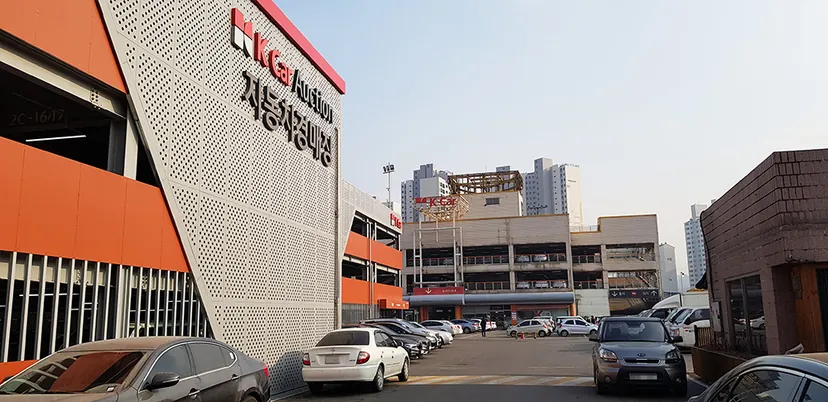
On August 31, KG Steel completed the acquisition of 25,632,810 shares of K Car from Hahn & Co. Auto Service Holdings after making the final payment. The acquired stake is 52.50%, and the final acquisition price is 394.61015 billion won. Following an initial down payment of approximately 37.5 billion won on April 1, KG Steel paid the remaining balance of approximately 357.1 billion won on August 31. This marks the conclusion of the change-of-control process about five months after the stock purchase agreement was signed in late March. In line with its incorporation into KG Group, K Car has changed its corporate name to ‘KG Mobility Platform.’
The initial transaction structure was different. On March 31, KG Steel had planned to acquire the entirety of Hahn & Co. Auto Service Holdings’ 72.19% stake in K Car (35,245,670 shares) for approximately 550 billion won. However, on April 21, it transferred the status of the buyer for 9,612,860 shares—representing 19.69% of the total—to Cactus Private Equity. On June 25, Cactus PE then transferred that position to K Mobility Value-Up, a special purpose vehicle. Ultimately, KG Steel lowered its acquisition burden by directly purchasing only the 52.5% stake required to secure management control of K Car.
Why KG Steel, Not KG Mobility, Acquired K Car
What catches the eye is that KG Steel, rather than KG Mobility—which is closest to K Car in terms of business operations—became the major shareholder. KG Steel’s core business is the production and sale of cold-rolled steel sheets, galvanized steel sheets, and color-coated steel sheets. Conversely, KG Mobility is a complete vehicle manufacturer. Given the direct business overlap with K Car in areas like used car purchasing/sales, certified pre-owned vehicles, and car rentals, it would have been more natural for KG Mobility to be the acquiring entity.
KG Group Chairman Kwak Jae-sun explained this acquisition structure directly at a press conference in June. Chairman Kwak stated, "KG Mobility is a company that still has many areas requiring investment," and argued that it is more appropriate for the group’s overall efficiency for KG Steel to hold K Car rather than KG Mobility. The logic is that while KG Mobility needs constant capital injection to grow, KG Steel possesses relatively stable profitability and a robust financial structure, making it better suited to hold cash-generating assets.
KG Mobility has significant growth investments planned. According to the mid-to-long-term plan announced by KG Group in June, KG Mobility intends to sequentially release seven eco-friendly vehicle models—including electric vehicles (EV), hybrids (HEV), and plug-in hybrids (PHEV)—by 2030. It also aims to expand its KD (knock-down) assembly business in the Middle East and Southeast Asia, targeting 200,000 annual vehicle sales, 10 trillion won in revenue, and an operating profit margin of over 5% by 2030. For KG Group, choosing to invest in new vehicles, electrification, and overseas expansion rather than tying up KG Mobility's funds in a used car acquisition was a strategic choice.
In contrast, KG Steel consistently generates cash from its core business. Last year, on a separate basis, KG Steel recorded 2.9264 trillion won in revenue, 133.5 billion won in operating profit, and 119.4 billion won in net profit. In the second quarter of this year, it posted 896.4 billion won in consolidated revenue and 43.1 billion won in operating profit, marking increases of 11.3% and 16.9%, respectively, compared to the same period last year. Its export ratio in the second quarter reached 53.1%, the highest in the company’s history.
However, the 394.6 billion won acquisition cost is not a trivial amount for KG Steel. As of the end of 2025, KG Steel’s total assets were 3.1007 trillion won, with equity of 2.0554 trillion won based on consolidated financial statements. This acquisition represents 12.73% of total assets and 19.20% of equity. It is also more than three times the separate net profit the company earned last year.
KG Steel liquidated its assets ahead of the K Car acquisition. In June, it sold 6.5 million shares obtained from converting Taihan Cable & Solution convertible bonds (CB) into stock through an off-hours block deal. The sale price was 38,962 won per share, totaling 253.253 billion won. KG Steel cited asset optimization and securing funds for future growth investment as the purposes for the sale. The market interpreted this as an effort to secure large-scale cash ahead of the K Car purchase.
Acquisition financing was also utilized. In July, KG Steel disclosed a structure to borrow a total of 100 billion won for the K Car purchase: 67 billion won from KB Securities, 26 billion won from KDB Capital, and 7 billion won from SBI Savings Bank. The loan term is five years from the initial drawdown. Among the K Car shares acquired by KG Steel, 19,225,720 shares, along with the securities accounts holding them, were pledged as collateral. Combining the 253.3 billion won from the Taihan Cable & Solution stock sale and the 100 billion won in acquisition financing covers most of the 394.6 billion won final acquisition price.
K Car, which KG Steel took on the burden of acquiring, is a company with proven cash-generating power. In 2025, K Car recorded 2.4388 trillion won in revenue and 76 billion won in operating profit. Both figures were record highs, increasing by 6.0% and 11.5%, respectively, from the previous year. Last year, the company sold 156,290 used cars and held a 12.7% market share. As KG Steel becomes the major shareholder, K Car’s future performance will also impact KG Steel’s consolidated results.
KG Group’s Mobility Landscape: Steel, Manufacturing, Used Cars, and Finance
The used car finance business has been placed under another listed affiliate, KG Inicis. Through its subsidiary KG Capital Holdings, KG Inicis will acquire 100% of K Car Capital. The final acquisition cost is 207.97785 billion won. The structure involves KG Inicis investing 58 billion won into KG Capital Holdings, with the latter securing the remainder of the acquisition funding. K Car Capital recorded 745.6 billion won in assets and 13.1 billion won in net profit last year.
Ultimately, the total acquisition cost directly invested by KG Group affiliates into K Car and K Car Capital exceeds 602.6 billion won. However, instead of one company taking on both the used car and finance businesses, roles were divided so that KG Steel holds K Car and the KG Inicis affiliate holds K Car Capital. This structure allows KG Mobility, responsible for vehicle manufacturing, to seek business synergy without directly injecting large-scale funds into the acquisitions.
The synergy KG Group expects is most likely to be seen directly within KG Mobility. Chairman Kwak Jae-sun explained that by using the K Car platform, the certified used car business can be expanded to include all brands, not just KG Mobility vehicles. The plan involves utilizing KG Mobility’s nationwide service network for the used car reconditioning process and increasing sales of KG Mobility vehicles through the expansion of K Car’s rental and leasing businesses. In the long term, the goal is to expand into an overseas used car platform by leveraging the vehicle purchase, sales, and repair data accumulated by K Car.
Because of this, the K Car acquisition structure serves as a case study for role division among KG Group’s affiliates. KG Steel takes on the burden of the 394.6 billion won investment and borrowing to become the major shareholder, reaping the benefits of performance and investment returns. KG Mobility seeks business synergy in certified pre-owned vehicles, maintenance, and rentals without the burden of a direct acquisition. The KG Inicis affiliate handles the installment finance business necessary for the used car purchase process. In effect, the connection between ‘vehicle manufacturing, used car distribution, and finance’ promoted by KG Group is being realized through different listed affiliates.
The key moving forward is how this division of roles translates into actual performance for each affiliate. If K Car’s profits become a new cash cow for KG Steel, while KG Mobility simultaneously creates new revenue in used car distribution and services, Chairman Kwak Jae-sun’s capital allocation strategy will gain momentum. Conversely, it remains to be seen whether the costs borne by each listed affiliate and the benefits they derive are balanced, independent of group-wide synergies. The outcome of this somewhat unusual structure—where a steel company buys a used car company and an automaker utilizes its platform—is now the next task for KG Group to prove through its financial results.