

[비즈한국] In the sweltering heat of summer, I head to the grocery store, craving the taste of steaming corn just out of the pot. Among the pile of corn in the bins, which one has kernels packed tight? Is there a way to tell without peeling back the husk? Jung Joo-hye, author of the new book 'Walden of the Grass', tells us that we should simply pick the corn with plenty of silk. Corn silk is actually the style of the corn's pistil, and each strand is connected one-to-one to an ovule inside. When this ovule grows, it becomes one kernel of the corn we eat.
'Walden of the Grass' tells stories like this—about plants we are familiar with, yet know little about. In particular, one cannot help but be amazed by the sophisticated and meticulous survival strategies of these grasses.
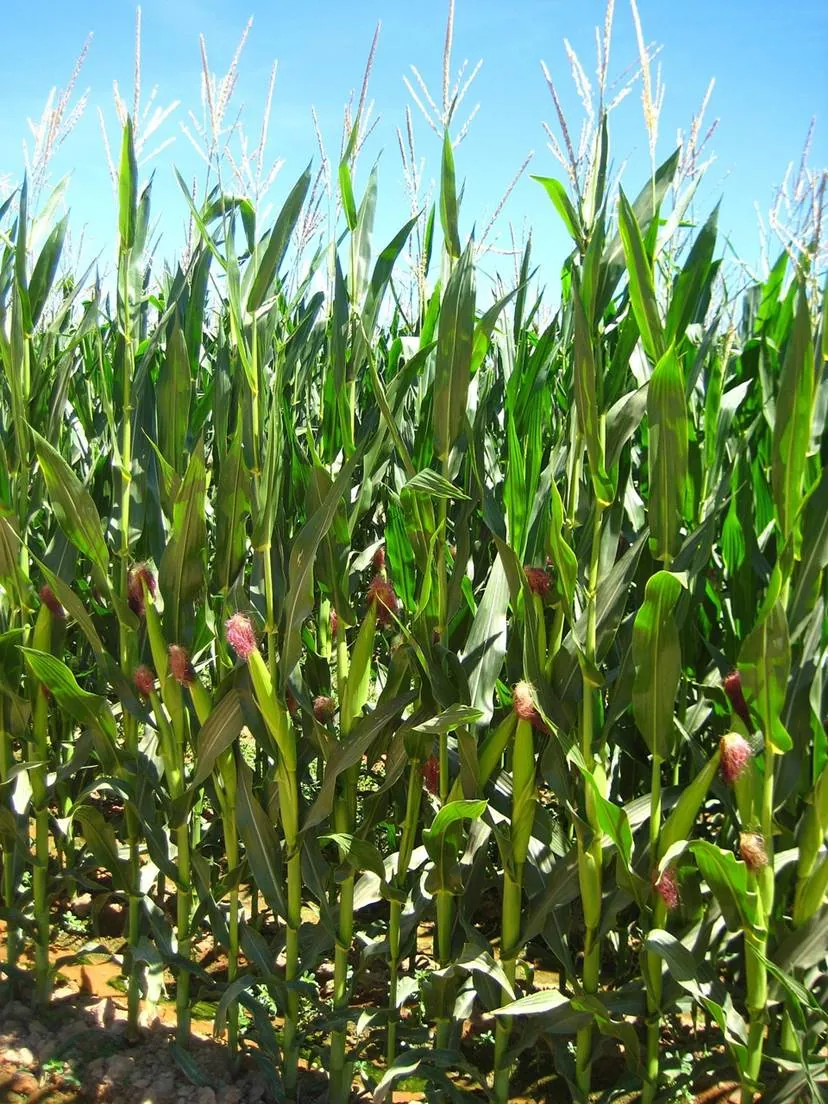
For instance, corn leaves grow alternately on the stalk, with the female flowers located at the very bottom of the leaves. The leaves cover the female flowers like a roof, preventing the plant's own male flowers at the very top from pollinating them. Furthermore, the leaf surfaces are covered in fine hairs that catch pollen drifting in from other flowers. This trapped pollen slides along the grooves of the leaves, traveling down the zigzag arrangement of the lower leaves. Finally, the pollen reaches the last leaf and, when the wind blows, lands precisely on the silk of the corn ear located just below the leaf.
That is not all. One day, while at a restaurant, the author discovered a "bump" on a corn stalk in the garden outside. After observing it throughout the summer, she discovered that this bump plays a crucial role in helping the corn fruit grow well. While the corn's broad, long leaves help with pollination, they end up blocking the sunlight when the corn fruit is actually developing. At this point, the leaf sheath tissue, which tightly wraps the stalk node, swells like a bump, and the force of this pushes the ear of corn outward at an angle. This allows it to move out of the leaf's shadow and receive full sunlight.

By Jung Joo-hye, EK Book
The cleverness of dandelions and clovers, which we see everywhere, is also quite remarkable. Dandelions do not bloom all at once, but rather sequentially over three days. Why choose such a "troublesome" method? What we commonly call a "single flower" is actually a cluster of 200 to 300 individual florets. Each yellow petal contains a pistil, stamen, petals, and an ovary. If it were to bloom all 300 flowers at once, insects would eat their fill in one sitting and leave. Flowers that the insects didn't visit might never have the chance to be pollinated. That is why the dandelion opens new flowers every day, and on the second day, it produces flowers with a deeper color than those that bloomed on the first day.
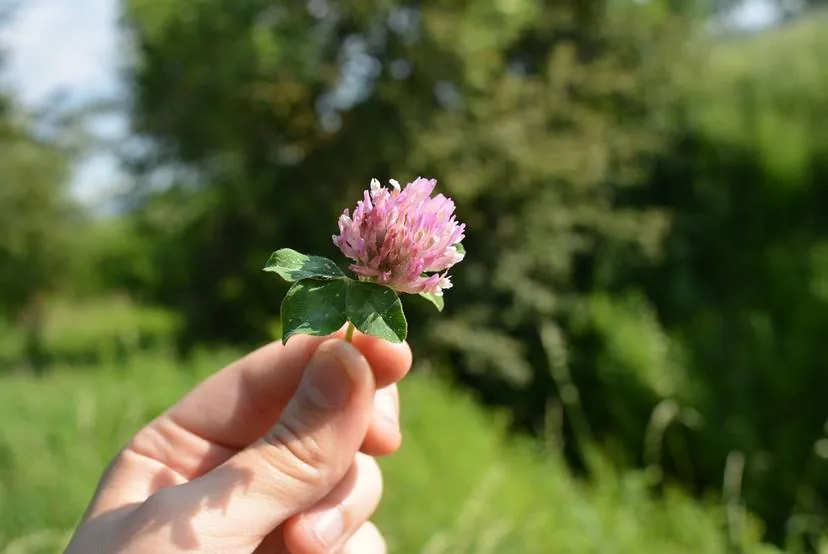
Clover, which consists of about 50 individual florets per head, also uses a time-lapse blooming strategy like the dandelion. Clover is also famous for thriving in barren soil. The secret lies in the fact that it is a legume. Surprisingly, clover is a member of the pea family. Root nodules containing rhizobia live in the soil roots of legume plants, and these bacteria convert nitrogen from the air into ammonium-based fertilizer that plants can absorb. In return, the plant shares the sugars created through photosynthesis with the bacteria. Because they have a "fertilizer factory" in the ground, clover can grow well in any soil.
So, where are the "beans" in the clover? If you open the dry, brown flowers after pollination is complete, you will find small, cute bean pods inside. Each pod usually contains three or four beans. They may be "ultra-mini," but they are legumes nonetheless.
The book is full of other exciting stories about various plants. There is purslane, which uses the recoil of raindrops to disperse its seeds; the "sterile" tiger lily, which reproduces by creating clone "bulbils" instead of seeds; the dayflower, which lures insects with fake stamens that are much more efficient than nectar; the pumpkin flower, which induces insect pollination by keeping nectar deep beneath the stamen; and the leopard lily, which twists its petals like a spiral after pollination to protect the ovary and pass on nutrients until the very end.
Reading 'Walden of the Grass' often elicits exclamations of wonder. One feels a sense of awe toward even the most trivial weeds, realizing how cleverly and precisely those small plants have evolved. The author surmises that perhaps plants develop much more meticulous strategies than animals precisely because they cannot move.
The author, who worked as a translator in her youth, stepped into the world of wildflowers and insects through forest outings. She currently runs an ecological community with her husband. She has spent long periods observing even the smallest blades of grass at different times, cutting open flowers and leaves to examine their cross-sections one by one, and even once suffered a "spicy" shock while trying to suck nectar from a flower. The author’s extraordinary affection for plants can be felt throughout the book.