

[BizHanKook] The films ‘Face’ and ‘Colony’ have such vastly different worldviews that it is hard to believe they were written and directed by the same person (Yeon Sang-ho). This is especially true regarding the setup and portrayal of characters with disabilities.
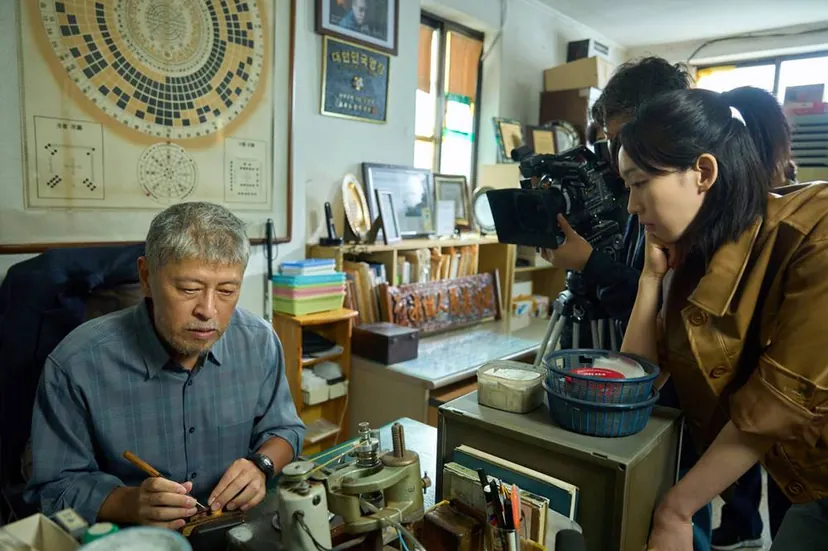
To begin with, the appearance of characters with disabilities is welcome. Both films have positive and encouraging aspects regarding disability. First, both feature individuals with disabilities who have jobs. The film ‘Face’ features a visually impaired seal engraver. While he is given the grand title of a “seal carving master,” he primarily carves personal stamps. Im Young-gyu (Kwon Hae-hyo, Park Jung-min), who has been blind since birth, is highly renowned as a master who carves the most beautiful stamps in the world. In a way, he could be called a genius craftsman, having overcome his disability. Because of this, a broadcasting station even produces a documentary about him.
Such a character is highly unrealistic. In reality, you cannot find a visually impaired seal engraver. The premise that someone who has never seen the world can create “beautiful stamps” seems no different from commercial films that cloak characters with disabilities in the trope of being a “genius with high-functioning autism spectrum disorder.” Even considering the cultural trend where stamps are not frequently used anymore, the setting of a visually impaired seal carving master feels out of touch with the times.
(※Spoiler alert below!)
Of course, the attitude of the broadcast producer is focused more on overcoming disability or displaying incredible skill rather than on the perspective of the disabled person and their work. Above all, the character Im Young-gyu is a person who murdered his wife for the sake of his fame and future. A mental state that allows one to kill the mother of one's own child for one’s own benefit cannot be tolerated. Swayed by rumors from people around him that his wife was unattractive, his faith in her wavered. Furthermore, while there might exist a person with a disability who would murder their spouse for their own future, a film like this can hardly be praised as a “good film.” Perhaps that is why, despite being nominated in 10 categories at the Blue Dragon Film Awards, it did not win a single one. In fact, no one in the disability community mentions the film ‘Face’ at all.
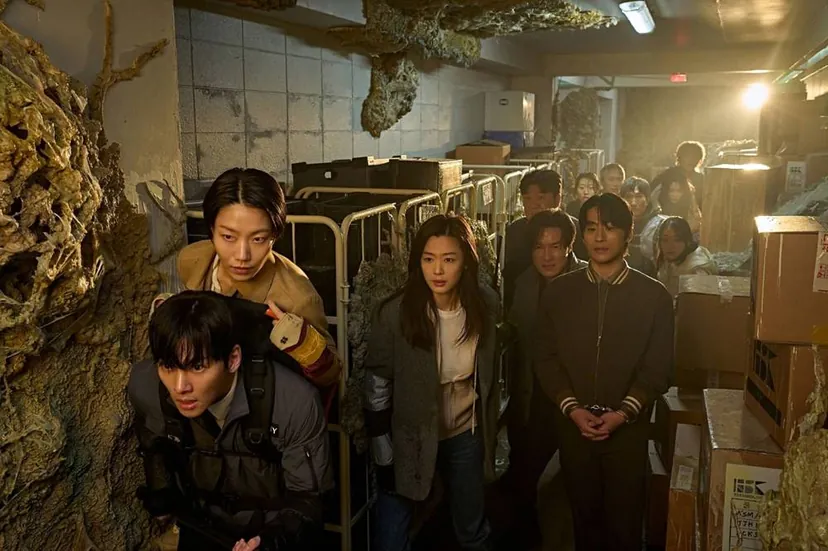
The film ‘Colony’ also features a female character with a disability, who shares traits similar to Bella from the film ‘Noting Hill.’ In that regard, it received favorable reviews. Bella uses a wheelchair but is always positive, honest, and bright. Most importantly, she uses her wits to enable the meeting of the two main characters. The scene where she bypasses the hotel manager’s blockade by proposing to write a hotel evaluation regarding accessibility for the disabled is quite exhilarating.
In the film ‘Colony,’ Choi Hyun-hee (Kim Shin-rok) also uses a wheelchair as a person with paraplegia. She is set up as an IT worker capable of demonstrating professional expertise even while seated. She visits her younger brother, Choi Hyun-seok (Ji Chang-wook), a security team employee at a skyscraper, for a rare vacation, only to be met with an infectious disease outbreak. As a person with limited mobility, she is carried on her brother’s back to avoid the zombie horde, but she soon utilizes her skills. From the control room, she analyzes the building structure and CCTV to secure an escape route for people, including her brother. Such elements are worth evaluating as a desirable, active, and positive setup. Usually, people with disabilities easily become objects of pity and consideration. In most disaster films, they do not even appear at all.
However, what matters is what happens next. Choi Hyun-hee does not escape. She is sacrificed to the infected. Furthermore, Seo Young-cheol (Koo Kyo-hwan), the mastermind behind the outbreak, forces the now-zombie Choi Hyun-hee to bite her own brother, Choi Hyun-seok, who is rushing toward her. It is a development where she is sacrificed by the evil actions of a villain who wants to see him suffer at the hands of the sister he cherished. Eventually, Choi Hyun-seok also becomes a zombie because of his sister. The brother, who helped others escape and struggled to save his sister, is also pointlessly sacrificed.

To deepen the resonance of the emotions and in terms of thematic consciousness, Choi Hyun-hee or Choi Hyun-seok should have been kept alive. Even if she had become a zombie, she should have been depicted as retaining at least a vestige of humanity and familial love. This is a regression from the progress shown in the film ‘Train to Busan.’ The homeless man (Choi Gwi-hwa), who was socially alienated and marginalized, does his best to save children and others; even after being infected and becoming a zombie, he tries not to harm people until the very end. This is the point that cultural content should aim for. No matter how cold and unavoidable reality may be, we must show what humanity and our society should strive for.
Let’s recall that the film ‘Zombie Daughter’ was recognized for its mass appeal and quality because it contained themes of treatment, rehabilitation, recovery, and reintegration. Considering this, one can guess how minorities such as people with disabilities should be established and how the storyline should unfold. The film ‘Colony’ enjoyed the halo effect of ‘Train to Busan,’ but it failed to expand on those achievements, ultimately failing to generate further word-of-mouth. The setup and portrayal of the character with a disability are just one example.
One of the factors that drives word-of-mouth from general audiences is the lingering sense of human values contained in the film. A lingering sense of human values will only remain if minorities who are sidelined in reality are able to survive. If not, is there any reason to spend one’s own money to go to a theater to watch cultural content? The death of Seong Gi-hun in ‘Squid Game’ Season 3 ensured that this work would no longer be discussed. They should have kept him alive, even if it meant giving him a disability.
It seems this is a time when K-content must reflect more deeply on what it means to be cultural content that leaves a lingering resonance. In the film ‘Colony,’ the biotechnologist Kwon Se-jeong (Jun Ji-hyun) even shows off action-packed scenes and serves as the leader of the survivors. In fact, this film seems to be a film for Jun Ji-hyun. I look forward to the day when a person with a disability is cast in such a role.
The author Kim Heon-sik has walked or navigated through the forest of pop culture phenomena since his 20s, with the expectation that there is a way to make the world a better place through culture. He continues on the same path with the same belief even in the 21st century, where artificial intelligence and quantum computers are active.