

[비즈한국] ‘ECM skin boosters,’ which involve injecting extracellular matrix (ECM) extracted from donated human tissue into the skin, are growing rapidly in the aesthetic medical market.
However, unlike tissue transplantation for therapeutic purposes, no separate safety verification system has been established for skin injections, leading to growing calls for urgent legal and institutional reforms to bridge this regulatory gap. Against this backdrop, officials from the Ministry of Health and Welfare, the Ministry of Food and Drug Safety, as well as representatives from the medical, legal, and consumer advocacy sectors, gathered to discuss the need for a rational regulatory framework that balances industrial development with public safety.
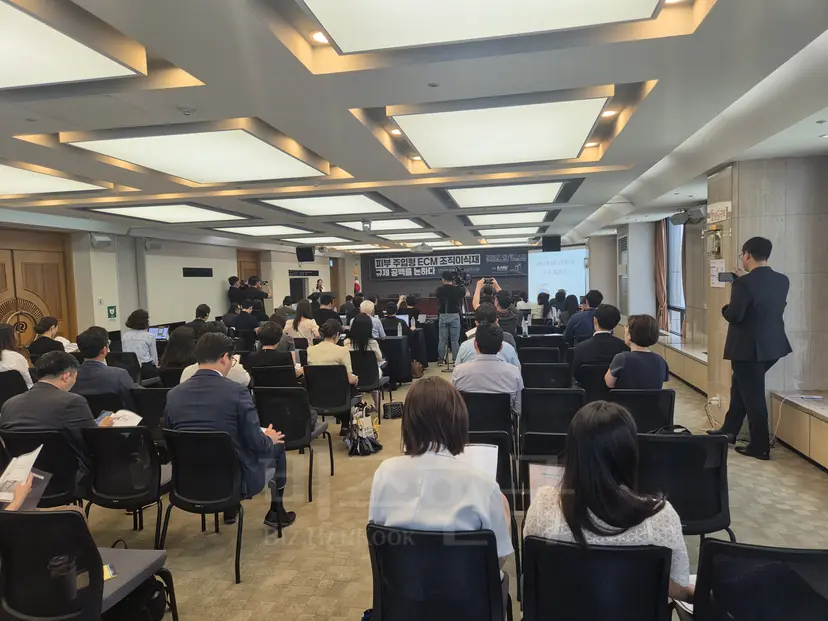
On the 28th, the ‘Symposium on Discussing Regulatory Gaps in Skin-Injectable ECM Tissue Transplants—The Need for Safety Verification,’ held by the Korea Medical and Bio Journalists Association at the Korea Press Center in Jung-gu, Seoul, covered the clinical safety, legal issues, and institutional improvement directions for ECM tissue-based products. The symposium drew attention as it was attended by representatives from ECM skin booster developers and distributors such as L&C Bio, GC Wellbeing, and Huons.
ECM skin boosters are cosmetic products made by freezing, drying, and pulverizing human dermal tissue collected from cadavers into a fine powder, which is then diluted in saline and injected directly into the skin using a syringe.
The market began in earnest after L&C Bio launched ‘Lituo’ in November 2024, followed by a series of related product launches from companies like HansBioMed. Other companies including GC Wellbeing, CG Bio, and MS Bio have also announced plans to enter the market. Financial analysts project that the domestic market will grow nearly tenfold in one year, from approximately 9.9 billion won in 2025 to 92.5 billion won in 2026.
Manufacturers are also rapidly expanding their production capacity. With monthly production capacity increasing from the previous 30,000 units to over 80,000–150,000 units, the usage of ECM skin boosters is trending upward.
Shin Hyun-young, a clinical assistant professor of family medicine at Seoul St. Mary’s Hospital, who served as a proportional representative in the 21st National Assembly for the Democratic Party of Korea, pointed out that the clinical safety of aesthetic skin injections has not been sufficiently verified and that there is no management system in place. She proposed conducting investigations into the manufacturing processes, promotional practices, and combination usage of current ECM products, establishing objective verification for ‘minimal manipulation’ and ‘homologous use’ requirements, mandating informed consent for donors and recipients, and strengthening administrative and facility inspections for tissue banks.
Professor Shin questioned the logic used by ECM skin booster companies to emphasize product safety. Related companies argue that since acellular dermal matrix (ADM) has been used in reconstructive surgeries for decades, its safety is proven and thus it poses no significant issues when injected for aesthetic purposes.
However, Professor Shin countered, “The criteria for expected effects and permissible side effects differ fundamentally between reconstructive and aesthetic purposes.” She emphasized, “It is difficult to directly apply safety data accumulated in the field of reconstruction—which treats wounds or defects—to aesthetic skin injections. The fact that it is verified for reconstruction does not mean it is safe for aesthetic procedures.”
According to U.S. FDA regulations, human tissue-derived products can be distributed with only tissue bank registration, without separate product approval, only when they meet both ‘minimal manipulation’ and ‘homologous use’ requirements. However, questions have been raised as to whether the process of freezing, drying, and pulverizing cadaver skin tissue into fine powder constitutes a departure from the ‘minimal manipulation’ category, as it destroys the original physical structure and function of the tissue.
Professor Shin noted, “While using acellular allograft dermis to cover skin defects during breast reconstruction is recognized as homologous use because it restores the natural function of the tissue, the FDA considers injecting the same material solely for aesthetic volume enhancement or wrinkle reduction as non-homologous use.”
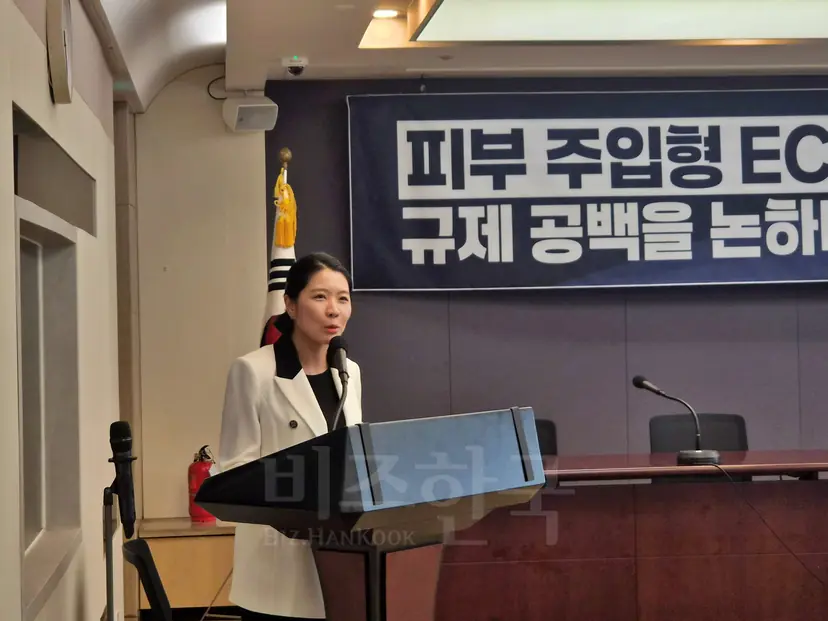
Lim Won-taek, a managing partner at the law firm Moonjang, argued that since the current Act on Safety of Human Tissue is designed with therapeutic tissue transplantation in mind, the usage method of injectable aesthetic products needs to be re-examined to see if it aligns with the legislative intent.
Lim stated, “The Human Tissue Act focuses on transplanting tissue for the purpose of treating patient diseases. In contrast, skin booster injections are for aesthetic purposes, not disease treatment, and are used through invasive injection rather than transplantation.” He pointed out, “The argument that they should be completely exempted from strict approval and verification procedures—like those for drugs or medical devices—simply because they are human tissue is an interpretation that strays from the text and legislative purpose of the Human Tissue Act.”
Another reason for the controversy surrounding ECM skin boosters is consumer perception of the raw materials. Most products are manufactured by decellularizing and pulverizing acellular allograft dermis (hADM) collected from cadavers supplied by overseas tissue banks. However, few consumers are fully aware of this fact.
According to a survey of 1,034 adults conducted by the Health Consumer Alliance in April, 69.8% of respondents expressed aversion to procedures involving the injection of human tissue derived from cadavers into the skin for aesthetic purposes, with negative responses reaching 77.3% when including potential boycotters. Furthermore, 72.9% of respondents said that the use of human tissue and the origin of the raw material should be mandatorily disclosed before the procedure, and 70.6% responded that the donor’s consent for aesthetic use should be required.
However, experts noted that since a market worth tens of billions of won has already formed and procedures have spread rapidly in medical settings, a step-by-step institutional reform—strengthening safety verification systems and the consumer’s right to know—is a more realistic alternative than a simple ban or across-the-board regulation.
Professor Shin said, “The government must establish clear standards for the scope of using human-derived materials for aesthetic purposes and build social consensus. We also need to consider establishing a long-term side-effect monitoring system while ensuring patient choice based on sufficient information and consent.”
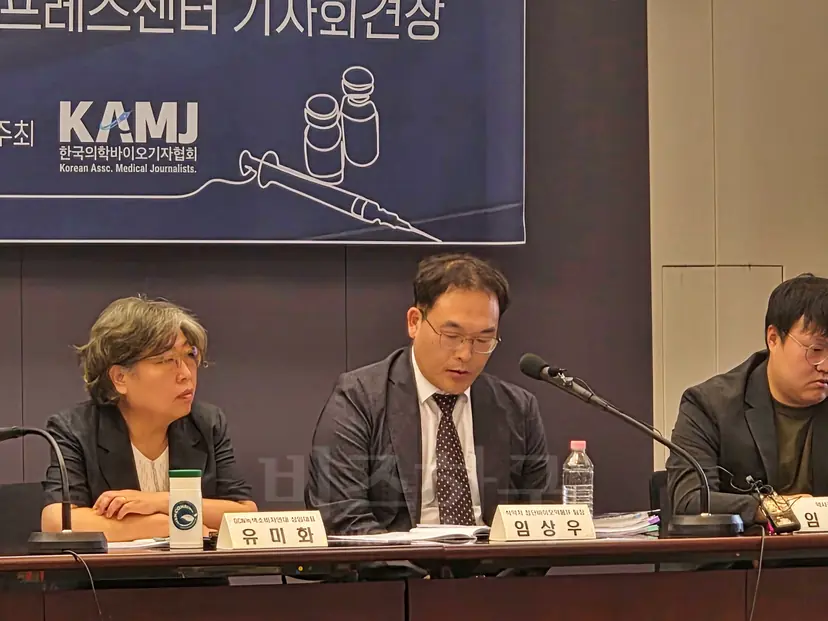
In this regard, Lim Sang-woo, head of the Advanced Biopharmaceuticals Task Force at the Ministry of Food and Drug Safety’s Bio-Drugs Bureau, expressed agreement on the need for safety management and explained that they are promoting concrete institutional improvements. Lim stated, “We have pre-announced a rule amendment to create a section in the tissue transplant record form for checking whether the patient was notified that the material is human tissue, ensuring they are fully aware of the source.” He added, “We will actively reflect the content of this discussion in establishing future safety management policies for skin booster injections, acknowledging the expert opinion that these products require product approval and management equivalent to drugs or medical devices rather than being treated as simple human tissue.”