

[비즈한국] The court has delivered its first ruling regarding the unpaid travel package crisis involving T'MON and WEMAKEPRICE (T'Mef). While the court recognized the travel agencies' responsibility to provide refunds, it did not uphold the liability of the payment gateway (PG) companies. Concerns are growing that if this ruling is finalized, the burden of consumer refunds will be concentrated on travel agencies, further weighing down the industry.
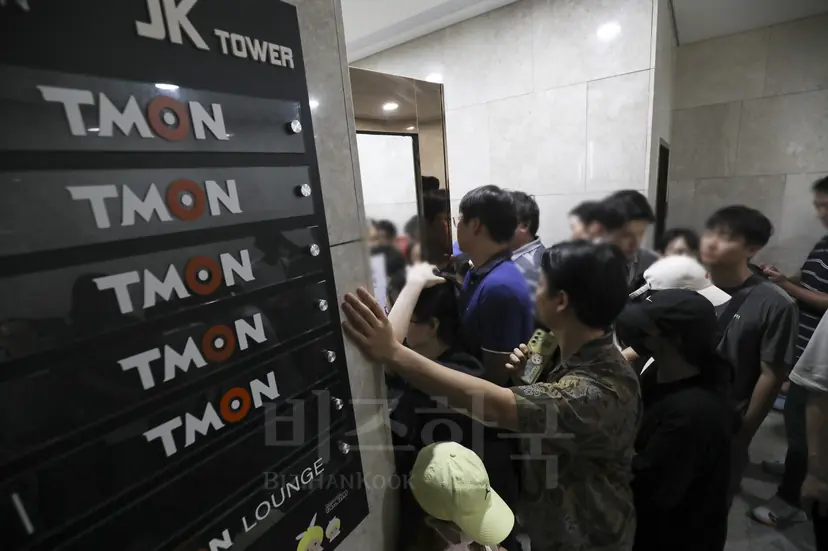
Expectations for Refunds Following "Recognition of Travel Agency Liability"… Victims Outside of Lawsuit Ponder Further Action
On the 16th, the Seoul Central District Court ruled partially in favor of the plaintiffs in a refund lawsuit filed by 598 victims of the T'Mef crisis against travel agencies and payment gateway (PG) companies. The victims argued that travel agencies and PG companies should be jointly and severally liable to return payments that were not settled due to the T'Mef crisis. While the court accepted most of the victims' claims against the travel agencies, it did not recognize the compensation liability of the PG companies. If this judgment is finalized, it means travel agencies are highly likely to bear the burden of consumer refunds resulting from the T'Mef non-settlement issue.
Previously, the Consumer Dispute Settlement Committee issued a recommendation in December 2024 that sales companies (travel agencies) should refund up to 90% of the payment and PG companies up to 30% jointly and severally to the victims. However, only 42 out of 106 sales companies and 4 out of 14 PG companies accepted this.
An official from the Korea Consumer Agency stated, "Victims filed class-action lawsuits against the sales companies and PG companies that did not accept the dispute resolution proposal," adding, "The defendants include about 60 sales companies and 10 PG companies. Excluding cases where credit card companies provided refunds in relation to installment transactions, we understand that no other companies have separately refunded consumers."
Approximately 3,000 consumers who were unable to use travel and lodging products due to the T'Mef crisis filed lawsuits with the Seoul Central District Court starting in June 2025 with the support of the Korea Consumer Agency. The total amount of damages is approximately 7.7 billion KRW.
Subsequently, the Financial Dispute Mediation Committee of the Financial Supervisory Service recognized the right to withdraw subscriptions and the right of defense under the Installment Transactions Act, deciding that credit card companies should refund payments to consumers who paid for travel and airline tickets through installments on T'Mef. As a result, refund procedures for installment transaction victims are underway, and some plaintiffs who have received refunds have withdrawn from the lawsuit. Currently, victims who paid in full and could not apply for installment defense rights remain in the lawsuit.
The lawsuits are divided into five groups based on the remaining victims and the defendant travel agencies. The case in which this ruling was issued belongs to the second group, and defendants include Yellow Balloon Tour and Sunmin Tour.
With the first ruling acknowledging the travel agencies' refund responsibility, there is a sense of relief among the victims participating in the lawsuit, as the possibility of receiving refunds has increased. One lawsuit participant said, "Every time I asked travel agencies for a refund, they only told me to wait for the result of the lawsuit," adding, "Although there is a possibility of appeals, I think it is fortunate that a path to a refund has opened."
On the other hand, there are consecutive inquiries from victims who could not participate in the lawsuit about whether they can join the relief process even late. As it is known that it is difficult to additionally participate in ongoing lawsuits, there is a movement among victims to push for separate joint lawsuits.
One victim said, "I couldn't participate in the class action at the time, but after seeing this ruling, I'm checking if I can join even late," adding, "It seems difficult to join the existing lawsuit, so there is talk among victims who couldn't participate about starting a new joint lawsuit together."
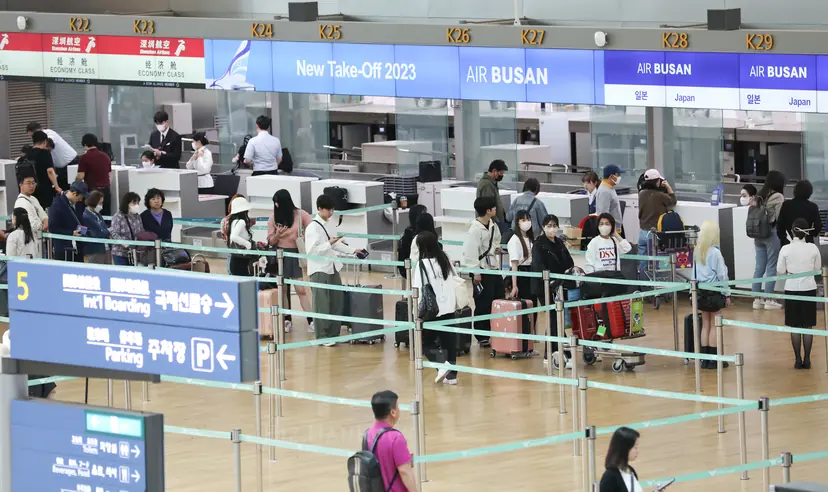
From Non-Settlement to Refund Burden… Growing Burden on the Travel Industry
This ruling is drawing attention as it is the first judgment by the court out of the five class-action lawsuits regarding T'Mef travel products. There are observations in the industry that since the cases involve the same facts, this ruling could influence the remaining cases as well.
If the travel agencies' responsibility for refunds is ultimately recognized, the burden on the travel agencies involved in the lawsuits is expected to be significant. This is because if travel agencies have to pay consumer refunds while they have not yet been settled by T'mon and WeMakePrice, they may face a double burden.
The management conditions of the travel industry are on a downward trend. According to the Korea Tourism Organization's Tourism Data Lab, 1,021 travel businesses closed in 2025, a 21.7% increase from the previous year (839). This year, the number of closed businesses counted through June has already reached 805.
The industry sees the deterioration of liquidity for some travel agencies following the T'Mef crisis as one of the factors influencing the increase in closures. Recently, there are concerns that the overall management burden on the travel industry is increasing due to a combination of high exchange rates, economic slowdown, and global instability.
A travel industry official said, "The overall management environment for the travel industry is poor due to recent tensions in the Middle East and high exchange rates," adding, "If the burden of refunds is added to a state of worsened profitability, the burden on the entire industry will inevitably increase."
However, some suggest that even if the travel agencies' responsibility for refunds is eventually recognized, it is unlikely to reach a level that would shake the management foundations of the related travel agencies. An industry official pointed out, "Since most of the targets of this lawsuit are large travel agencies, paying the refunds won't immediately shake their existence," adding, "However, if additional refunds become a reality in a situation where burdens from non-settlement damages and economic stagnation have accumulated, profitability and financial pressure could further increase."
The impact of this ruling is expected to become more concrete depending on the results of future trials. In addition to the second group for which the ruling was issued, the 3rd group is scheduled for hearings in August, and the 4th group in September. Depending on the progress, the 3rd and 4th groups are likely to have conclusions within the year, but it is uncertain whether rulings for the 1st and 5th groups, for which dates have not yet been set, will be issued this year. As there are still hearings and appeal procedures for each case, it is expected to take a considerable amount of time before the final refund responsibilities and the scale of the burden for travel agencies are confirmed.