

[비즈한국] The Joint Task Force Against Stock Manipulation (Joint Task Force), launched under the leadership of the Financial Services Commission (FSC) after President Lee Jae-myung declared, “I will show that those who engage in stock manipulation will face financial ruin,” is now facing a ‘crisis.’ This comes after the court ruled that the initial search and seizure procedures led by the Financial Supervisory Service (FSS) were “illegal.” With a judgment stating that evidence from its very first case is “inadmissible,” the team has encountered a fatal obstacle—the lack of evidentiary value—even before arguing the merits of guilt or innocence. In the legal community, there are concerns that the entire initial investigation by the Joint Task Force could collapse.
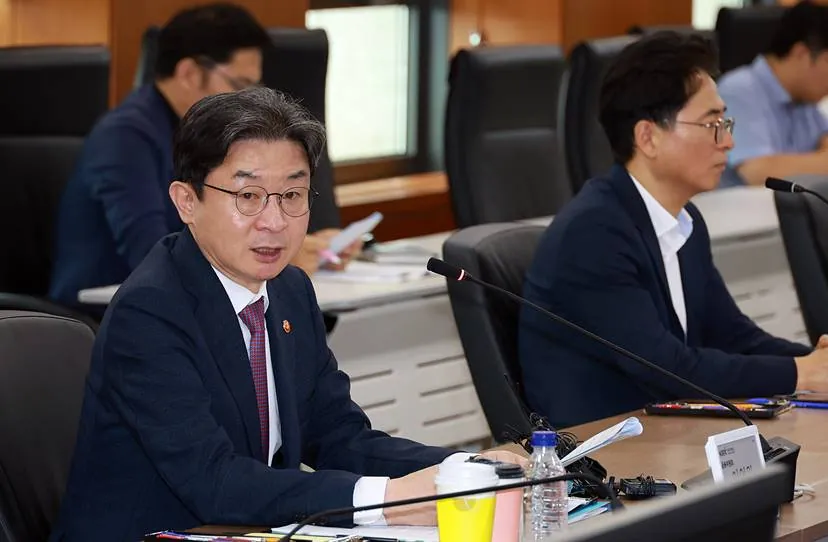
Last March, the Securities and Futures Commission of the FSC referred a wealthy individual who operates general hospitals and an executive at an asset management firm to prosecution. The Joint Task Force, launched following President Lee Jae-myung’s emphasis on eradicating unfair trade practices, selected the investigation into DI Dong-il as its first case. Subsequently, it secured evidence through searches and seizures and requested arrest warrants for four key figures, including a Mr. Kim, in early July.
However, the Seoul Southern District Court rejected all arrest warrants for these four individuals. The decision considered the defendants' quasi-appeal application, which argued that there were issues with the admissibility of the evidence secured by the Joint Task Force.
The defense team raised issues regarding the composition of the Joint Task Force just before the arrest warrant requests. Under current law, the FSC has the authority to apply for and direct search and seizure warrants, but the FSS does not have such authority.
The problem lies in the composition of the Joint Task Force. While the team includes personnel from the FSC, the FSS, and the Korea Exchange, the workforce at the beginning of the investigation was dominated by the FSS. There were only 4 FSC staff members compared to 20 from the FSS and 12 from the Korea Exchange, totaling 37 people.
The defense attorneys exploited this loophole. They pointed out that while the on-site searches, seizures, and forensics were formally conducted through the FSC, they were actually carried out by FSS employees. They filed a quasi-appeal with the court, arguing, “Under current law, the FSS is only capable of voluntary investigations that require the consent of the subject, and it has no authority for searches and seizures.” They argued that the admissibility of the evidence secured by the Joint Task Force itself should be denied.
The court accepted this argument. On the 24th, the Seoul Southern District Court (Presiding Judge Kim Ju-seok) accepted the quasi-appeal filed by Mr. Kim, a suspect in violation of the Capital Markets Act, who argued that “the procedures were illegal because they were led by FSS employees who have no search and seizure authority under the Capital Markets Act.” Although the prosecution had continued the investigation by obtaining separate warrants based on the data secured by the Joint Task Force, the court’s recognition of the illegality in the initial data-gathering process has made setbacks in the “prosecution’s investigation” inevitable.
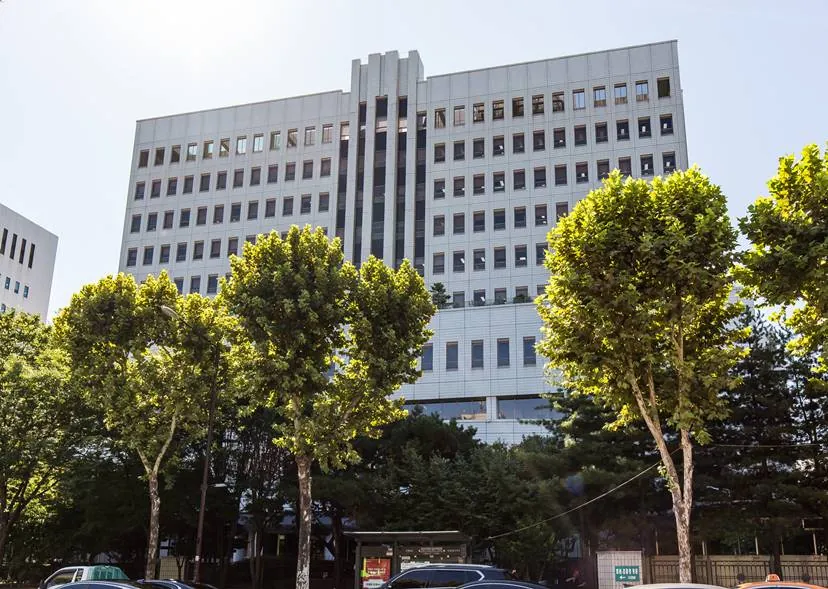
In general, if seized items are judged to have been obtained illegally, even if the investigative agency obtains new warrants to secure the evidence again, the evidence is typically denied “evidentiary value.” Under the Criminal Procedure Act, evidence collected without following due process is classified as illegally obtained evidence and cannot be used in court to prove guilt. Furthermore, secondary evidence derived from illegally obtained evidence is also generally excluded under the “fruit of the poisonous tree” doctrine.
Now that the search and seizure have been ruled illegal, it is highly likely that critical physical evidence—such as account records, internal documents, computer hard drives, and restored mobile phone data—seized at the time will not be admitted in court. In effect, the very first case directed by the President is now in danger of failing.
A lawyer familiar with the case pointed out, “One of the defense attorneys struck at the fact that ‘the FSS has no authority,’ and the court, which applies strict standards to the evidence-gathering process, accepted it. There was open talk that they rushed to request arrest warrants because they weren't confident about challenging the evidence during the quasi-appeal process. Since most of the evidence is effectively nullified, the Joint Task Force and the prosecution are in a situation where they must prove the illegal activities all over again using the remaining evidence if they want to prosecute the first case.”
Voices are also criticizing the “investigative response” led by non-legal professionals. A lawyer who formerly served as a deputy chief prosecutor remarked, “Ultimately, this is a disaster that occurred because the FSC and FSS, comprised mainly of non-lawyers, did not accurately verify the ‘boundaries of legal authority’ and rushed to organize the team in response to the President’s directive. After this case, won’t all suspects investigated by the Joint Task Force seek out the court with the same logic, asking for evidence to be invalidated? And isn’t it highly likely the court will judge it as ‘illegal’ again? This means all the evidence secured by the Joint Task Force so far is increasingly likely to become ‘null and void.’”