

[비즈한국] Hana Bank, which was previously hit with a business suspension by financial authorities for engaging in so-called "fund cycling" during the redemption process of Optimus funds, has won its remand appeal against the cancellation of those sanctions. Following the Supreme Court’s reversal of the original ruling—where it determined that Hana Bank’s adjustment of bank account loans did not constitute an illegal transaction under the Capital Markets Act but was merely a matter of accounting—the remand court reached the same conclusion. With this consecutive victory, attention is now focused on whether Hana Bank will successfully finalize the cancellation of the financial authorities' sanctions and put the legal risks associated with the Optimus fund behind it.
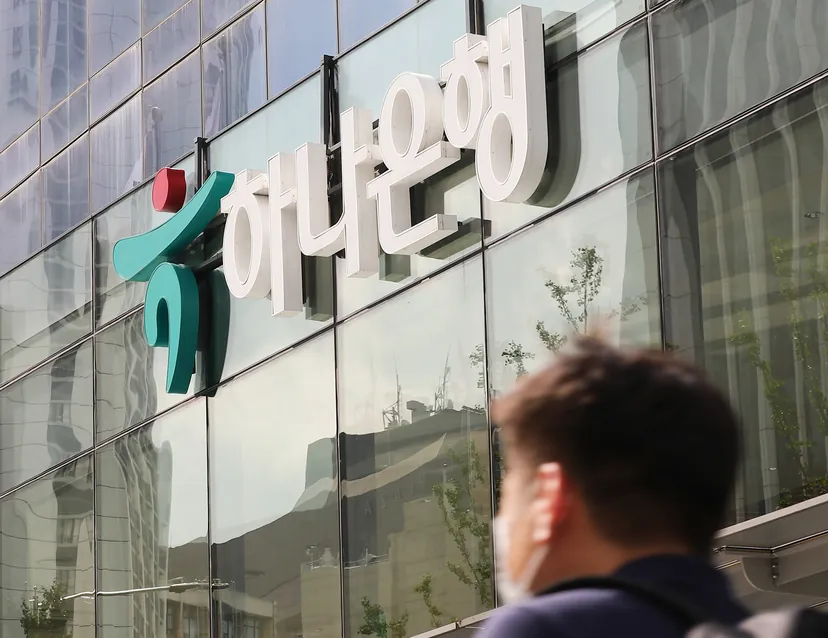
On July 23, the 9-3 Administrative Division of the Seoul High Court ruled in favor of the plaintiffs, Hana Bank and an employee surnamed Jo, in their remand appeal against the Financial Services Commission (FSC) and the Governor of the Financial Supervisory Service (FSS). The court declared, "We cancel the 3-month suspension of new trust business for private collective investment schemes imposed on Hana Bank by the FSC on March 2, 2022, and the 3-month suspension of employee Jo imposed by the FSS Governor on March 16, 2022," adding that "the defendants shall bear all litigation costs."
The lawsuit originated from Hana Bank's use of "fund cycling" in 2018 while paying out 9.2 billion won in Optimus fund redemption claims. Hana Bank, which held a trust agreement with Optimus Asset Management, faced a liquidity shortage while processing redemptions between August and December 2018. Consequently, it covered the payments with its own funds first and then reconciled the books by adjusting bank account loans (deposits from other funds). Bank account loans refer to the temporary lending of unmanaged trust account funds to the custodian bank's account.
Following the massive redemption suspension crisis involving Optimus funds, financial authorities conducted a departmental inspection of Hana Bank. The FSC determined that the adjustment of bank account loans during the redemption process violated the "Capital Markets and Financial Investment Business Act" (Capital Markets Act), leading to the 3-month suspension of new private equity trust business in March 2022. The FSS imposed a 3-month suspension on the employee, Jo, who handled the adjustments. However, the business suspension has been stayed until 30 days after the remand court’s ruling.
Hana Bank had lost both the first and second trials in its lawsuit to cancel the suspension. In September 2023, the Seoul Administrative Court, presiding over the first trial, ruled that the fund cycling through bank account loan adjustments was a "transactional" act in violation of the Capital Markets Act. Furthermore, the court deemed the authorities' sanctions appropriate, citing that the bank continued the practice despite knowing it might violate the law and that it provided convenience to Optimus Asset Management through illegal activities.
The second trial reached the same conclusion. In March 2024, the 4-3 Administrative Division of the Seoul High Court ruled that the arbitrary adjustment of bank account loans constituted a transaction that altered the rights and obligations of collective investment property. The court also held that Hana Bank, as a trustee, violated its fiduciary duty (the duty of care of a good manager) and investor protection obligations, siding with the financial authorities just as the first court had.
However, the Supreme Court’s judgment was different. In December 2025, the Supreme Court viewed Hana Bank’s adjustment of bank account loans not as a "transaction" involving property-related activities, but as a simple accounting measure for closing the bank's books. The Supreme Court stated, "Whether an act performed on collective investment property held and managed by a trustee constitutes a transaction must be judged specifically and individually by comprehensively considering the nature, content, purpose, circumstances, intent of the parties, and interests involved," adding that "the original court erred by misunderstanding the legal principles regarding the meaning and requirements of a transaction, which influenced the judgment," and remanded the case.
Having succeeded in overturning the verdict at the Supreme Court, Hana Bank's victory in the remand appeal increases the likelihood of securing the permanent cancellation of the sanctions. Although the financial authorities could theoretically appeal the decision again, a reversal is unlikely given the remand court's alignment with the Supreme Court's reasoning. Furthermore, it is considered favorable that two Hana Bank employees, including Jo, have already been acquitted through all three levels of court in a related criminal case.
Regarding the outcome of the remand appeal, Hana Bank stated, "We respect the court's decision and will continue to do our best to create an environment where customers can trade with peace of mind through thorough strengthening of internal controls and risk management."