

[비즈한국] The long-standing professional boundary dispute between medical doctors and Oriental medical doctors has surfaced once again, sparked by the controversy over the illicit distribution of Classys' cosmetic medical devices, "Shurink" and "Volnewmer." Recently, as Classys, a company specializing in aesthetic medical devices, issued a notice prohibiting the sale and after-sales service (A/S) of its equipment and consumables to Oriental medicine clinics and dental clinics, the history of conflicts surrounding the medical field—such as the national health insurance coverage for herbal decoctions (cheop-yak), the use of local anesthetics (lidocaine), and legal precedents regarding modern medical devices—is being brought back into the spotlight.
Classys: "We Do Not Sell to Oriental Clinics or Dental Clinics"
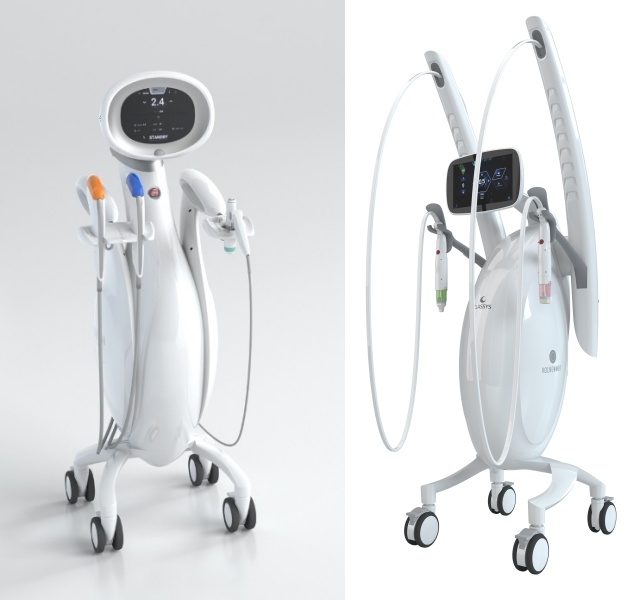
The medical community was recently shaken when posts appeared on social networking services (SNS) claiming that Oriental medicine clinics had adopted popular skin-aesthetic medical devices, "Shurink" and "Volnewmer." The Oriental medical doctor in question claimed to have acquired genuine machines and consumables, and some clinics reportedly even held promotional events, offering "Volnewmer 600 shots for 550,000 won and 300 shots for 300,000 won." Shurink is a prominent aesthetic device using High-Intensity Focused Ultrasound (HIFU), while Volnewmer utilizes Monopolar Radiofrequency (RF) energy.
Doctors expressed strong skepticism on SNS regarding how these aesthetic devices and consumables were procured outside of normal distribution channels. They also raised concerns about potential illegal distribution and the use of non-genuine consumables, warning that it could pose serious risks to patient safety.
On social media, voices of criticism are rising, stating, "Medical procedures are based on the health and safety of patients; if medical devices are used nonchalantly in non-medical institutions and the boundaries continue to collapse, patients will be the ones to suffer in the end." Others have demanded stricter after-sales management and supply chain control, noting, "This is not just a problem with a specific company or individual," and "Manufacturers must also actively establish genuine product authentication and brand management policies so that consumers are not confused."
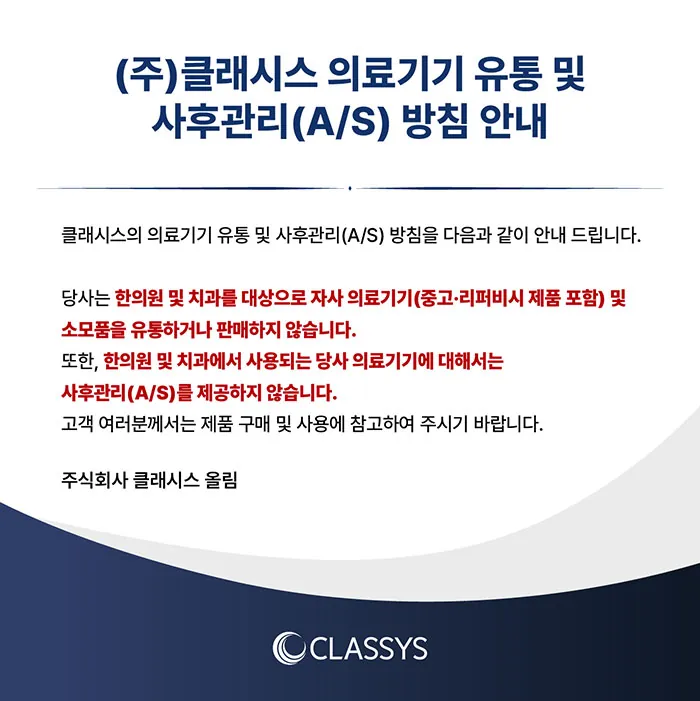
As the controversy spread, Classys posted an official policy on its website to draw a line regarding distribution and A/S for Oriental medicine and dental clinics. The company stated, "Our company does not distribute or sell its medical devices (including used or refurbished products) or consumables to Oriental medicine or dental clinics," adding, "We do not provide after-sales service (A/S) for our medical devices used in Oriental medicine or dental clinics."
From Herbal Decoction Insurance to Lidocaine and Modern Medical Devices...
Classys' clarification notice serves as a snapshot of the cumulative professional conflict between medical doctors and Oriental medical doctors. According to Articles 2 and 27 of the current Medical Service Act, medical doctors can only perform medical acts based on Western medicine, while Oriental medical doctors are limited to the scope of their licenses based on Oriental medicine. However, as medical tools become more sophisticated due to technological advancements, both groups are in constant friction over the scope of their licenses and legal interpretations.
A representative example is the conflict surrounding the "Pilot Project for Health Insurance Coverage for Oriental Herbal Decoctions," which began in November 2020 and was recently expanded to its second phase. Doctors are demanding a full withdrawal of the policy, which applies health insurance to herbal decoctions prescribed at Oriental clinics, citing the reasons of wasted health insurance funds and patient risk, as the safety, efficacy, and prescription standards have not been objectively verified. On the other hand, Oriental medical doctors argue that it is an essential policy to reduce the burden of Oriental medical expenses for the public and to standardize the herbal medicine management system, leaving the two sides on parallel paths.
The controversy over the use of the local anesthetic "lidocaine" is another highly contentious area. Doctors argue that since lidocaine is a professional drug that requires immediate emergency response in case of side effects, its use by Oriental medical doctors for pain relief in pharmacopuncture or procedures constitutes unlicensed medical practice.
Following an appellate court ruling in 2024, the Supreme Court in June 2025 finalized a guilty verdict against an Oriental medical doctor for the administration of lidocaine, imposing an 8-million-won fine and ruling that prescribing professional drugs falls outside the scope of an Oriental medical license. Nevertheless, Oriental medical doctors maintain their position that they learned relevant pharmacology in their regular university curriculum and that there is no problem in using it for supplementary pain relief.
Recently, legal battles have even emerged over the authority to use modern medical devices. In 2022, the Supreme Court en banc ruled that it was not illegal for Oriental medical doctors to use ultrasound diagnostic devices and electroencephalograms (EEG) as supplementary diagnostic tools. However, the legal community generally agrees that high-intensity focused ultrasound or radiofrequency equipment—such as Shurink or Volnewmer—which directly applies strong energy to skin tissue to cause irreversible changes, is fundamentally different from supplementary diagnostic devices.
Kwon Min-ji, a partner attorney at Law Firm Doa, stated, "The Supreme Court ruling was not intended to permit Oriental medical doctors to use all modern medical devices; it was strictly limited to diagnostic devices. There has never been an instance where the use of invasive skin aesthetic devices like Shurink and Volnewmer by Oriental medical doctors was permitted."
Kim Sung-geun, spokesperson for the Korean Medical Association, also emphasized, "Medical devices are instruments that must be used by doctors based on medical judgment. As the Medical Service Act distinguishes the areas of licensure, it is not a matter of professional turf war, but a normal critique of acts that deviate from standards."
Patient Safety and Genuine Supply Chain Management are Key
The "Shurink/Volnewmer" controversy demonstrates that the conflict between medical doctors and Oriental medical doctors is extending to equipment for skin aesthetics and therapeutic procedures. As the aesthetic medical market is growing rapidly, fueled by the popularity of K-Beauty, the competition and confrontation between the two professions over leadership in the aesthetic medical device market are intensifying. Global market research firm Grand View Research has projected that the domestic aesthetic medical market will grow at an average annual rate of 11.7%, reaching $334.6 million (450 billion won) by 2030.
However, it is pointed out that the departure from official distribution channels and the circulation of non-genuine consumables caused by the rapid expansion of the market can lead to fatal side effects for patients, such as burns or tissue damage. Attorney Kwon warned, "If an accident occurs while performing a procedure using equipment that did not go through the manufacturer’s official supply chain or using illegally refilled consumables, heavy criminal liability and obligations for damages may follow."
A Classys official stated, "The perspective that our company directly supplies products to Oriental clinics is completely untrue, and we are closely monitoring distribution through unofficial channels. We will continue to strictly uphold our principle of genuine product distribution."