

[비즈한국] Samsung Electronics has changed the formula for the Galaxy Z Fold. While previous iterations packed large displays, peak performance, premium cameras, and multitasking capabilities into a single device, this year the company has split them into the ‘Galaxy Z Fold8’ and ‘Galaxy Z Fold8 Ultra.’ The Fold8 is focused on content consumption—such as video, gaming, and reading—while the Fold8 Ultra is engineered as the premier model for professional tasks and content creation.
On the 22nd (local time), Samsung Electronics unveiled the Galaxy Z Fold8 Ultra, Galaxy Z Fold8, and Galaxy Z Flip8 at ‘Galaxy Unpacked 2026’ held at Old Billingsgate in London, UK. This marks the first time Samsung has applied the ‘Ultra’ designation, which signifies its highest-tier products, to the Fold series.
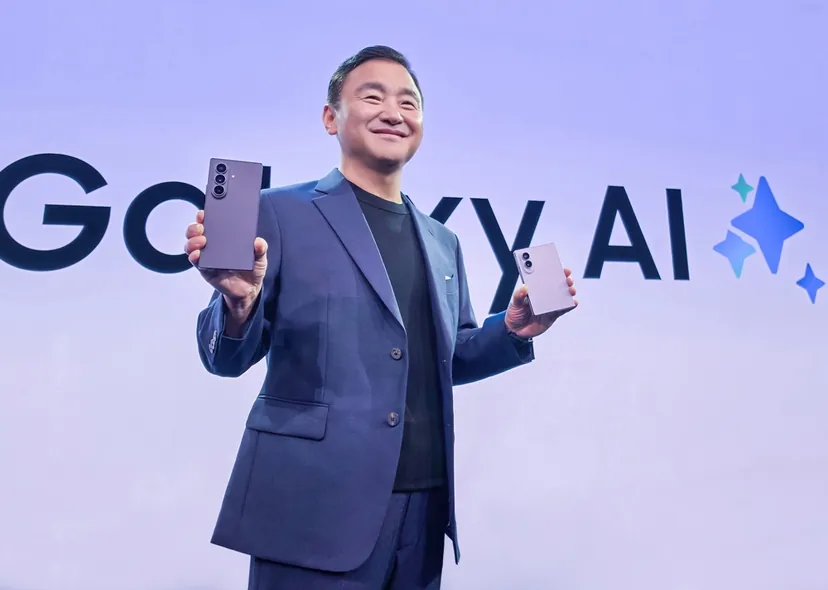
The notable change in this announcement is not just the increase in the number of products, but the fact that the role of the Fold has been divided into two. Moving away from the approach of concentrating all features into a single Fold device, Samsung has begun to target users who primarily consume content and users who work on large screens with separate products. It has determined that the foldable market has reached a stage where consumers choose products based on their specific use cases.
Beyond Showcasing Tech: A Strategy for a Mature, Segmented Market
Until now, the Galaxy Z Fold was closer to being a symbol of Samsung’s smartphone technology. By packing a large screen, multitasking, and top-tier camera and performance into one device, it was priced significantly higher than standard slab-type smartphones. However, as devices have become thinner and lighter, questions about who the Fold is really for have grown.
For users who want to watch videos and browse the web on a large screen, a price well over 2 million won and a professional-grade camera are not strictly necessary. Conversely, users who actively want to use a foldable for work and content production desire a larger screen, powerful performance, and a high-capacity battery.
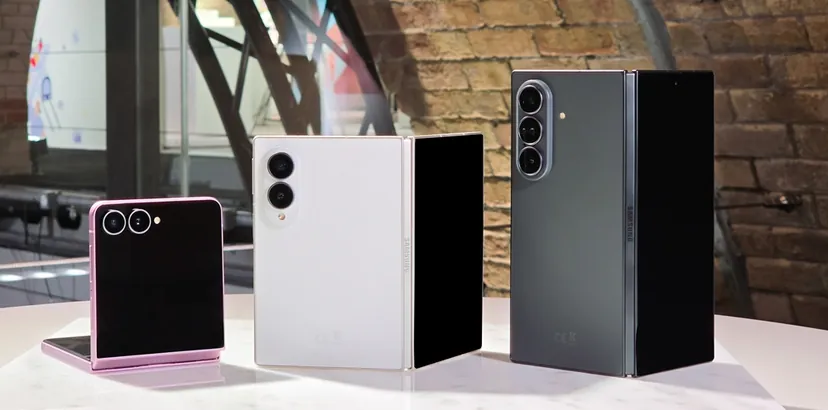
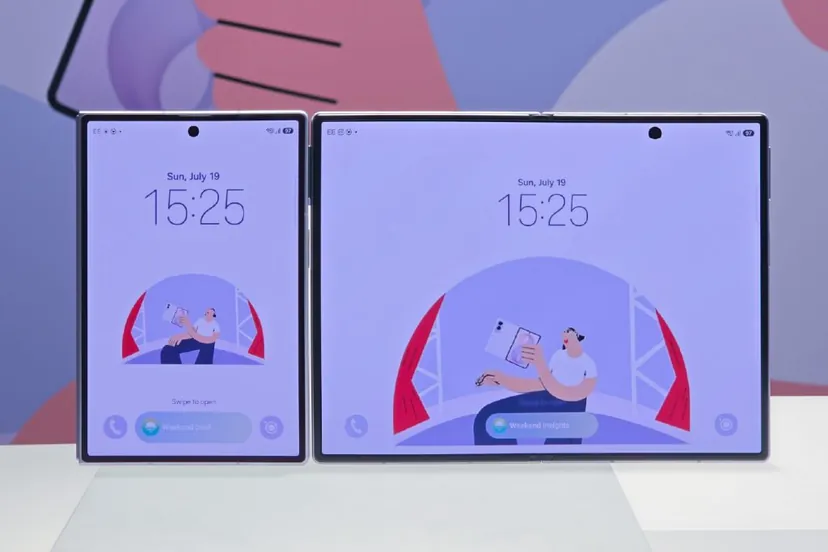
By splitting the Fold into two, Samsung has attempted to resolve this conflict. The Galaxy Z Fold8 features a weight of 201g, a 4800mAh battery, and a 7.6-inch screen when unfolded. The cover screen is 5.5 inches with a 10:16 aspect ratio, tailored for typical smartphone usage such as messaging, social media, and short-form videos. The main screen adopts a 4:3 aspect ratio, reducing unnecessary margins when consuming content like videos, games, and e-books.
The Fold8 Ultra takes a different path. It offers an 8-inch screen when unfolded, with a thickness of just 4.1mm when open. At 215g, it is 14g heavier than the Fold8, but still light compared to previous Fold devices. It supports a 200MP main camera, a 50MP ultra-wide camera, a 5000mAh battery, and up to 45W fast charging.
It is also equipped with the Snapdragon 8 Elite 5th Generation for Galaxy processor. Samsung defines the Fold8 Ultra as a product for users who handle multiple tasks simultaneously on a large screen and want to complete everything from filming to editing and production on a single device.
The difference between the products is also clear in the pricing. Based on 256GB storage, the Galaxy Z Fold8 is priced at 2,278,100 won, while the Fold8 Ultra is 2,577,300 won—a difference of 299,200 won. For the 1TB models, the price exceeds 3 million won, with the Fold8 at 3,152,600 won and the Fold8 Ultra at 3,451,800 won.
Rather than Samsung lowering the Fold8 to a more affordable, mass-market foldable, this move is closer to adding a more expensive Ultra product on top of the existing premium Fold market. It is a structure that broadens consumer choices while simultaneously raising the average selling price of the foldable lineup.
Content-Focused Fold vs. Work-Focused Fold: Different Aspect Ratios, Different Roles
Samsung’s product descriptions intentionally emphasize the differences between the two models. The core keyword for the Fold8 is ‘immersion.’ It highlights the 4:3 main screen, the light 201g weight, and over 26 hours of video playback. The camera is also composed of 50MP wide and ultra-wide sensors, and includes features like ‘My Fan Cam,’ which automatically tracks a selected person to edit videos, making it easy for general users to create content.
In contrast, the keyword for the Fold8 Ultra is ‘productivity.’ It enables professional-level content creation using the larger 8-inch screen for multitasking, a 200MP camera, 8K video recording, AV1 codec, and Cine LUT. The graphite cooling sheet has also been expanded to account for long periods of high-intensity tasks.
This resembles the way Samsung segments the Galaxy S series into Base, Plus, and Ultra models. As the smartphone market matures, it becomes difficult for manufacturers to satisfy all consumers with a single flagship product. It appears Samsung has officially begun applying the tier-segmentation strategy used in its slab smartphones to its foldable lineup as well.
If the early competition in the foldable market was about ‘whether you can build a foldable phone,’ it has now shifted to ‘who are you building this foldable for?’ This is a shift where the Fold8 targets content consumption and daily usage, while the Fold8 Ultra handles work and creative demands.
However, with an expanded lineup, the challenge is to make the differences tangible to the consumer. The Fold8 itself is a top-tier smartphone priced over 2 million won. Market reactions will likely depend on whether the differences in screen size, camera, and battery between the Fold8 and the Ultra justify the approximately 300,000 won price gap.
If the perception that the Fold8 is a “standard model” becomes too strong, there is a risk that existing Fold buyers might view it as a downgraded device. Conversely, if features are too heavily concentrated in the Ultra, the positioning of the Fold8 could become ambiguous. Samsung faces the task of distinguishing the roles of both products while ensuring the Fold8 does not look like a mere budget model.
Agentic AI Takes Precedence Over Foldable Refinement
At this Unpacked event, Samsung emphasized ‘Agentic AI’ as much as its hardware. The new Galaxy Z series features Galaxy AI and Gemini Intelligence, which understand the user’s screen and conversation context to execute necessary apps or suggest next actions.
For example, if you make plans with a friend in a messenger app, ‘Now Nudge’ suggests adding it to your calendar; if you search for a location, it recommends saving it. If you request a hotel reservation, the AI searches for accommodations that meet your criteria and performs parts of the booking process. According to Samsung, it can handle complex tasks by integrating with about 40 apps including delivery, booking, and shopping services.
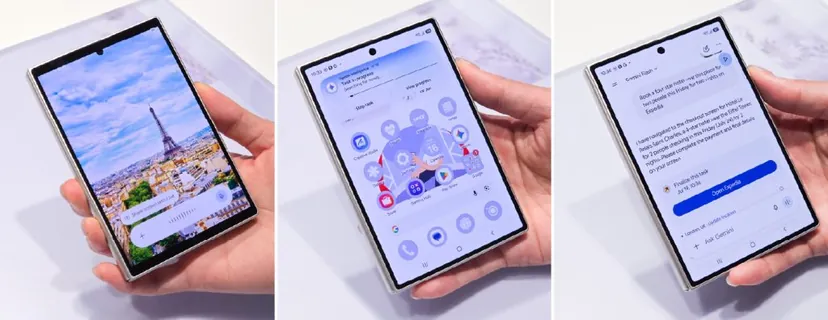
On the large foldable screen, the AI’s operations and the content the user is viewing can be displayed simultaneously. This is a core element that differentiates the Fold8 Ultra as a productivity device. It is an attempt to expand beyond existing multitasking—which simply runs multiple apps—into a structure where the AI intervenes directly in the workflow.
‘Gemini Notebook’ allows users to gather notes, images, recordings, and documents in one workspace to organize meeting minutes or create reports and infographics. The ability to split the screen and drag-and-drop materials makes it a feature designed with the large-screen foldable in mind.
The Flip8 applies the same AI strategy to the cover screen. Users can check schedules, news, and health information on the FlexWindow without unfolding the device, and perform tasks connecting multiple apps via voice or side buttons. Samsung emphasized that for the Fold, it has increased AI productivity by unfolding the screen, while for the Flip, it has emphasized AI convenience without needing to unfold it.
Connecting Watches to Eyewear… Galaxy AI Expanding Beyond Smartphones
Samsung also unveiled the Galaxy Watch Ultra 2, Watch 9, and Intelligent Eyewear on this day. The direction overarching all these new products is not to sell devices individually, but to create an AI device ecosystem that continuously monitors the user’s health, schedule, and environment.
The Galaxy Watch Ultra 2 features an 800mAh battery—a 35% increase from the previous model—and a display with a peak brightness of 5000 nits. It has enhanced trail running and diving functions, and has secured an IP69K water/dust resistance rating and EN13319 diving equipment certification.
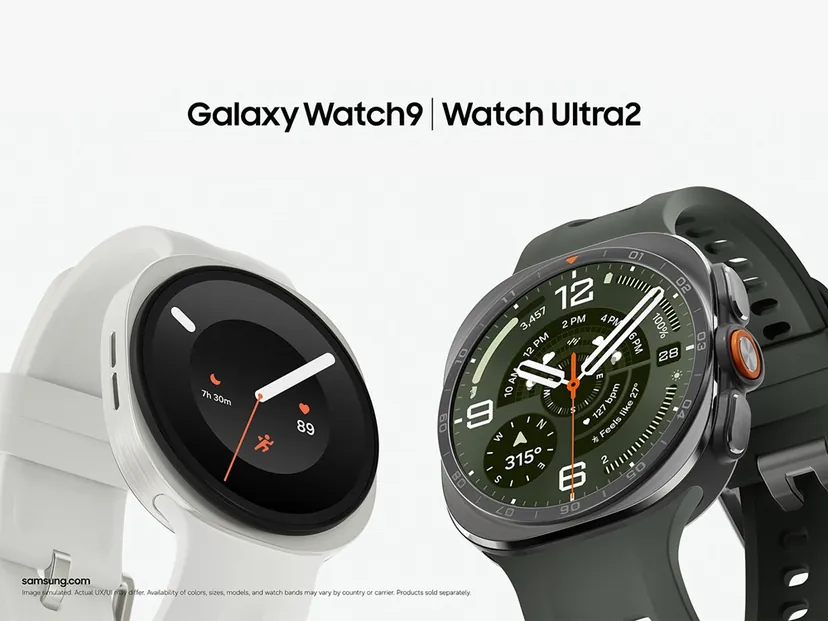
The Galaxy Watch 9 has expanded its health management features, including ‘Vital Signs’—which alerts users to physical changes based on sleep, heart rate, heart rate variability, respiration rate, and skin temperature—as well as heart health scores, daily aerobic load, and a physical fitness index.
The Intelligent Eyewear, scheduled for release within the year, is based on the Android XR platform developed by Samsung and Google. It is equipped with cameras, sensors, microphones, and speakers, allowing the AI to perceive what the user sees and hears. It supports real-time translation of menus or conversations, and can photograph whiteboards and meeting contents to automatically organize them in the Galaxy smartphone's Notes app.
It is also noteworthy that Gentle Monster and Warby Parker participated in the design. For wearable AI devices on the face, the key to mass adoption is not just performance, but whether they can be worn as naturally as regular glasses. This is why Samsung did not complete the design in-house but collaborated with global eyewear brands.
Samsung’s plan is to link foldable smartphones, watches, and future intelligent eyewear to understand the user’s physical state and surrounding context, presenting necessary information at the right time. The structure involves the Galaxy smartphone acting as the central AI brain, the watch collecting health data, and the eyewear taking in the user’s field of view and voice.

Success Rests on the ‘Base Model’ More Than the ‘Ultra’
For Samsung’s new strategy to succeed, the reason for the existence of the base Fold8 must be proven even more than the peak performance of the Fold8 Ultra. The Fold8 Ultra has a relatively clear explanation as a top-tier product with its 8-inch screen, 200MP camera, and 5000mAh battery. The question is whether the Fold8, starting at 2,278,100 won, can be accepted by consumers not as a "device with fewer features than the Ultra" but as "the device most suitable for content consumption."
The price difference between the two models is 299,200 won for the 256GB version. If consumers feel this difference is significant, the Fold8 may be chosen; however, if the large screen, camera, and battery performance of the Fold8 Ultra are considered more attractive than the price gap, demand could tilt heavily toward the Ultra. If the Fold8 is seen merely as an intermediate step to induce Ultra purchases, the meaning of the expanded lineup will fade.
For Agentic AI, the actual user experience is also critical. Features that suggest schedules by grasping message context and performing bookings or searches across multiple apps can broaden the utility of the large foldable screen. However, unless backed by wide app integration, execution accuracy, and trust in personal data protection, it will be difficult for these features to move beyond stage demonstrations and become part of everyday life.
Samsung is envisioning an AI ecosystem centered on smartphones, connecting watches and intelligent eyewear to grasp the user’s health, schedule, and environment. The Fold8 Ultra is the productivity device with the largest screen in this vision, and the Fold8 is tasked with expanding this into a more daily-use content device.
Ultimately, the point to watch for in this Unpacked event is not how much thinner and stronger Samsung has made its foldables. The core is whether it can persuade consumers that two foldables costing over 2 million won are distinct products. The answer will depend not on the sales volume of the Ultra, but on how much independent demand the newly repositioned Fold8 can generate in the market.