

[비즈한국] An activist fund has publicly proposed a merger between regional financial holding companies, causing a stir. Align Partners Asset Management, the second-largest shareholder of JB Financial Group, has sent a shareholder letter to the boards of directors at both JB Financial and BNK Financial Group demanding a review of a potential merger. Labor unions at both companies have responded with unified opposition, claiming the attempt undermines the public nature of regional finance and its role in the local economy. As activist funds expand their influence over regional finance, attention is focused on the clash between maintaining public service obligations and enhancing shareholder value.
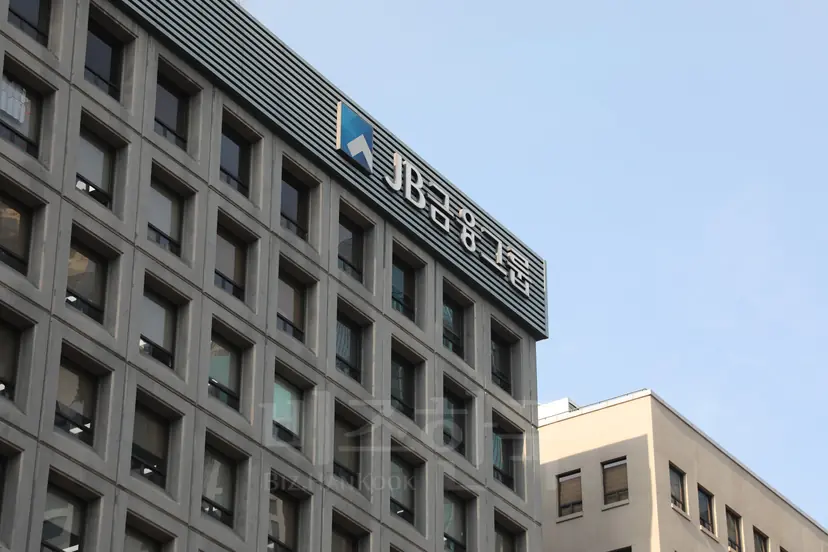
The unexpected discussion regarding a merger of regional financial holding companies has triggered a backlash from labor unions. The spark was a public shareholder letter sent by Align Partners to the boards of JB Financial and BNK Financial on the 14th, requesting a merger review. Align Partners holds stakes of 14.8% and over 1% in JB Financial and BNK Financial, respectively.
Align Partners argued, "The two regional financial holding companies are facing a structural crisis. Their market positions are weakening due to the rapid growth of internet-only banks and the entrenchment of an oligopolistic structure centered around large commercial banks." They further claimed, "A merger between these two holding companies is the most realistic, market-led solution for the long-term survival of regional finance and the enhancement of shareholder value."
Align Partners explained that a merger between JB Financial and BNK Financial would bring six key benefits for shareholder value: the launch of the largest single regional financial holding group, increased corporate value through profitability and cost synergies, the acquisition of AX (AI Transformation) investment capabilities and enhanced digital competitiveness, portfolio diversification and risk distribution, the creation of a complementary branch network, and the securing of a revaluation trigger.
Furthermore, they requested each company's board to: establish a special committee composed of independent directors within the board, appoint an external advisory firm to conduct a merger review, announce by August 7 whether they will begin a feasibility study on the merger, and, if a review is decided, disclose the results of the feasibility study and implementation plans by the date of the third-quarter earnings announcement.
Align Partners is an activist fund established in 2021 with the goal of resolving the "Korea Discount" through shareholder engagement. It has been exerting influence as the second-largest shareholder of JB Financial. In March 2024, Align Partners utilized a shareholder nomination system to appoint two recommended independent directors, Kim Ki-seok and Lee Hee-seung, to the JB Financial board. Both directors were successfully reappointed at the regular general shareholder meeting last March.
Labor unions under each holding company have strongly opposed the request for a merger review. On the 20th, the BNK Busan Bank Union (the Busan Bank branch of the Korean Financial Industry Union) and the Busan Bank Employee Stock Ownership Association issued a statement opposing the feasibility review of the merger to the BNK Financial board. In particular, they pointed out that in the event of a merger, BNK Financial shareholders would receive only 0.69 shares for every share held by JB Financial shareholders, a condition unfavorable relative to their capital contribution. This implies that the benefits of the merger would favor Align Partners, which holds a stake in JB Financial.
They retorted, "This merger proposal is an attempt to satisfy the interests of speculative capital seeking short-term profits through stock price increases, rather than for the development of regional finance," adding, "The pursuit of unnecessary external services and a special committee is an act that wastes BNK Financial's human and material resources."
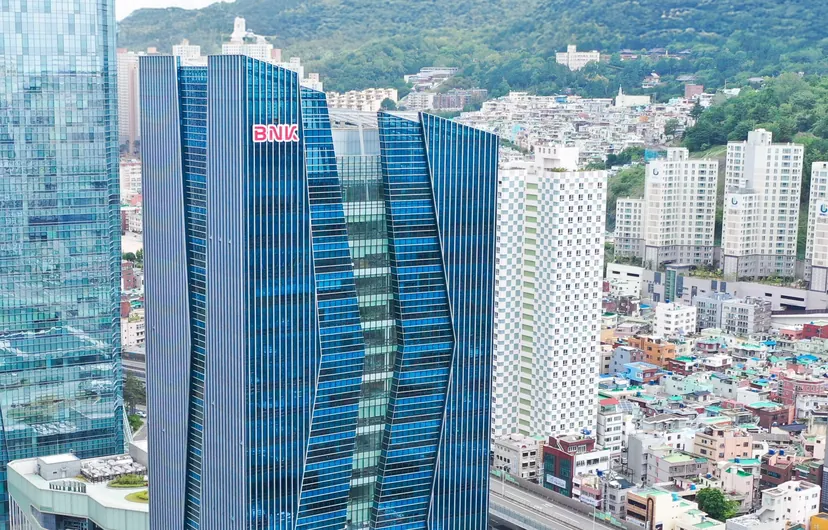
The unions also emphasized that the merger would undermine the public nature of regional finance. The Jeonbuk Bank Union (the Jeonbuk Bank branch of the Korean Financial Industry Union) issued a statement on the 16th, asserting, "Regional banks are not mere investment targets or objects for asset aggregation. They have a public nature, serving as a pillar of the local economy by circulating funds raised in the region back into the local economy and supporting small business owners and SMEs." They urged the withdrawal of the merger review request, stating, "Viewing a merger as the only market-led solution reveals an ignorance of the region." They also demanded that the JB Financial board reject the merger proposal.
On the same day, the Gwangju Bank Union also issued a statement saying, "The essence of this merger proposal is the maximization of shareholder value rather than the future of the local economy," and "If a merger review is pushed forward hastily according to the schedule set by external shareholders, it could worsen the role and public nature of regional finance and have a negative impact on financial support for local companies and small business owners."
Meanwhile, behind the unions' opposition is also concern over the strengthening influence of activist funds. Life Asset Management, also known as an activist fund, is actively involved in BNK Financial. Holding about 4% of BNK Financial shares, Life Asset Management sent a shareholder letter in December 2025 raising issues with BNK Financial's chairman selection process and demanded a complete restructuring of the board of directors and the executive recommendation committee.
BNK Financial accepted these demands, introducing a shareholder nomination system for independent directors and allowing them to participate in the executive recommendation committee. On March 26, Life Asset Management successfully installed its nominee, Lee Nam-woo, Chairman of the Korea Corporate Governance Forum, as an independent director at BNK Financial. Buoyed by this, Life Asset Management proposed the introduction of a Restricted Stock Unit (RSU) system in February, where company-owned shares would be granted to directors as long-term performance compensation. However, although it was submitted as an agenda item for the March regular general shareholder meeting, it was rejected.
Kim Dae-sung, chairman of the Busan Bank Union, stated, "Although BNK Financial is a private company, it possesses a public nature that goes hand-in-hand with customers in the Busan-Ulsan-Gyeongnam region and local businesses. The losses to BNK Financial resulting from an unfavorable merger will lead to a degradation of this public nature," adding, "Since activist funds are involved in BNK Financial as well, we are voicing our position on this matter even more actively."