

[비즈한국] Choroc Village, which entered corporate rehabilitation proceedings last July, has moved a step closer to exiting court receivership after signing a pre-packaged M&A investment agreement. As the Seoul Bankruptcy Court approved the investment agreement signed by the creditors' committee, the rehabilitation process—in which suppliers, franchisees, and eco-friendly farmers directly acquire the company—has shifted into high gear.
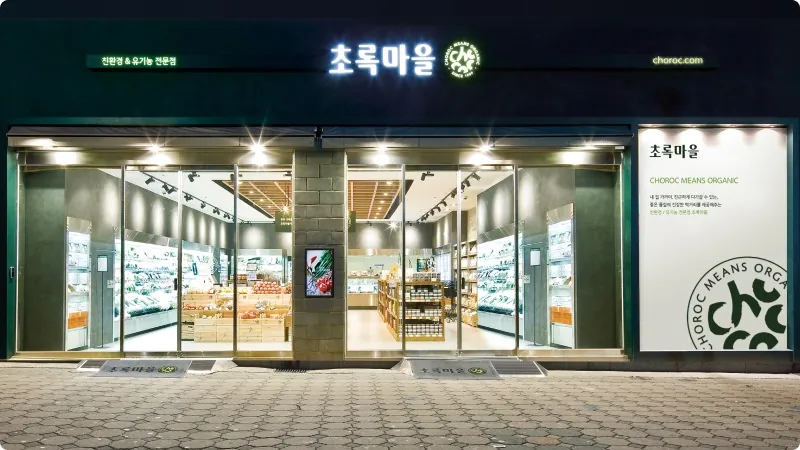
Creditors' committee steps up to 'save Choroc Village'
According to Bizhankook’s reporting, the Seoul Bankruptcy Court accepted the application submitted by Choroc Village for the pre-packaged M&A investment agreement on the 20th. Accordingly, Choroc Village plans to submit a detailed rehabilitation plan by the 27th and a final version by August 5th. Once the court approves the rehabilitation plan, the process will effectively enter the final stage of completion.
The entity taking over the company is not an outside corporation, but the Choroc Village Creditors’ Committee. A committee composed of key creditors, including suppliers, franchisees, and eco-friendly farmers, has decided to directly acquire Choroc Village. It is reported that Lee Won-young, representative of the Creditors’ Committee, will manage the company's operations once it exits the rehabilitation process.
The Creditors’ Committee submitted a rehabilitation plan on the 30th of last month and signed the investment agreement first at the court's request. This is an unusual method, as it is standard in rehabilitation procedures to sign an investment agreement only after the rehabilitation plan has been approved. Industry observers suggest that because it is rare for a creditors' committee to lead an acquisition directly, the court may have prioritized the signing of the investment agreement to verify the feasibility of the rehabilitation plan in advance.
After filing for court receivership last July, Choroc Village pursued a pre-packaged M&A starting in August of the same year. While they selected Samil PricewaterhouseCoopers as the lead manager for the sale and sought out investors, they were unable to find a suitable buyer for nearly a year. According to industry sources, negotiations with a promising potential buyer continued until the first half of this year but ultimately fell through.
The rehabilitation process hit a rough patch as the search for a buyer stalled. It is understood that the court had notified the company that the rehabilitation process could be terminated if a plan was not finalized by March. Consequently, the Creditors’ Committee decided to inject additional capital to maintain Choroc Village's sales network and push for management normalization.
In April, the committee discussed the plan for a "creditors-led pre-packaged M&A," and the parent company, Jeongyookgak, reportedly agreed to this approach. Since then, the committee has continued consultations to raise acquisition funds and draft the rehabilitation plan, accelerating the creditors-led pre-packaged M&A.
A representative from the Choroc Village Emergency Committee said, "From the creditors' perspective, there was deep deliberation over whether to prioritize debt collection or to save the sales network," adding, "We decided on the acquisition after determining that the suppliers, franchisees, and eco-friendly farmers could only survive if Choroc Village survives."
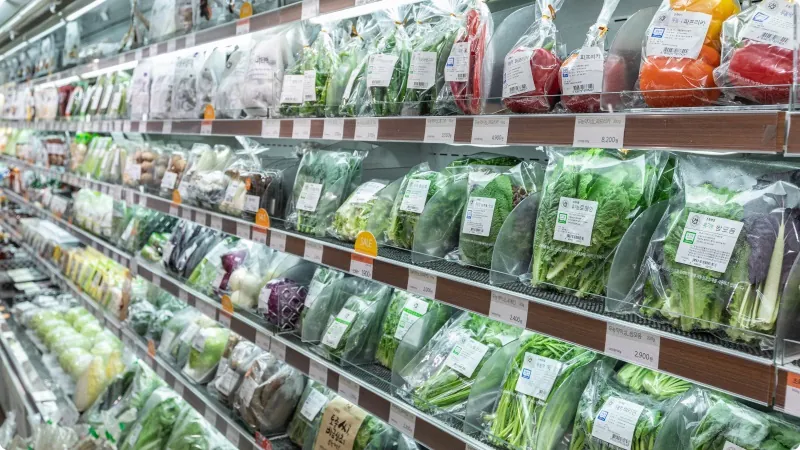
Impact reaches beyond individual corporate survival to the domestic organic ecosystem
Choroc Village is a leading distributor specializing in eco-friendly and organic food in South Korea. Established in 1999 as a subsidiary of The Hankyoreh, it was acquired by the Daesang Group in 2009. In 2022, the online meat platform Jeongyookgak acquired the company for approximately 87.6 billion KRW. However, following the acquisition, Jeongyookgak faced a liquidity crisis due to the burden of managing offline retail networks and a sluggish investment market, eventually entering corporate rehabilitation with Choroc Village last July.
If the rehabilitation of Choroc Village is successfully completed, it is expected to remain a notable case in the history of domestic corporate rehabilitation. The method where key creditors with varying interests—suppliers, franchisees, and farmers—directly provide funds to acquire a company in rehabilitation and normalize its management is considered highly exceptional.
The reason behind the creditors taking charge seems to be the recognition that the preservation of Choroc Village is connected not just to the survival of a single firm, but to the entire domestic eco-friendly food distribution ecosystem. Along with Hansalim and Natural Dream, Choroc Village has served as a pillar of the domestic eco-friendly food distribution network, acting as a primary channel for eco-friendly farmers and organic food manufacturers. Consequently, there were concerns that if Choroc Village collapsed, it would increase the burden not only on suppliers and franchisees but also on the production base of eco-friendly farmers.
The Choroc Village Emergency Committee official stated, "Because it is difficult for organic produce to be recognized for its value and receive a fair price in general produce markets, there is a high reliance on specialized distribution channels," adding, "If a major channel like Choroc Village disappears, not only will the farmers' revenue base be hit, but the foundation for organic production itself could be shaken."
Industry experts anticipate that the rehabilitation of Choroc Village will be completed within August. However, the primary challenge following the conclusion of the process will be to stabilize the supply chain and franchise business, restore profitability, and secure a sustainable foundation for the business.