

[비즈한국] Sirius Air, which has been pushing for mid-to-long-haul cargo transport based in Busan, has entered court-led rehabilitation proceedings. Although Sirius Air obtained an air cargo transport business license in 2024, it was unable to commence commercial operations as aircraft procurement was delayed due to financial difficulties. After an attempt to normalize management through a change in majority shareholders last year also fell through, the company will ultimately seek a turnaround under court management.
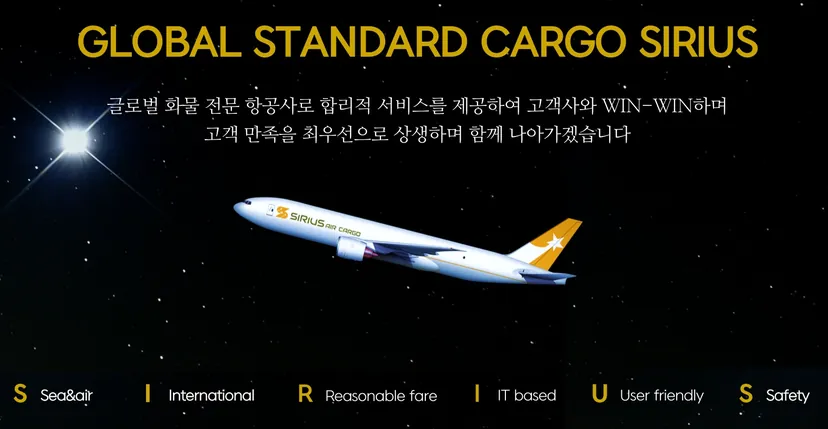
According to Bizhankook's reporting, the Busan Rehabilitation Court decided on the 9th to commence rehabilitation proceedings for Sirius Air. The deadline for reporting rehabilitation claims is August 7, and the submission deadline for the rehabilitation plan is October 7. Corporate rehabilitation is a system in which the court coordinates the legal relationships between creditors, shareholders, and other interested parties to facilitate the revitalization of a company or its business. The total scale of debt, including unpaid wages, is expected to be clarified during the claim reporting and investigation process.
Sirius Air is a cargo-only airline established in Busan in April 2020. It obtained an air cargo transport business license from the Ministry of Land, Infrastructure and Transport in January 2024. It planned to start operations in June of the same year and introduce 10 cargo planes by 2027. The plan was to launch services to Frankfurt, Narita, Hanoi, and Qingdao in the first year, then expand the scope of operations to American routes and promote sea-air intermodal transport linking Busan Port and Gimhae Airport.
Prior to obtaining the license, Sirius Air pursued capital expansion and external fundraising. The company's capital increased from 100 million KRW at the time of establishment to 5 billion KRW in August 2023 through several capital increases. In October of the same year, it also issued 10 billion KRW in private convertible bonds. However, these private convertible bonds were recovered by the bondholder through the exercise of security rights after an event of default occurred the following year.
Capital expansion and the issuance of convertible bonds did not lead to actual operations. For an airline to begin commercial flights, it must obtain an Air Operator Certificate (AOC) from the Ministry of Land, Infrastructure and Transport after establishing aircraft, professional personnel, and operational and maintenance systems. However, Sirius Air was unable to secure aircraft, facilities, and systems in time due to financial troubles, and its planned launch in June 2024 ultimately failed.
The failed launch led to a rapid deterioration in financial health. According to the audit report, Sirius Air recorded an operating loss of 7.1 billion KRW and a net loss of 9.9 billion KRW in 2024 without generating any revenue. As of the end of the year, assets were 2.7 billion KRW and liabilities were 9.3 billion KRW, resulting in a total capital of negative 6.6 billion KRW, leaving the company in a state of complete capital impairment. Hanwool Accounting Corporation issued a disclaimer of opinion on Sirius Air's 2024 financial statements.
Problems with unpaid wages also surfaced while preparations for operations were delayed. The Busan Regional Employment and Labor Office confirmed that approximately 1.9 billion KRW in wages and severance pay for about 80 former and current employees had been unpaid since June 2024, and referred Sirius Air and CEO Kwon Do-gyun to the prosecution in January last year on charges of violating the Labor Standards Act. Complaints regarding workplace bullying were also confirmed to be partially true, resulting in fines imposed on the CEO and the company.
Sirius Air attempted to normalize management last year by changing its majority shareholder. It is known that the private equity firm Oreum Private Equity became the new majority shareholder. According to the Ministry of Land, Infrastructure and Transport, there have been no further change notifications since the change of majority shareholder was processed last year. When the change of majority shareholder was carried out last year, the board of directors of Sirius Air, excluding CEO Kwon Do-gyun, was largely replaced.
However, even after the change in majority shareholder, Sirius Air could not begin commercial operations. With issues regarding employee wage arrears and unpaid loans continuing, the company entered rehabilitation proceedings about a year after the change in majority shareholder. Even if a rehabilitation plan is prepared, it appears that new capital will be required for debt restructuring as well as aircraft procurement.
An official from the Aviation Industry Division of the Ministry of Land, Infrastructure and Transport said, "Sirius Air's air cargo transport business license is currently valid, but it has not obtained an Air Operator Certificate (AOC) because it has not secured aircraft," adding, "While administrative sanctions are restricted during rehabilitation proceedings under the Aviation Business Act, it requires legal review whether this provision can be applied to a company that has not yet commenced operations. If it is confirmed that the license cannot be maintained after the rehabilitation proceedings end, we will proceed with administrative procedures."
Bizhankook contacted Sirius Air to ask about the background of the rehabilitation application and future plans for management normalization, but could not receive a response.