

[비즈한국] Homeplus, which stood on the brink of bankruptcy, has managed to catch its breath after reaching an agreement with Meritz Financial Group to secure at least 200 billion won in essential operating funds. Homeplus plans to accelerate the normalization of its business as soon as the rehabilitation process resumes. However, prospects for a smooth recovery remain dim, as the burden of procurement and operating costs for its stores remains heavy, and there is a significant backlog of unpaid debts to suppliers and tenants.
MBK and Meritz agree to provide 200 billion won in emergency funding
Homeplus announced on the 20th that it would file an immediate appeal with the Seoul Rehabilitation Court against the decision to terminate its rehabilitation proceedings. This day marked the final deadline for an immediate appeal set by the court when it issued the termination decision on the 3rd. If the court accepts the appeal and resumes the rehabilitation process, Homeplus will have another opportunity to submit a rehabilitation plan. The deadline for approving the rehabilitation plan will also be extended to the final cutoff date of September 4th.
Previously, the court had decided to terminate the rehabilitation process on the grounds that Homeplus had failed to secure the 200 billion won in emergency operating funds necessary to maintain the process. However, the company was granted a two-week period to file an immediate appeal, providing one last chance to devise a funding plan. Homeplus managed to reach an agreement for the 200 billion won just before the deadline, allowing it to proceed with the appeal.
The funding was secured through a dramatic agreement between MBK Partners and Meritz Financial Group. On the 16th, MBK Partners, the majority shareholder of Homeplus, and Meritz Financial Group, its largest creditor, finalized an agreement for 200 billion won in DIP (Debtor-In-Possession) financing, which is operating capital provided to a company in rehabilitation to keep its business running. MBK Partners agreed to increase its joint guarantee for the DIP loan from the initial 100 billion won to 200 billion won, and Meritz Financial Group convened a board meeting to authorize the execution of the 200 billion won loan.
MBK Partners had been persistently requesting the 200 billion won DIP loan from Meritz Financial Group. While Meritz had initially deposited 100 billion won into an escrow account, they demanded a personal joint guarantee from MBK Partners Chairman Kim Byung-ju before executing the additional loan. Negotiations had made little progress as the two sides remained at odds over the scope of the guarantee.
On the 9th, a meeting was held at the initiative of the Democratic Party's Euljiro Committee, attended by Kim Gwang-il, Vice Chairman of MBK Partners, and Kim Jong-min, CEO of Meritz Securities. On the 14th, a private meeting was hosted by Kim Yong-beom, Secretary to the President for Policy. Following continuous mediation and pressure from political circles, MBK and Meritz Financial finally reached an agreement.
A Homeplus official stated, "Chairman Kim Byung-ju decided to provide a joint guarantee for the 200 billion won emergency operating loan necessary for the company's rehabilitation. On this premise, Meritz agreed to proceed with the 200 billion won DIP financing and to cooperate actively in future rehabilitation plan approval processes."
The labor union also agreed to cooperate to some extent to resume the rehabilitation process. An official from the Homeplus branch of the Mart Workers' Union said, "Discussions are underway regarding the installment payment of 50 to 60 billion won in bonuses owed to employees, as well as the withdrawal of lawsuits over unpaid wages and adjustments to the payment method for relocation compensation. We plan to include these details in the appeal submitted to the court."
Normalization of 67 stores requires 200 billion won just for inventory procurement
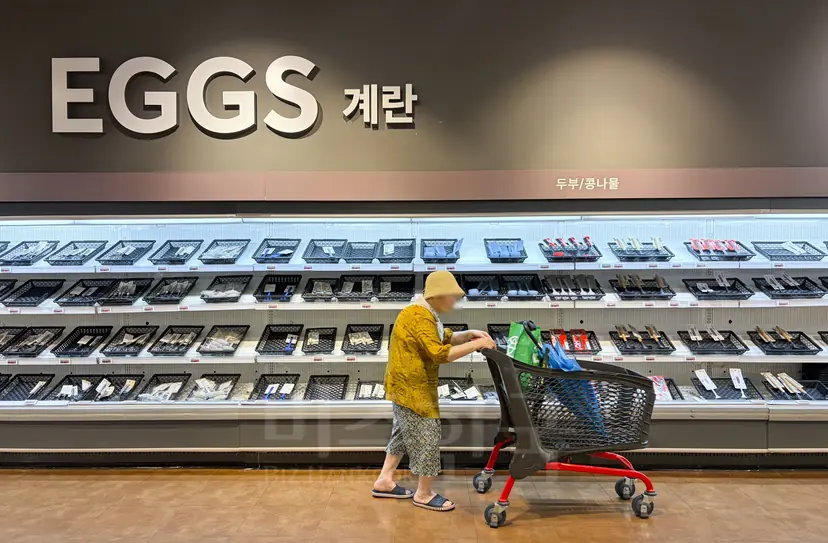
Homeplus plans to prioritize the normalization of store operations once the rehabilitation process resumes. Homeplus has suspended operations at 67 stores nationwide since the 13th due to a lack of operating funds. A Homeplus official noted, "If the court decides to continue the rehabilitation process through our immediate appeal, we plan to establish a schedule for resuming operations after consulting with our business partners."
However, industry experts suggest that even with the injection of emergency funds, resuming store operations may not be easy. Given that public interest claims—including unpaid supplier invoices and employee wages—exceed 1 trillion won, there are concerns that if the newly secured funds are prioritized for paying off these backlogs, there may not be enough left to normalize store operations.
According to industry sources, it costs approximately 3 billion won to procure the merchandise needed to run one Homeplus store normally. This means that about 200 billion won is required just for product procurement to normalize all 67 closed stores.
Nevertheless, Homeplus maintains that normalizing its stores is essential to continue its rehabilitation and eventual sale. The company must resume operations to generate revenue and maintain its value as a going concern for potential future buyers.
Consequently, Homeplus is expected to prioritize allocating a significant portion of the secured emergency funds to merchandise procurement and store reopening, while reviewing plans to pay off existing outstanding debts sequentially in consultation with suppliers. An industry insider noted, "Restarting store operations is the most urgent matter. I understand they are considering requesting government support to pay off the arrears sequentially rather than all at once."
If payments to suppliers and tenants are delayed further, their financial burden is likely to persist for some time. For this reason, some businesses that have not received their settlement payments are not necessarily celebrating the news of Homeplus's resumption of operations.
A tenant representative said, "We haven't even received our settlement payments from May yet. We have no clear answers on when we will be paid, so we are just waiting indefinitely. We agree that Homeplus needs to normalize, but many companies rely on these monthly settlements for their very survival." They added with a sigh, "I understand that purchasing goods is urgent for store operation, but it is questionable whether prioritizing stock procurement over paying off overdue settlements is the right move."
Ahn Soo-yong, head of the Homeplus branch of the Mart Workers' Union, emphasized during a press conference regarding the emergency funding decision, "Normalization must not be achieved by sacrificing others. The government and the National Assembly must thoroughly monitor MBK's actions during the remaining rehabilitation period and ensure that a normal rehabilitation plan that allows workers, suppliers, and tenants to survive together is prepared and approved."