

[비즈한국] Samsung Biologics has executed the largest merger and acquisition (M&A) deal in the history of the domestic pharmaceutical and biotech industry. It has decided to acquire Polypeptide Group, a global peptide CDMO (Contract Development and Manufacturing Organization) specialist headquartered in Baar, Switzerland, for approximately 2.7 trillion won (1.46 billion Swiss francs). Having already expanded its focus from traditional antibodies to mRNA (messenger ribonucleic acid) and ADC (antibody-drug conjugates), this move signifies the company’s intent to diversify its portfolio by adding the peptide sector.
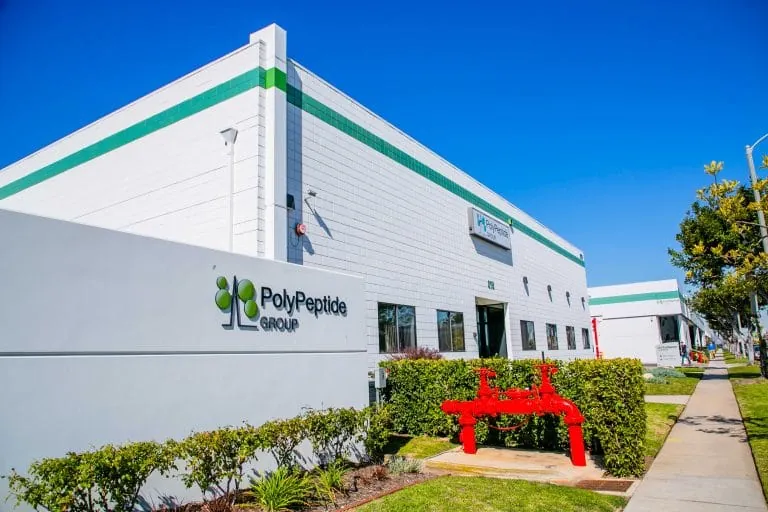
Polypeptide is a CDMO company that spun off from the peptide production division of the global pharmaceutical firm Ferring in 1996. It possesses experience in the development and production of over 1,000 peptide-related projects, accounting for one-third of all commercially approved peptide drugs worldwide. In the first half of this year, the company recorded 236.6 million euros (401.2 billion won) in revenue, a 41.6% increase compared to the same period last year.
The core competitive edge of Polypeptide lies in peptides. GLP-1 class obesity drugs such as Wegovy and Mounjaro, which are currently sweeping the global pharmaceutical and biotech market, are all based on peptides. With the obesity treatment market projected to reach up to 150 billion dollars (approximately 200 trillion won) by around 2035, the consensus is that demand for the raw material, peptides, will also skyrocket. Already, metabolic disease treatments targeting obesity and diabetes account for 68% of Polypeptide's total revenue.
Beyond metabolic diseases, Polypeptide also supports the production of customized active pharmaceutical ingredients (API) for innovative drug companies with pipelines in various therapeutic areas, including oncology, neurological disorders, cardiovascular diseases, and immune and rare diseases. Its network is also robust, with 72% of its total revenue coming from global big pharma companies.
Its production infrastructure and process technology are also attractive factors. It is capable of handling everything from small-scale customized projects in the milligram (mg) range to large-scale commercial production in the ton (t) range. Its production footprint is another advantage; it operates six facilities across five countries on three continents, including Malmö (Sweden), Braine (Belgium), Strasbourg (France), Torrance and San Diego (U.S.), and Ambernath (India), allowing it to immediately respond to the local production demands of global clients.
Additionally, through the acquisition of Polypeptide, Samsung Biologics has secured a foothold in "radiolabeled peptides," a next-generation precision medicine. Radiolabeled peptides are substances that combine radioisotopes with peptides that bind to specific cancer cells or target tissues, used for precise cancer diagnosis (PET, SPECT) or targeted radiation therapy (PRRT). Polypeptide possesses 20 years of accumulated expertise in radiolabeled peptide manufacturing.
John Rim, CEO of Samsung Biologics, evaluated this large-scale acquisition as "a strategic decision that encompasses all three pillars of Samsung Biologics’ growth: production capacity, business portfolio, and global footprint." He emphasized, "By combining the unique capabilities of both companies, we will provide our clients with a wider range of superior solutions and further strengthen our competitiveness in the global CDMO market."