

[비즈한국] Over 3,000 new startups were born in Germany in the first half of this year alone.
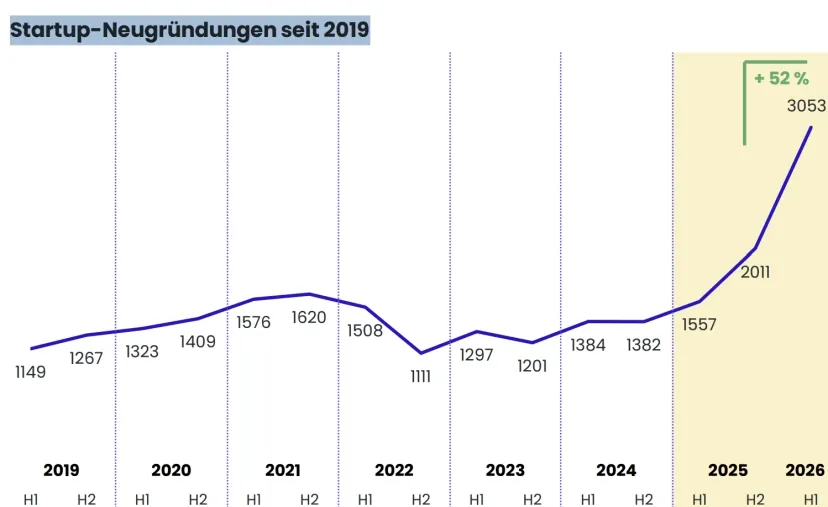
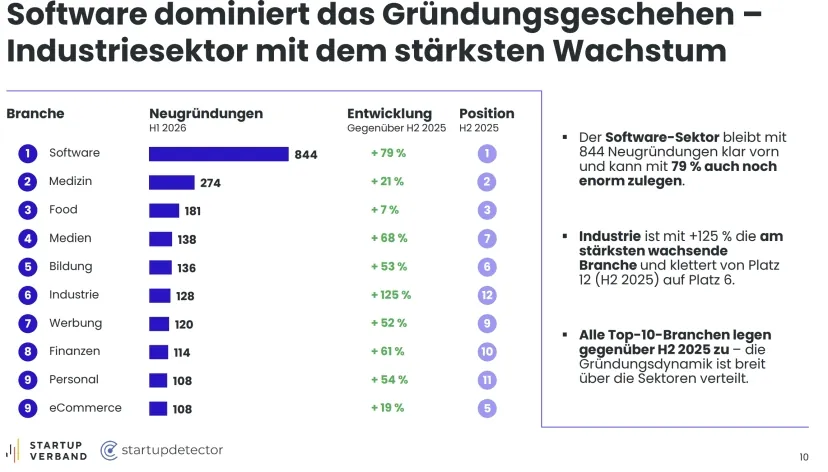
According to the ‘Next Generation’ report released by the German Startup Association on the 7th, a total of 3,053 startups were founded in Germany between January and June of this year. This is the highest figure for a half-year period since records began in 2019. It also represents a 52% increase compared to the second half of 2025 and is a higher number than the entirety of the 2024 calendar year.
Verena Pausder, Chair of the German Startup Association, offered an encouraging assessment, stating, “This level of entrepreneurial dynamism is something Germany has never seen before.”
Beyond the emergence of countless new startups, something else stood out: a shift in the location of startups in Germany, which had previously been dominated by Berlin and Munich. In particular, when comparing major cities, there are signs that a new startup hub is emerging in Hamburg, Germany’s largest maritime logistics city.
Berlin-Munich Duopoly
Germany is a country with distinct industrial specialization by region. Frankfurt represents finance, Stuttgart and Munich are known for automobiles, Essen for energy, and Cologne for media. On the other hand, the capital, Berlin, had no major signature industry until the early 2000s, serving only as the seat of the federal government and a home for artists.
Paradoxically, however, this "blank slate" became an opportunity for those looking to start something from scratch. Relatively low rent and the influx of international talent also played a role. ‘Rocket Internet,’ a global venture builder founded in Berlin in 2007 by the three Samwer brothers, served as the foundation for turning Berlin into Europe’s premier startup hub. Since 2007, Rocket Internet acted as an ‘academy’ for talent by churning out copycat models like Zalando, HelloFresh, and Delivery Hero, creating a cycle where the talent that passed through went on to found their own companies.
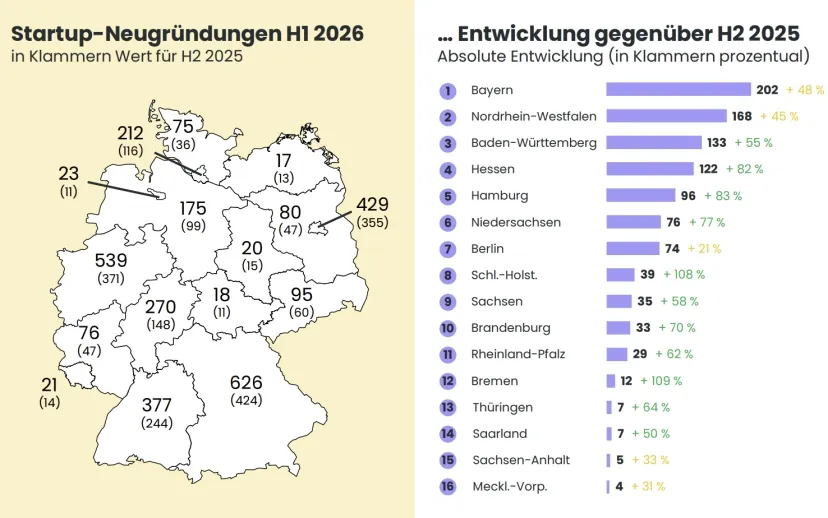
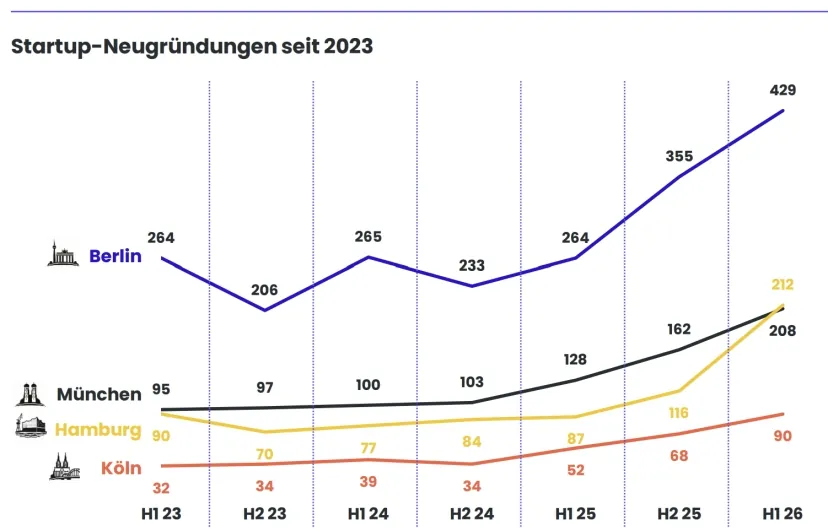
In this report, Berlin maintained its undisputed top position with 429 new startups. However, its growth rate was 21%, significantly lower than the national average (52%).
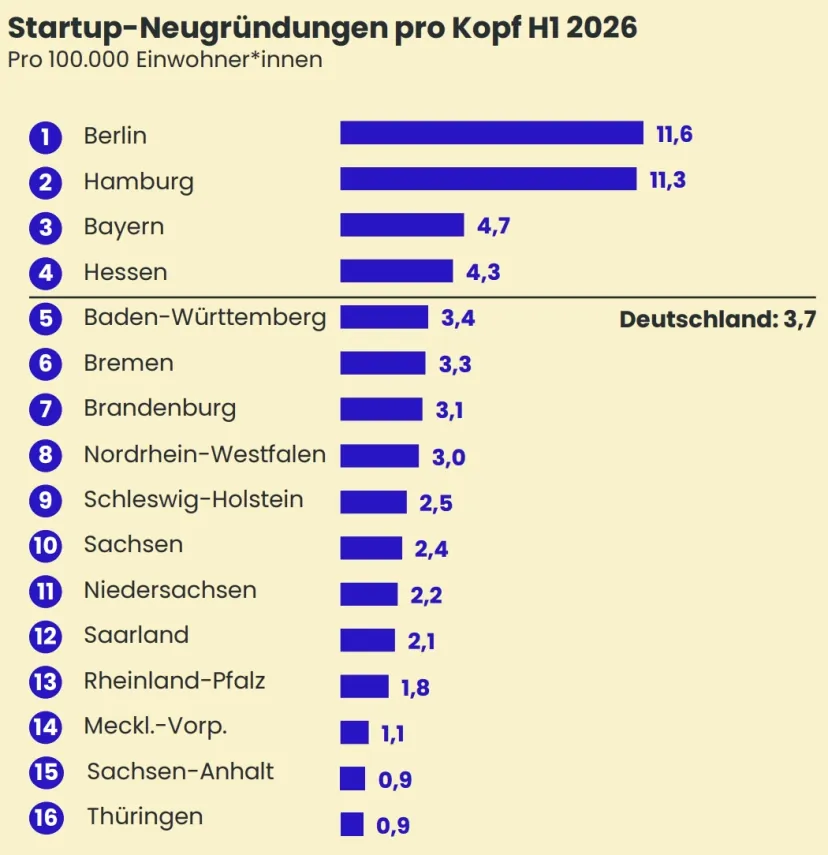
Munich’s strength lies in its robust industrial base. With the headquarters of major corporations like BMW and Siemens, as well as German branches of Apple and Google, it is easier for deep-tech startups to secure their first corporate clients in Munich than in any other European city. The Center for Digital Technology and Management (CDTM), a joint program between the Technical University of Munich (TUM) and Ludwig-Maximilians-University (LMU), consistently produces technical talent every year, and local family offices form a strong layer of follow-up investment. As a result, the startup density is 24.6 per 100,000 residents, the highest in Germany.
Hamburg Piercing the Gaps
Hamburg is the city creating cracks in this duopoly. While its 212 new startups in the first half of the year are less than half of Berlin's total, its growth rate reached 83%, allowing it to overtake Munich—which had 208—for the first time in years.
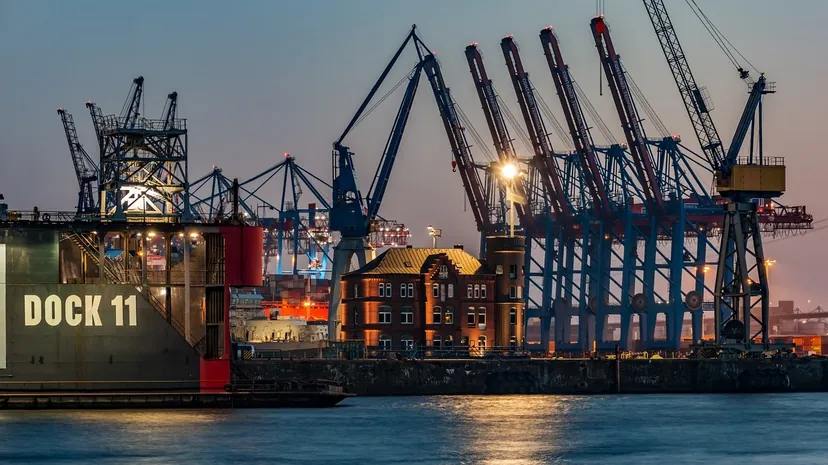
Hamburg is home to the third-largest port in Europe. Consequently, it has many logistics companies and a high number of logistics professionals. With such developed logistics, startups looking to solve logistics problems via IT naturally congregated in this city, as there is a wealth of inefficiencies to address.
In 2017, the City of Hamburg converted an old warehouse building into a startup office complex, naming it ‘Digital Hub Logistics.’ Currently, 85 startups are based there. Notable examples include Zero44, software that calculates CO2 emissions for ships, and NautilusLog, which digitizes shipping paperwork.
Greentech is also blossoming due to the need for port decarbonization. A green hydrogen hub involving companies like Shell and Mitsubishi Heavy Industries is being built on the site of a decommissioned coal-fired power plant in the heart of the Port of Hamburg. The plan is to use North Sea offshore wind power to electrolyze water for hydrogen, which will then fuel heavy harbor machinery and large ships. The port operator HHLA is currently converting its loading equipment to run on hydrogen fuel cells.
The City of Hamburg is also attracting startups by drawing in research infrastructure. The city successfully secured the DLR Quantum Computing Innovation Center, a national research facility. Furthermore, the city decided to inject an additional 34.1 million euros (approx. 58 billion KRW) from its own budget between 2023 and 2028, and allocated another 12 million euros (approx. 20 billion KRW) early this year.
As a result, eleQtron, a developer of ion-trap quantum computers, chose Hamburg as its second hub alongside its headquarters in Siegen. In May, eleQtron raised 57 million euros in a Series A round, one of the largest Series A rounds in the global quantum computing sector to date.
Other quantum-related startups, such as Munich-based quantum architecture specialist ParityQC, as well as QUDORA and Universal Quantum, are also heading to the innovation center. An ecosystem where multiple companies compete and collaborate centered around a single policy infrastructure has been formed.
Explosive Startup Growth, Directly Proportional to AI Development
Of course, this startup boom is not a special factor unique to Hamburg. It is interpreted as a global phenomenon where the threshold for entrepreneurship is lowering due to AI.
In this report, 1,038 new startups—one in three (34%)—incorporated AI into their business models. The numbers have shown explosive growth from 6–7% before 2022 to 13.8% in 2023, 18.3% in 2024, and 27.4% last year.
The association also noted, "Thanks to AI technology, entrepreneurs are now able to start businesses faster and more easily across various industries with lower costs."
According to global venture capital data provider Crunchbase, approximately 80% of global venture investment in the first quarter of 2026 flowed to AI companies. This is a significantly higher figure than the same period last year (55%). In the second quarter, AI companies captured over 70% of total investment.
However, it is clear that the City of Hamburg’s strategic direction and policy drive toward greentech, logistics, and quantum computing have accelerated this flow.
A Healthier Startup Ecosystem
It appears that not only is the number of new startups increasing, but the quality is also improving.
For instance, in the first half of this year alone, six existing German startups reached unicorn status. A unicorn is a private startup with a valuation of over $1 billion (approx. 1.4 trillion KRW). The name was coined because finding such startups is as rare as seeing a unicorn.
This has increased the total number of German unicorns to 36 (16 in Berlin, 10 in Munich, 10 in other regions). Compared to the 11 unicorns in Germany at the end of 2020, this is more than a threefold increase in five years. While still incomparable to the U.S., which has around 900 unicorns, the upward trend is encouraging.
Although not listed in the report, the six unicorns appear to be: Osapiens, a developer of ESG and supply chain regulation compliance software; Dash0, which develops software that detects and analyzes anomalies in server and cloud systems in real-time using AI; CMBlu Energy, which creates batteries using petrochemical byproducts; Focused Energy, a developer of laser-based nuclear fusion technology; Neura Robotics, a manufacturer of collaborative and humanoid robots; and Finn, an automotive subscription platform.
Another signal that the ecosystem is becoming healthier is the decline in bankruptcy rates. The number of startups that closed in the first half of this year was 117, a clear decrease compared to the same period last year (167).
The German startup ecosystem is now rapidly reorganizing into a hub of next-generation innovation by simultaneously capturing the three elements of quality, quantity, and regional diversification.
The author, Lee Jung-woo, has worked for 17 years as a journalist, covering a wide range of fields including major industries like automotive, secondary batteries, and heavy industry, as well as national defense, diplomacy, environment, education, and health and welfare. He has specifically covered industrial structural changes centered on mobility, energy transition, and sustainability in the field. He currently resides in Berlin, Germany, and serves as a partner at the startup accelerator ‘123 Factory.’