

[비즈한국] Samsung Electronics Dissatisfaction over the performance bonus gap between the Semiconductor (DS) Division and the Device Experience (DX) Division has ultimately led to large-scale rallies. The discontent among DX employees, which persisted following the conclusion of wage negotiations in May, surfaced this month through a series of rallies led by the company's second and third-largest labor unions. The conflict is now evolving beyond the issue of bonus amounts, touching upon concerns regarding organizational equity and trust. The management is now faced with a new leadership challenge: bridging the divide between divisions and strengthening organizational cohesion.
Backlash Over ‘DX Passing’… 2nd and 3rd Unions Take to the Streets
The Samsung Electronics Labor Union Donghaeng (Donghaeng Union), primarily composed of DX Division employees, will hold an after-work rally near the Suwon complex starting at 5:30 PM on the 16th. Under the banner of “Same Company, Same Rights,” they plan to demand the resolution of discriminatory treatment compared to the DS Division. The Donghaeng Union stated, “We are holding this rally to voice our opposition to the unreasonable ‘DX passing’ that occurred during this year’s wage negotiations,” adding, “We are aiming for a turnout of 2,000 to 3,000 people.” In a preliminary survey, 2,400 members expressed their intention to participate.
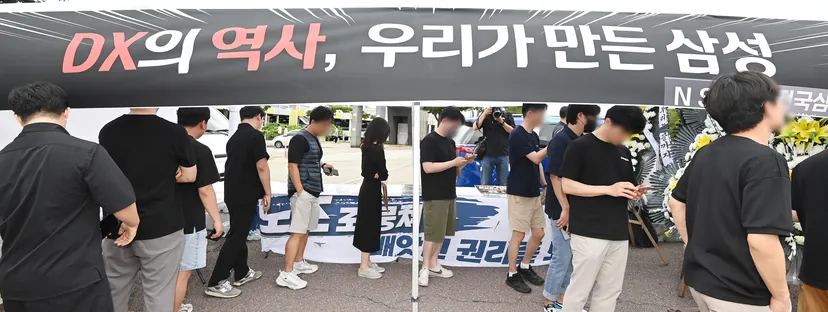
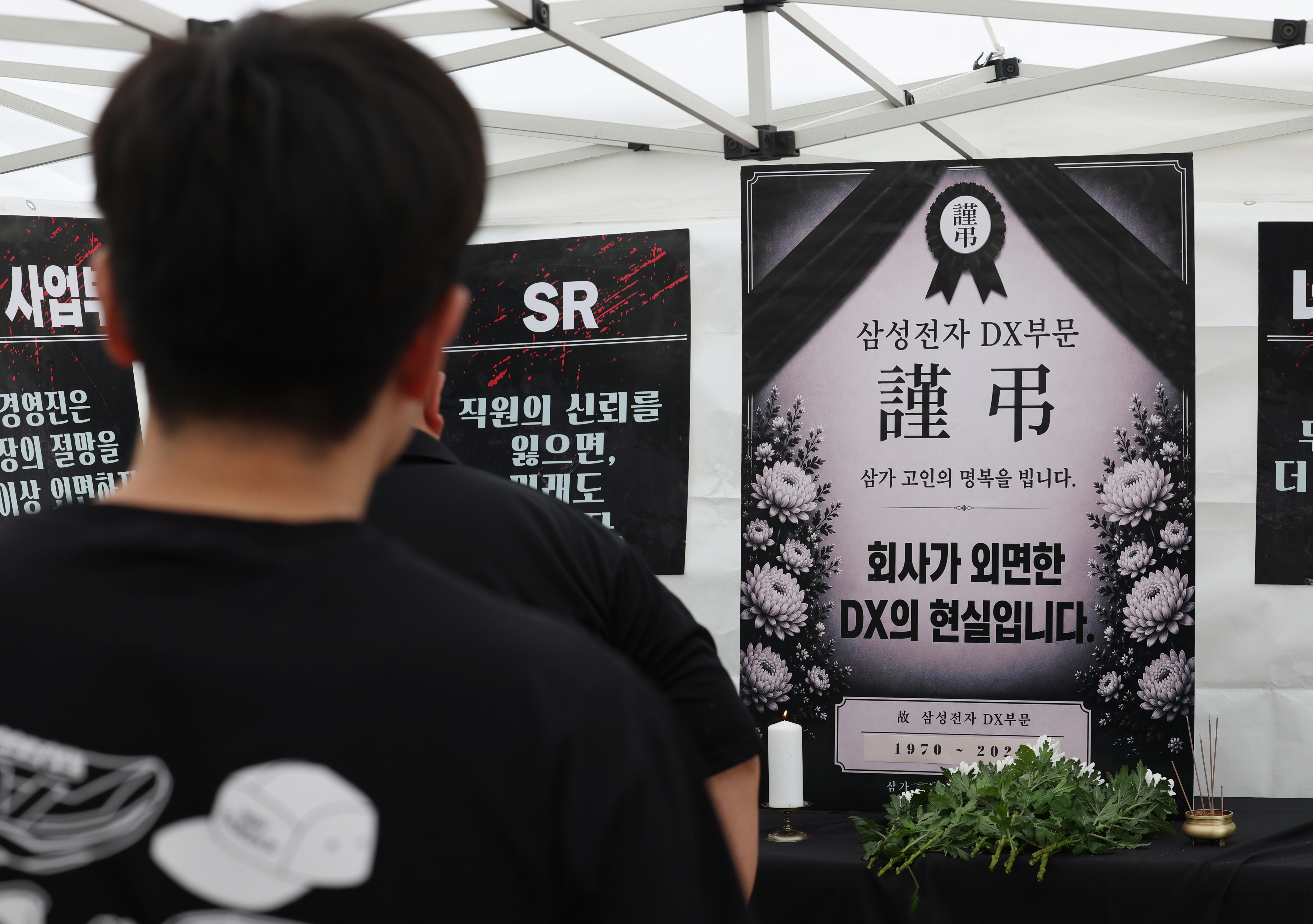
Previously, the National Samsung Electronics Union (NSEU) held a “memorial altar” rally in front of the main gate of the Suwon complex on the 14th, urging management to boost morale and devise compensation measures for the DX division. Signs with slogans such as “The history of DX, the Samsung we built” were displayed, and a joint memorial altar was set up where members performed a flower-laying ceremony. Lee Ho-seok, head of the NSEU Suwon branch, pointed out, “This is not just about receiving more or less money; it is a matter regarding the value of labor. When profits earned by DX were used for semiconductor facility investments, it was considered common funds, so it is inconsistent to separate the financial resources of DS and DX only when paying out performance bonuses.”
The backdrop to this is the May wage agreement. Following the agreement led by the Multi-Company Labor Union’s Samsung Electronics branch (which consists mainly of DS division members), the DS division received a total bonus of 12%—consisting of 1.5% in Over-Profit Incentive (OPI) plus 10.5% in special management bonuses—whereas the existing system was maintained for the DX division. As a result, some employees in the DS division are estimated to receive compensation near 600 million won, while DX employees received only 6 million won worth of company stock, leading to estimates that the gap between the divisions has widened by up to 100 times.
The membership of the Donghaeng Union, which was around 2,000 before the agreement, has now grown to 28,600, reaching 55% of the total DX workforce. While the NSEU membership has exceeded 22,600, the DS-focused Multi-Company Labor Union is seeing a steady departure of members. As the compensation conflict accelerates the movement of members, the structure of unions representing the interests of each division is becoming increasingly distinct.
Beyond Compensation Disputes: A Test for Organizational Integration
The unions do not deny the principle of performance-based compensation itself; rather, they argue that the current system, which utilizes company-wide resources for investment but limits bonus payouts based on specific business unit results, is inequitable. As a result, this conflict is expanding beyond a debate over bonus amounts to a dispute over compensation criteria and the distribution of financial resources.
There is also criticism that the structure in which executive long-term incentives reflect company-wide performance while employee bonuses reflect only divisional performance is unfair. Branch head Lee Ho-seok stated, “It is logically contradictory and hypocritical to claim that employees cannot receive company-wide bonuses while executives’ bonuses are distributed using company-wide funds.”
The union also raises the issue of management’s responsibility for the DX division’s sluggish performance. The sentiment is that several months have passed since the situation began, yet no appropriate measures have been introduced.
The competition for dominance among the unions is another variable. The Multi-Company Labor Union has refused the joint negotiation proposed by the Donghaeng Union for 2027, stating that it will focus on improving conditions for the DS division, raising the possibility of intra-union conflict in future negotiations. The conflict is not limited to the DX division. Embers of dissent remain within the DS division as well. The Samsung Electronics Labor Union sent an official letter on the 3rd to Chairman Lee Jae-yong and CEO Jeon Young-hyun, requesting a formal meeting to point out the disadvantageous compensation structure for underperforming business units such as the foundry division.
As unions fragment according to the interests of each business unit, the burden on management is growing. With the performance-based compensation system now moving beyond its function of inducing competition between divisions to causing cracks within the organization, a new management challenge has emerged: maintaining performance-based principles while securing fairness that employees can accept and leading organizational integration.
Branch head Lee also said, “It is the role of management to embrace the hurt employees and bring the organization back together as one.”
Meanwhile, movements toward union formation and organization are spreading across the group’s affiliates. The first union in the company’s history was formed at Samsung SDS, an IT service, cloud, and logistics solutions firm, on the 6th, with a majority of employees joining within two days. A union was also officially launched on the 15th at Semes, a semiconductor manufacturing equipment subsidiary of Samsung Electronics.