

[비즈한국] It’s a heatwave. Media outlets are advising people to refrain from outdoor activities as much as possible. Yet, golfers are still heading to the field. Some golfers strongly argue, “When would I play if not now?” citing the cheaper green fees during the off-season. “If you wear shorts and pack an ice pack, it’s manageable.” Such is the word of a passionate golfer whose enthusiasm burns hotter than the heatwave. In fact, wearing shorts during a round hasn't been permitted for very long. Golfers who raise their voices asking how they could possibly play a round in long pants during midsummer might want to consider themselves lucky compared to the golfers of the past, who were subject to strict dress codes.
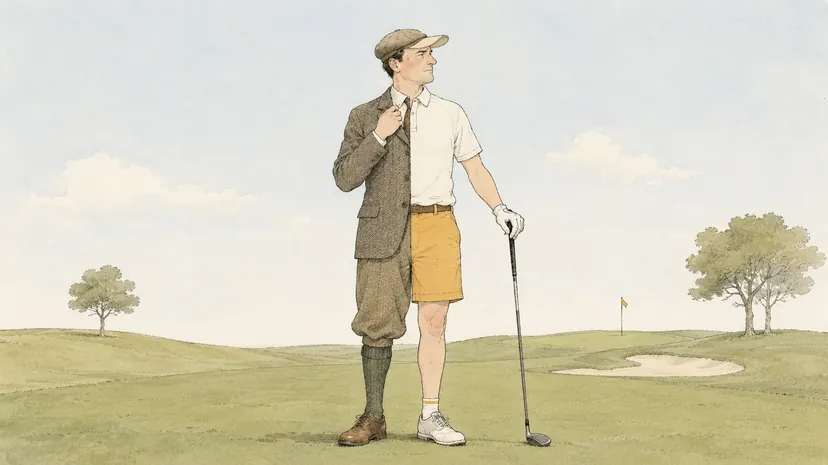
Golf began in 15th-century Scotland. That is the established view. In the early days, as it was a pastime for shepherds tending their flocks, there were no specific dress regulations. However, to block the biting wind and rain of Scotland, they played golf wearing thick tweed jackets or woolen daily clothing. But as the 18th and 19th centuries rolled in and the British royal family and aristocracy began to enjoy golf actively, golf attire changed completely. To the aristocrats of the time, golf was not just a sport; it was a social activity and a way to build connections. To maintain the dignity of a gentleman, they wore shirts with stiffened collars, ties or bow ties, thick jackets, and pants that reached below the knees, known as knickerbockers. Female golfers had to play wearing long dresses and corsets that covered them from head to toe. Thinking about it now, one wonders how uncomfortable it must have been to swing, but at the time, maintaining decorum took precedence over functionality.
The Great Depression hit in 1929. Golfers could no longer afford expensive knee-high socks. Knickerbockers, which were a set with these socks, eventually disappeared from golf courses. By the 1930s, golfers finally cast off their ties. They began wearing tops and pants made of lighter materials instead of heavy tweed jackets. Entering the 1950s, chemical fibers began to trend. The development of nylon brought a flood of light and stretchy clothing. Golfers started dotting the fields in vibrant primary colors like pink, green, and yellow, moving away from achromatic tones. The fields of the 1970s were the most flamboyant and colorful era in the history of golf fashion.
Golfers didn't just cast off their ties. They also discarded the flat cap, also known as the hunting cap, which had been favored for a long time. The image of wearing a collared polo shirt with a baseball cap began to establish itself as the typical attire for golfers. It was also around the time when the style shifted to the wide-brimmed baseball cap that professional players started attaching sponsor brands to their hats.
The strict and stubborn dress code of golf also began to soften. Tiger Woods wore a mock-neck shirt, which had a slightly raised circular collar instead of a traditional shirt collar. At the time, a fierce debate erupted over whether such a shirt should be permitted. Eventually, many players and weekend golfers began to follow Tiger Woods and wear mock-neck shirts.
Golf's dress code was not limited to the course. When entering the clubhouse, one was also expected to be dressed reasonably well. Jackets were mandatory, jeans were forbidden, and casual shoes were considered a violation of etiquette from a dress code perspective. To golfers who started recently, this might sound like a story from the strict days of long ago, but that’s how it was back then.
The reason shorts were banned for golfers for so long was simple. It was because of the perception that shorts were clothes worn only by young children. The debate over whether golfers should be allowed to wear shorts was the debate of all debates. Some domestic golf courses even mandated that if one wore shorts, they had to be paired with knee-high socks to prevent the calves below the knees from being exposed.
However, LIV Golf, which is relatively lenient toward existing customs, allowed shorts starting in 2022. The DP World Tour and the Asian Tour also permitted shorts, and the PGA Tour—a relatively strict tour—allowed shorts during pro-am tournaments held before official competitions, though not during regular tournaments. The KPGA allowed rounds in shorts at the Gunsan CC Open held at Gunsan CC in 2024.
Now, the scenery on the golf course is no longer solemn. The attire of golfers is no longer purely formal. As golf became popularized, the dress code of golf changed as well. The era has recreated the code. However, there are still lines that must be observed. That line is that one should not make others frown with their attire on the golf course. At the very least, on a golf course, there is a line that must be respected even in fashion. At least, that remains the case for now.