

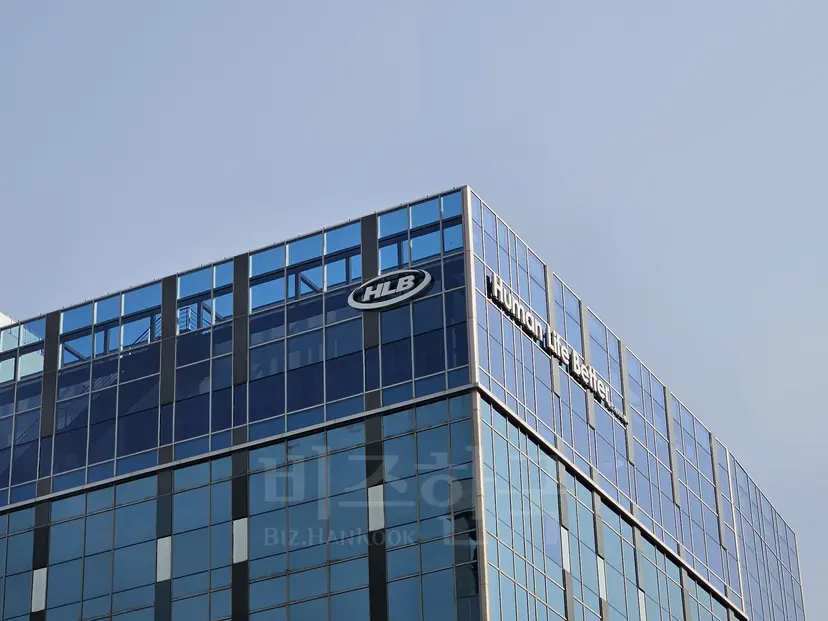
[비즈한국] HLB has faced its third setback in its pursuit of FDA approval for a new drug. The "Rivoceranib-Camrelizumab combination therapy," currently under development as a first-line treatment for liver cancer, failed to cross the threshold after receiving a Complete Response Letter (CRL) from the FDA. The market is deeply concerned that this frustration could negatively impact investor sentiment not just for the HLB Group, but across the entire domestic pharmaceutical and biotech sector.
Quality Control Issues at Partner Hengrui Pharma’s Other Drugs to Blame
In a disclosure today, HLB announced that it had received a CRL regarding the FDA review of its Rivoceranib-Camrelizumab combination therapy. This marks the third occurrence, following previous instances in May 2024 and March 2025.
While the previous first and second CRLs were hindered by CMC (Chemistry, Manufacturing, and Controls) risks associated with Hengrui Pharma’s Camrelizumab, the current issue does not stem from defects in the production processes of Rivoceranib or Camrelizumab themselves.
HLB’s explanation is that the cause of this CRL was that a production facility for Active Pharmaceutical Ingredients (API) of other generic drugs sold by Hengrui Pharma in the U.S. received a ‘Form 483’ (List of Inspectional Observations) during a regular FDA cGMP (Current Good Manufacturing Practice) inspection. According to HLB, the FDA conducted unannounced inspections of Hengrui Pharma’s drug substance (DS) facility on April 15 and its drug product (DP) facility on the 3rd of this month. These were not Pre-Approval Inspections (PAI) for the Rivoceranib-Camrelizumab combination therapy.
The issue arose because the DS for Rivoceranib was scheduled to be produced at that same facility. The FDA withheld approval, citing the overall quality management of the plant, stating, “Approval for Rivoceranib cannot be granted until compliance with cGMP standards at that manufacturing site is verified.” It is effectively a ‘butterfly effect’ resulting from poor quality control of other drugs sharing the same factory, rather than an issue with Rivoceranib or Camrelizumab themselves.
However, the industry is concerned that HLB essentially has no control over its partner, Hengrui Pharma. Hengrui Pharma was already in the process of responding to the DS inspection it received in April and, despite receiving the DP inspection notification on July 3, kept this fact hidden, only notifying HLB’s U.S. subsidiary, Elevar Therapeutics, on the 5th.
At the time, Hengrui Pharma reportedly offered the excuse that they did not share the information because “Rivoceranib is not yet a commercialized product and was therefore not subject to the inspection.” This means the situation was not shared properly, even though this is the third time FDA approval has failed. HLB stated that it has officially requested the specific details of the FDA’s Form 483—the core of the current delay—from Hengrui Pharma and is awaiting a response.
Jung Yoon-taek, CEO of the Pharmaceutical Industry Research Institute, pointed out, “The fact that communication between partners was not smooth, despite it being a direct production facility issue, clearly shows a lack of structural control. This is a significant lesson, demonstrating that there are clear limitations in driving joint development or cooperative relationships rather than having a single integrated company.”

Why the Bold Confidence of ‘Samsung Bio Legend’ Kim Tae-han Became Embarrassing in Just 3 Months
As the situation has unfolded this way, the position of Kim Tae-han, Chairman of the Bio Division at HLB Group, has become awkward. Chairman Kim, who built a flawless quality system as the inaugural CEO of Samsung Biologics, joined HLB Group early this year amidst high expectations that he would be the savior to resolve HLB’s quality risks.
During an integrated shareholder meeting for the HLB Group held in April, Chairman Kim expressed confidence in the FDA approval of the Rivoceranib-Camrelizumab therapy. At the time, he stated, “Since joining the HLB Group, I have reviewed all materials exchanged with the FDA and documents from Elevar and Hengrui Pharma for the past 2 to 3 months.” He added, “I visited Hengrui Pharma in China in person with experts from Elevar to inspect every corner of the production plant and share know-how on responding to the FDA.” He reassured shareholders by saying, “This is a situation that can often be encountered, and I viewed the CRL review received by Hengrui Pharma as being on the borderline between approval and supplementation.”
However, as the third attempt for FDA approval hit a snag, his bold words from three months ago have become embarrassing. While it is true that the cause was a cGMP issue related to an entirely different drug that HLB was unaware of, the result demonstrates that even a global quality expert has clear limitations in controlling the independent and unexpected risks of an overseas partner.
Will This Spread to a Crisis of Confidence in K-Bio?
The frustration of a leading biotech stock, which ranks among the top in market capitalization on the KOSDAQ, is casting a long shadow over the asset value of the entire market and confidence in the capital market. Starting from the opening bell today, HLB shares plummeted to the daily limit, and stocks of other HLB Group affiliates fell by more than 17%.
Lee Seung-kyu, Vice President of the Korea Biotechnology Industry Organization, noted, “It is unreasonable to view this matter as a defect in the Rivoceranib compound itself or a fundamental problem.” However, he added, “I am concerned that the market might misunderstand this and that it could spread to a crisis of confidence or a contraction in investor sentiment across the biotech sector and the KOSDAQ market as a whole.” He continued, “It is a painful lesson showing how thoroughly domestic pharmaceutical and biotech companies must incorporate CMC risks at the commercialization stage and information-sharing systems into their contract conditions when developing new drugs through overseas partnerships.”
Although HLB has been hindered by quality risks, its evaluation remains that the value of Rivoceranib as a new drug and the growth of its follow-up pipeline remain solid. Vice President Lee stated, “This incident should be approached as an area related to manufacturing, such as the CMC of a Chinese partner.” He added, “As HLB has been honest and open about the situation and its countermeasures whenever an issue occurred, it is necessary to listen calmly to the strategies HLB will present in the future.”
HLB is also facing an FDA decision on its second-line treatment for cholangiocarcinoma, ‘Lirafugratinib,’ in September. At the 2026 ASCO GI (American Society of Clinical Oncology Gastrointestinal Cancers Symposium) held in January, the company attracted industry attention by revealing Phase 2 clinical data showing an Objective Response Rate (ORR) of 46.5% and a Disease Control Rate (DCR) of 96.5%. It was also designated as a Breakthrough Therapy (BTD) by the FDA in 2023. Additionally, through its major affiliate HLB Life Science, it is conducting clinical trials for additional indications (such as adenoid cystic carcinoma) for Rivoceranib, and HLB Therapeutics is accelerating the development of a pipeline for neurotrophic keratitis, focusing on diversifying its portfolio of follow-up anti-cancer drugs and new drug candidates.