

[비즈한국] SK Hynix will list its American Depositary Receipts (ADRs) on the Nasdaq on the 10th. The current offering size is approximately $28 billion (about KRW 43 trillion), making it one of the largest U.S. stock market listings by a foreign company to date. Industry experts view this ADR listing not merely as a move to raise foreign capital, but as a strategic step to have its corporate value re-evaluated in the global capital market to support large-scale investment competition in the AI era.
Market interest extends beyond the success of the public offering to the outlook after listing. Attention is focused on how the U.S. market will evaluate SK Hynix, how much of the so-called "Korea Discount" can be resolved, and whether this will serve as a test bed for verifying global investor sentiment toward the AI memory market.
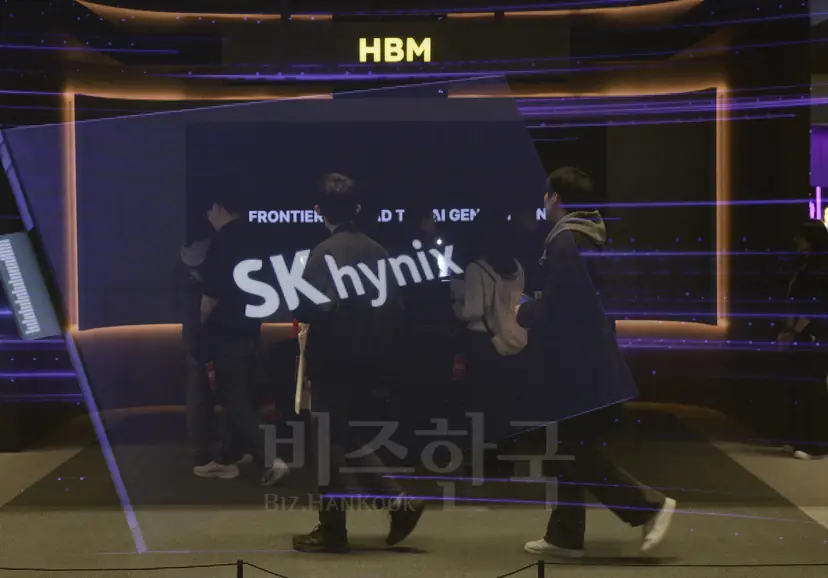
Why SK Hynix is heading to the U.S.
This listing is expected to be one of the largest ever for a foreign company entering the U.S. stock market. SK Hynix will issue 17.79 million new shares, equivalent to 2.5% of its total outstanding shares, for the ADR offering. Based on the adjusted offering price of KRW 2,425,000 announced on the 6th, it is estimated that SK Hynix will secure approximately KRW 43.1408 trillion through this listing.
The backdrop for SK Hynix’s pursuit of this ADR listing lies in the valuation gap between the U.S. and Korean capital markets. According to the securities registration statement submitted by the company to financial authorities, the average price-to-earnings ratio (PER) of the U.S. stock market was 22.4 times at the end of May this year, whereas the KOSPI stood at only 9.6 times. SK Hynix cited its structural limitation of being listed only in the domestic market as a reason for being undervalued compared to global peers.
In fact, SK Hynix’s 12-month forward PER was in the range of 6.2–6.6 times as of the beginning of this month, which is lower than major global semiconductor companies such as Micron (7 times) and Taiwan’s TSMC (23.1 times). The common consensus among securities firms is that while the company has secured global leadership in High Bandwidth Memory (HBM) market share and profitability, its corporate value remains discounted compared to its competitors.
The U.S. listing is an attempt to mitigate these structural limitations. U.S. investors will be able to trade SK Hynix ADRs directly on the Nasdaq without needing to open a Korean securities account or go through currency exchange procedures. This allows the company to secure a new investment base, including U.S. institutional investors, pension funds, and global funds, while simultaneously gaining the opportunity to be evaluated on the same terms as competitors like Micron.
Ryu Hyung-keun, a researcher at Daishin Securities, noted, "It is an opportunity to be evaluated on the same terms as competitors. Since the company holds an advantage in business competitiveness and scale compared to its rivals, the valuation discount is expected to be resolved quickly."
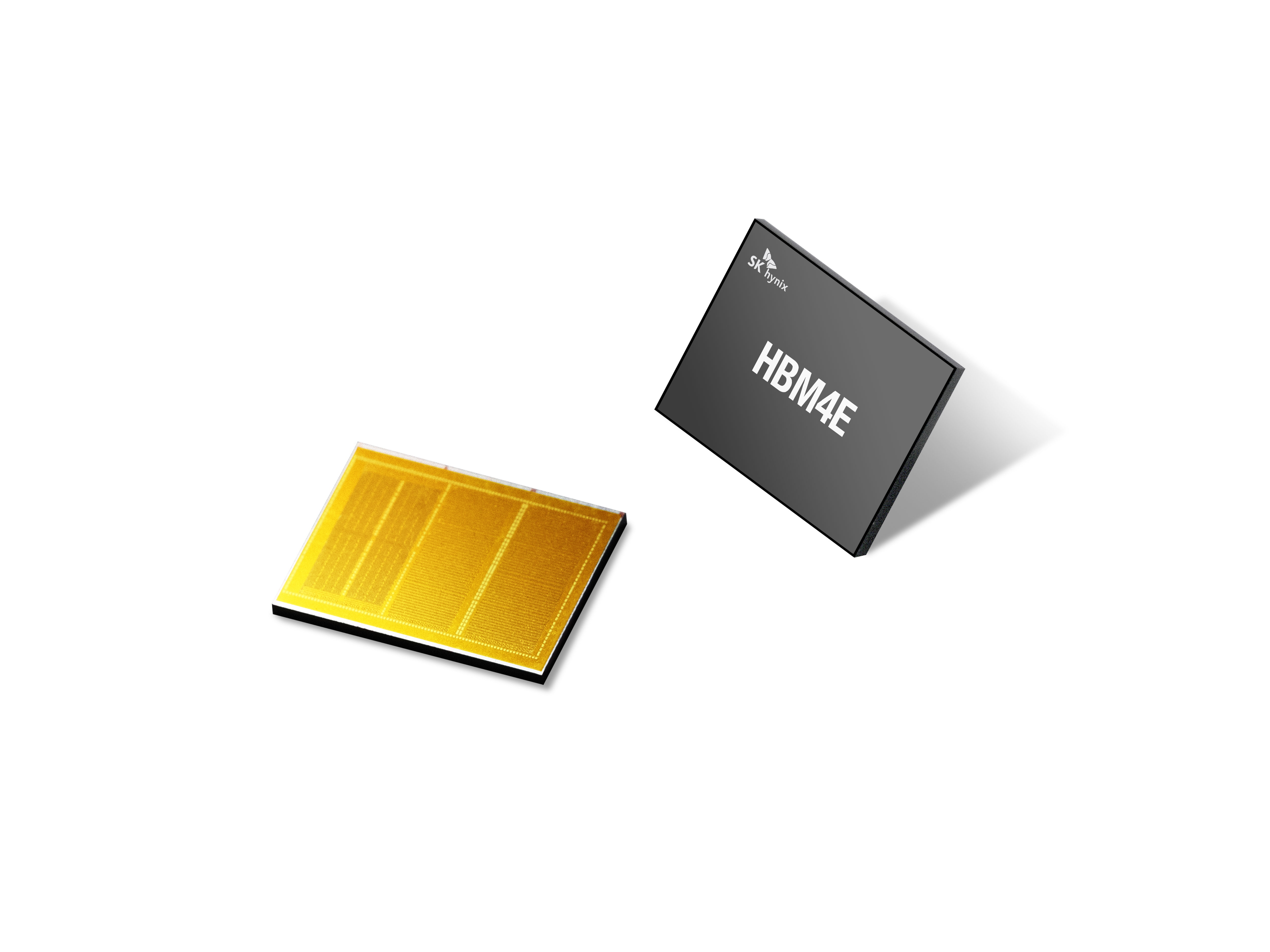
Leveraging Global Capital Markets Amid AI Investment Competition… Impact on Domestic Market
This ADR listing also signifies the establishment of a long-term capital procurement foundation to support massive capital expenditures. SK Hynix will issue up to 17.79 million new shares in Korea to serve as the underlying assets for the ADRs. The funds secured are slated to be invested in expanding AI memory production capacity, including the first fab at the Yongin Semiconductor Cluster (KRW 31 trillion), the Cheongju P&T7 Advanced Packaging plant (KRW 19 trillion), and the acquisition of extreme ultraviolet (EUV) lithography equipment (approximately KRW 12 trillion).
The semiconductor industry notes that the scale of investment in the AI era has grown to an extent incomparable to the past. The judgment was that in a situation where tens of trillions of won in facility investments are required due to fierce competition in advanced memory and packaging, it is difficult to stably secure long-term investment resources solely from the domestic capital market.
In its securities registration statement, SK Hynix also defined the U.S. as a market where the AI industry, key customers, and global investors are concentrated. This is interpreted as a strategy to move beyond mere fundraising to expand touchpoints with investors and customers at the heart of the AI ecosystem and build a foundation to continuously utilize global capital markets in the future.
The possibility of global passive fund inflows following the listing is also noteworthy. If included in major U.S. semiconductor indices and the exchange-traded funds (ETFs) that track them, new investment demand could flow in over the long term. However, this is more likely to be seen gradually through the index inclusion process rather than an immediate effect right after listing.
Predictions also suggest an impact on the domestic stock price. As the ADR and the underlying domestic shares have a structure that allows for mutual conversion, the corporate value formed in the U.S. market could be reflected in the domestic market. Kim Dong-won, head of the KB Securities Research Center, observed, "While the dilution effect is limited, we can expect a reduction in valuation discounts through increased accessibility for global investors."
AI Memory Test Bed… Expectations and Tasks
Amid forecasts that investments in AI data centers and demand for HBM will continue, how U.S. investors evaluate SK Hynix is closely tied to the market’s judgment on the growth potential of the AI memory industry.
The analysis suggests this will also influence the capital market strategies of other memory firms. U.S. investment bank D.A. Davidson evaluated it as a "double-edged sword," noting that while some funds previously flowing to Micron or SanDisk might shift toward SK Hynix, investor understanding of the memory industry could increase as the number of comparable peers grows.
There are also significant variables. With this new share issuance, the stake of existing shareholders will be diluted by approximately 2.4%. If the company fails to secure enough investment demand in the U.S. market or if the pace of AI infrastructure investment slows, the effect of valuation re-evaluation could be limited. The company must also bear new burdens such as disclosure obligations and strengthened regulations resulting from the U.S. listing.
On the 8th, two days before the listing, SK Hynix shares closed at KRW 2,076,000, down 5.68%. While Morgan Stanley recently raised a "semiconductor peak" theory in a report, the domestic securities industry continues to see favorable market conditions due to deepening supply shortages. As such, attention is focused on whether this ADR listing will serve as a barometer for the AI memory industry.
The public offering price will be finalized on the afternoon of the 9th (local time). In Korean time, this is before the stock trading resumes on the 10th.
Yoo Hoi-jun, a professor of Electrical Engineering at KAIST, said, "It seems the SK Group has made a strategically meaningful choice. If they can receive an evaluation in the U.S. capital market comparable to that of a U.S. company, we can expect a positive impact on corporate value." He added, "However, the impact on relationships with China is something to watch, though I believe it is a decision made after careful strategic judgment."