

[비즈한국] A ‘pie in the sky.’ As the patent expiration for ‘Epidiolex,’ an epilepsy treatment that emerged as a global blockbuster drug (with annual sales exceeding $1 billion) last year, comes into sight, interest from the pharmaceutical and biotech industry is rising. However, in Korea, it is blocked by regulations under the Narcotics Control Act because it contains cannabidiol (CBD), an ingredient derived from medical cannabis.
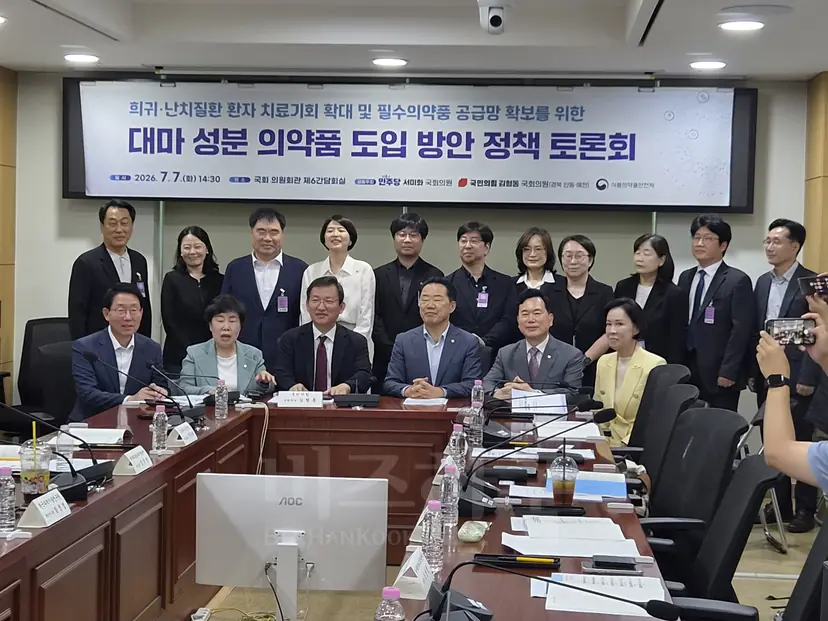
Furthermore, while global Big Pharma companies are racing to secure the next generation of cannabis-derived compounds (cannabinoids), the reality is that Korea cannot even easily produce generics due to outdated regulations. On the 7th, a policy forum on the ‘Introduction of Cannabis-derived Medicines’ held at the National Assembly Member’s Office Building in Yeongdeungpo-gu, Seoul, held in-depth discussions on the domestic production of cannabis-based drugs, which currently rely on imports, and how to innovate the regulations hindering this progress.
“It’s as simple as dissolving it in sesame oil”… But restricted by law, they can’t even start
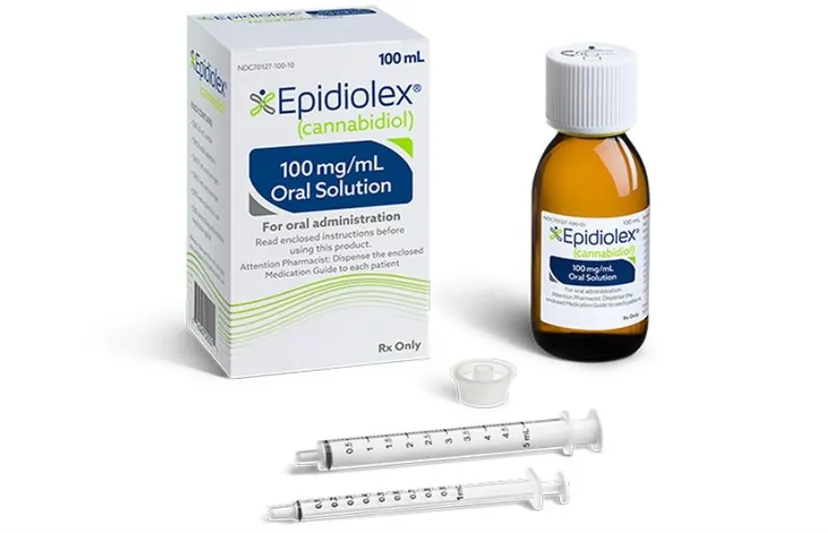
Epidiolex is a rare disease drug developed by the UK’s GW Pharmaceuticals, which became the first cannabis-derived medicine to receive approval from the US Food and Drug Administration (FDA) in 2018. Later, in 2021, Jazz Pharmaceuticals acquired GW Pharmaceuticals for approximately $7.2 billion (10.8691 trillion won), securing the global exclusive rights and patents for Epidiolex.
It serves to reduce seizures in pediatric patients with severe, intractable epilepsy, such as Lennox-Gastaut syndrome (LGS) or Dravet syndrome (DS), which cannot be controlled by existing medications. Last year, Epidiolex sales reached $1.0592 billion (1.6008 trillion won).
Jazz Pharmaceuticals is known to claim that the patent protection period for Epidiolex lasts until 2035. However, industry insiders believe that generic production of Epidiolex could be possible as early as 2030 through patent litigation settlements and other means. As the technical difficulty of developing Epidiolex, which is a CBD oil formulation, is not high, experts suggest that if only the regulatory barriers are lifted, domestic companies would have a fair chance in the generic market. Ham Jeong-yeop, a senior researcher at the Korea Institute of Science and Technology (KIST), noted, “You just need to dissolve 10g of CBD in sesame oil, and that’s it.”
However, in Korea, the development and commercialization of cannabis-based medicines are not easy because they are blocked by regulatory barriers rather than technology. CBD must be registered as an active pharmaceutical ingredient and go through GMP (Good Manufacturing Practice) facilities, but since cannabis is currently classified as a narcotic under current law, even permission for research purposes requires approval from relevant ministries every single time.
- THC (Tetrahydrocannabinol)
- The main hallucinogenic component of cannabis. It acts on the central nervous system to induce psychoactive effects and hallucinations, and is a strictly regulated narcotic substance worldwide due to the risk of addiction.
- CBD (Cannabidiol)
- A type of non-hallucinogenic compound (cannabinoid) found in cannabis. It has no addictive or psychoactive (hallucinogenic) effects and is widely used as a key pharmaceutical ingredient due to its excellent anti-convulsant, anti-inflammatory, and neuroprotective properties.
- Hemp
- A cannabis plant with a THC content (the hallucinogenic component) of 0.3% or less by dry weight. It causes almost no hallucinogenic effects and has a much higher CBD content compared to THC, making it primarily used for medical drug raw materials or industrial purposes (textiles, cosmetics, etc.).
- Marijuana
- A cannabis plant with a THC content exceeding 0.3% by dry weight. It has a higher THC content than CBD, causing strong psychoactive (hallucinogenic) effects, and is strictly classified and controlled globally as a narcotic due to the risk of abuse.
Global market moves to next-gen substances… Korea stands still
Major developed countries are moving quickly. In April, the US issued a final order to downgrade cannabis-based medicines approved by the FDA and products regulated under state medical cannabis licenses from Schedule I to Schedule III under the Controlled Substances Act (CSA), significantly easing restrictions on medical cannabis. With this measure, medical cannabis companies are expected to be taxed at the same rate as general businesses, with an estimated annual tax saving of $2.3 billion (3 trillion won) for the industry as a whole. This is also seen as a factor that will lead to the influx of large-scale capital from the financial sector, such as private equity funds and banks.
Japan, which was historically conservative regarding regulations, also overhauled its relevant systems earlier this year. While strictly preventing abuse by capping the residue limit of THC—a hallucinogenic substance found in common products—at 0.001% or less (the strictest level in the world), it has cleared a path for cannabis-derived medicines that have undergone clinical trials and approval to be prescribed legally.
In contrast, Korea is still hovering at the initial stages of discussing CBD legalization. It is currently only at the stage of evaluating the efficacy and safety of medical cannabis through limited demonstration projects by designating the Andong, North Gyeongsang Province area as a special regulatory zone for industrial hemp.
In the meantime, the global industry is rapidly shifting its focus in cannabis research beyond CBD to next-generation cannabinoids such as CBG (cannabigerol), CBC (cannabichromene), and CBN (cannabinol). Researcher Ham expressed concern, saying, “The global market has reached a point where new drugs are being developed with substances beyond CBD, as research results pour in showing that CBG, a precursor to CBD, is effective for various diseases, but in Korea, companies cannot even touch these as raw materials.”
“Don’t just grow strawberries in smart farms…” Urgency for localization of high-value raw materials
Experts agree that localizing active pharmaceutical ingredients and preemptive deregulation are urgent to create future growth engines for K-Bio. Cannabis used as a pharmaceutical raw material must be grown in indoor smart farms and GMP facilities where temperature, humidity, and security are perfectly controlled, rather than in ordinary open fields.
However, a paradoxical situation continues where, despite having advanced agricultural infrastructure, it cannot be utilized in the high-value pharmaceutical industry due to strict controls. Researcher Ham urged a transition to facilities capable of producing high-value pharmaceutical raw materials, stating, “Even though Korea has built world-class smart farm technology over the past decade, we are currently only growing paprika or strawberries there.”
However, positive changes are being detected. The atmosphere at the Ministry of Food and Drug Safety (MFDS), which has adhered to a policy of thorough regulation on cannabis, citing concerns over abuse, is becoming more favorable.
It is understood that the MFDS has recently formed a consensus that, beyond simply recognizing the necessity of medical cannabis for protecting the treatment rights of patients with intractable diseases, bold regulatory innovation must be supported to expand and foster this into a full-scale pharmaceutical and bio-industry.
Chae Gyu-han, the Narcotics Safety Planning Officer at the MFDS, who attended the forum, said, “Once cannabis ingredients move from regulated substances into the medical domain, generics and other products will be able to receive approval much more easily. Therefore, even if it takes some time to develop new substances, the state should actively keep opportunities open for areas with future medical and industrial development potential.”
Ultimately, the key lies in the will of the National Assembly and the government to act. Recently, political circles have also been accelerating efforts to improve the system. Lawmaker Kim Hyung-dong of the People Power Party (Andong-si, Yecheon-gun, North Gyeongsang Province) and lawmaker Seo Mi-hwa of the Democratic Party of Korea (proportional representation) each proposed the ‘Partial Amendment to the Narcotics Control Act,’ which centers on allowing domestic cultivation and the manufacturing, import, and export of medical cannabis.
As both ruling and opposition lawmakers share a consensus on resolving the outdated regulations binding medical cannabis, the possibility of institutional improvement through legislation is gaining momentum. Lawmaker Kim Hyung-dong, who co-hosted the forum with lawmaker Seo Mi-hwa, stated, “While strictly managing the risks of cannabis, the government must take active institutional support in step with legislative activities so that the research results of related companies are not discarded and can lead to industrialization.”