

[비즈한국] Broadcasting companies produce and distribute content differently than general corporations. Therefore, procedures and measures distinct from standard corporate rehabilitation are required, and this need has become clear through the JTBC situation. This is why the Korea Broadcasting Actors Union (KBAU) has finally stepped in.
As JTBC, along with affiliates of the JoongAng Group, filed for corporate rehabilitation with the court, the execution and payment of funds have been frozen and delayed. Damages amounting to billions of won, including both performance fees and rerun royalties, are being cited. As payments for major hit programs like JTBC’s 'Please Take Care of My Refrigerator' and 'Knowing Bros' have been delayed, the KBAU has demanded that countermeasures be prepared.
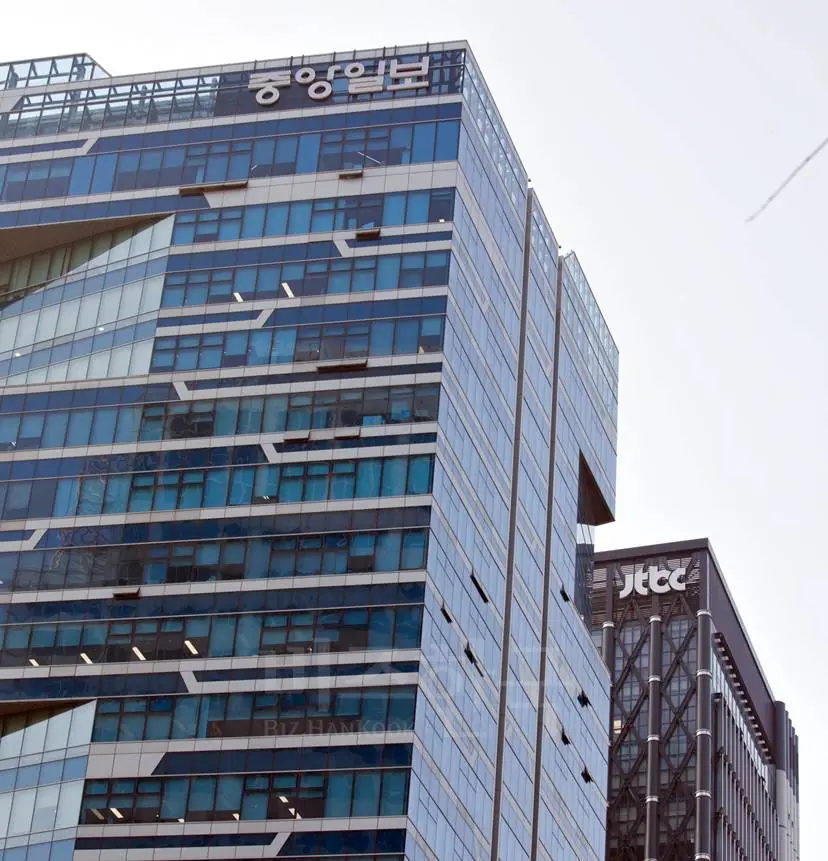
JTBC previously explained the situation to the agencies, asked for their understanding, and stated that they would pay the performance fees in accordance with court procedures and schedules. However, the KBAU is demanding measures for extreme situations that may arise in the future. They emphasized that performance fees should be prioritized because they are equivalent to wages rather than general claims. This is to prevent a scenario where most general claims would likely not be recovered if JTBC enters court receivership.
JTBC is currently in a process of autonomous restructuring support, so-called autonomous consultation. Before the court forcibly commences rehabilitation, the company and creditors are negotiating independently. The commencement of corporate rehabilitation can be deferred for up to 3 months—a basic 1 month plus a maximum of 2 months. During these 3 months, the court issues preservation orders and comprehensive injunctions, allowing the debtor to negotiate with creditors without the threat of compulsory execution.
If an agreement is reached during this period, the rehabilitation application is withdrawn, and business operations can return to normal. If negotiations fail, formal rehabilitation proceedings begin. Once a decision to commence corporate rehabilitation is made, a third party appointed by the court takes control of the company and proceeds with restructuring. The core of such restructuring is workforce downsizing. Furthermore, legal actions by creditors such as provisional attachments, attachments, and auctions resume. The company must submit a rehabilitation plan under the court's supervision and obtain the consent of its creditors.
When formal rehabilitation begins, unpaid wages and severance pay for workers are classified as priority common-benefit claims and, though it may take time, can be recovered. However, broadcasting performance fees are different. Performers are generally classified as self-employed individuals, and the fees involved are often quite large. Moreover, not only the base performance fees but also rerun royalties remain unpaid. Therefore, if formal rehabilitation proceedings begin, there is a high possibility that a significant amount will not be paid. The KBAU is concerned about this very point.
Out of this concern, the KBAU is demanding transparency regarding the current status of unpaid fees and a concrete future payment schedule, as well as an official channel for consultation. Furthermore, since many broadcast programs are being halted or delayed, leading to unstable employment or loss of job security, separate relief measures are also necessary.
I propose a solution to resolve this situation: a performance fee trust system is needed to stabilize the production and directing environment. This involves entrusting the management and receipt of broadcast performance fees to a trust company or management organization. It is an asset management and rights protection system that allows a trustee institution to safely store and operate the funds, ensuring they are paid to actors, singers, and entertainers.
The rights of small-scale creditors, such as freelancers, must also not be relegated to the back of the line. When broadcasters pay costs to outsourcing production companies, there should be a system of "third-party payment" and separate management where funds are deposited directly into the performers' accounts. In the future, it is also worth considering mandatory insurance products that guarantee the payment of production costs and performance fees.
Failure to pay performance fees or breaches of contract should be reflected in broadcaster evaluations and relicensing processes. Such comprehensive and overarching institutional mechanisms must be established to prevent further issues from occurring.
The author, Kim Heon-sik, has walked through or navigated the forest of pop culture phenomena since his 20s, driven by the hope that there are ways to make the world a better place through culture. He continues on the same path in the 21st century, an era of artificial intelligence and quantum computers, with the same belief.